

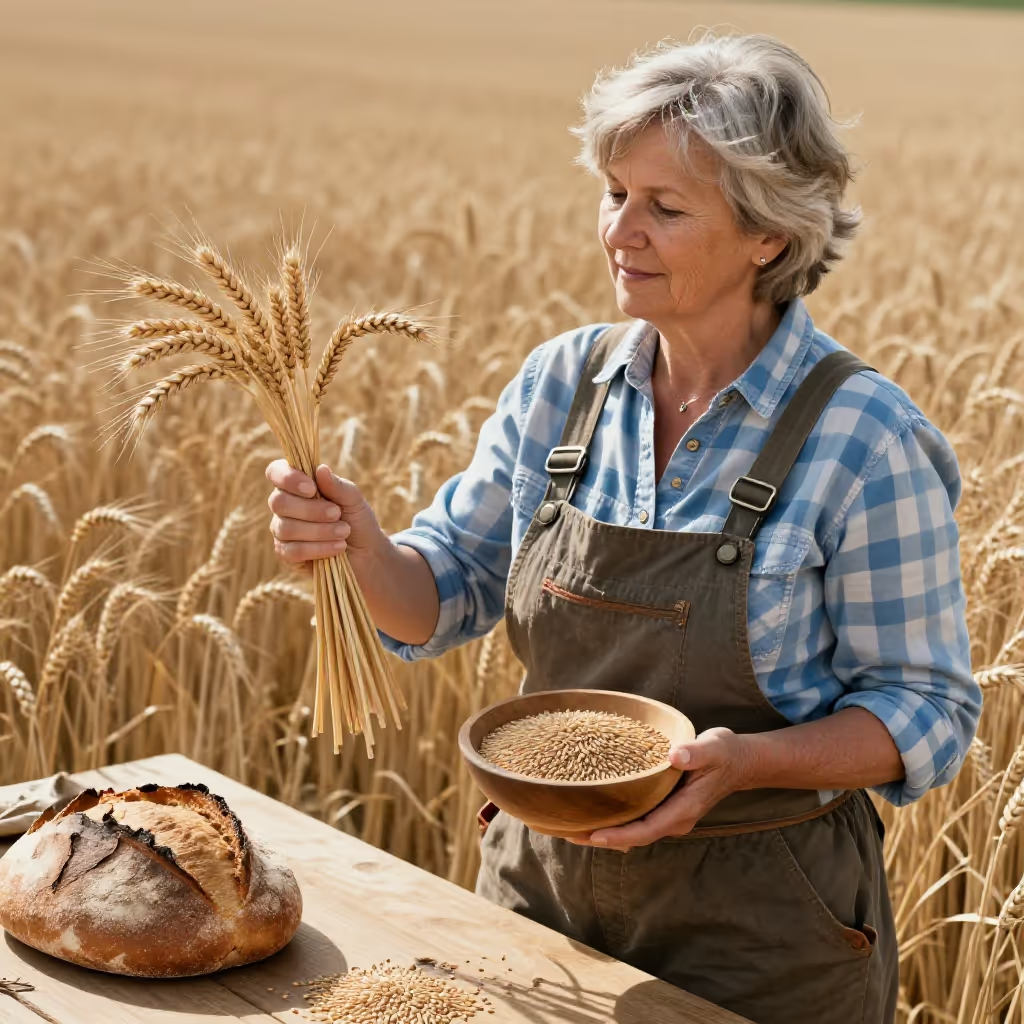
A type of grain that is an old form of wheat and is often used as an alternative to modern wheat.
example
Ich backe mein Brot am liebsten mit Dinkel, weil ich es besser vertrage.
I prefer to bake my bread with spelt because I tolerate it better.
Usage tips
Common word combinations
'Dinkel' (spelt) is the basis for many words that refer to foods. It is often found as the first part of compound nouns.
EXAMPLE
Zum Frühstück esse ich gerne Dinkelbrot mit Marmelade.
For breakfast, I like eating spelt bread with jam.
Use as a material
As a type of grain, 'Dinkel' (spelt) is an uncountable noun. It is often used with prepositions like 'aus' (from/made of) or 'mit' (with) to describe what something is made from.
EXAMPLE
Diese Nudeln sind aus reinem Dinkel gemacht.
These noodles are made from pure spelt.
Typical verbs
'Dinkel' (spelt) is frequently combined with verbs from agriculture and cooking.
EXAMPLE
Viele Bio-Bauern bauen wieder Dinkel an.
Many organic farmers are growing spelt again.
Compare with
near_synonym · confusable
Dinkel vs Weizen
wheat
'Weizen' and 'Dinkel' are closely related, because spelt is an old form of wheat. Both are types of grain and can be processed into flour. The difference is: 'Weizen' usually means modern, very common wheat. 'Dinkel' is used more precisely when it is about this special old type of wheat, for example in 'Dinkelbrot' (spelt bread) or 'Dinkelmehl' (spelt flour). Learners may confuse the words because spelt belongs to the wheat family. Still, in everyday language you do not simply always say 'Weizen' when a product is explicitly labeled 'Dinkel'.
Dinkel
Beim Bäcker nimmt Sofia ein Brot aus Dinkel, weil sie den Geschmack mag.
At the bakery, Sofia chooses a bread made from spelt because she likes the taste.
Weizen
Weizen ist in vielen Nudeln und Brötchen enthalten.