
A person who looks so much like another person that they could be mistaken for them, without being related to them.
example
Im Urlaub habe ich jemanden getroffen, der der Doppelgänger meines Bruders war.
On vacation, I met someone who was my brother's lookalike.
Usage tips
Word composition
The word is made up of 'doppel' (double) and 'Gänger' (from 'gehen' (to go)). So it literally describes a person who 'goes around' as a 'second version' of another person.
EXAMPLE
Manche berühmten Politiker haben Doppelgänger, die sie bei öffentlichen Auftritten aus Sicherheitsgründen vertreten.
Some famous politicians have lookalikes who stand in for them at public appearances for security reasons.
Sentence structure
To say whose doppelgänger someone is, you usually use the genitive or a possessive pronoun. This clearly names the person who appears to have a double.
EXAMPLE
Ich habe gestern den Doppelgänger von Angela Merkel in der U-Bahn gesehen.
Yesterday I saw Angela Merkel's doppelgänger on the subway.
Context clue
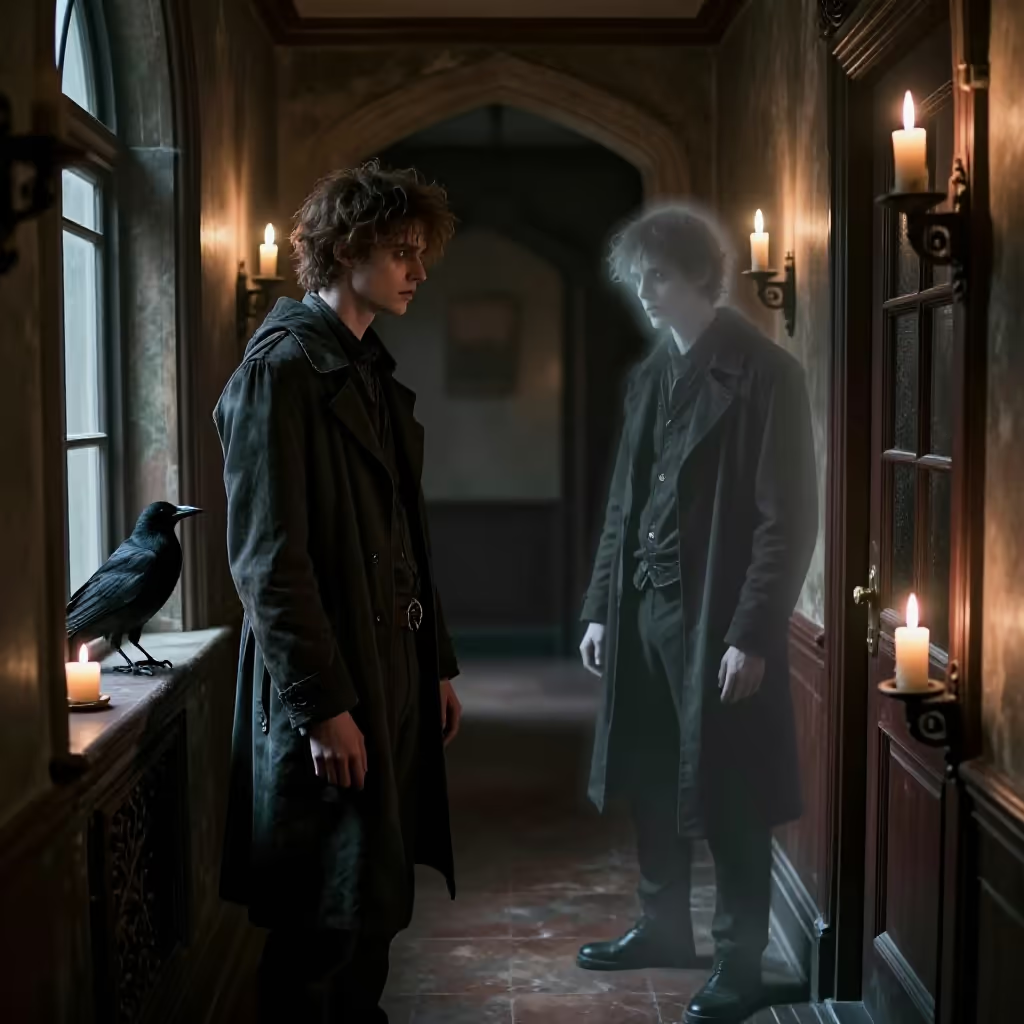
The supernatural meaning is clear from context. When ghosts, omens, eerie apparitions, or old legends are mentioned, it usually refers to the mythical being, not just a person who looks similar.
EXAMPLE
Der alten Sage nach bringt es Unglück, seinem eigenen Doppelgänger zu begegnen.
According to the old legend, it brings bad luck to meet your own doppelgänger.
Cultural context
The 'Doppelgänger' is an important motif in German literature, especially in Romanticism. It often symbolizes a dark, hidden side of the main character.
EXAMPLE
In vielen Schauerromanen des 19. Jahrhunderts spielt der unheimliche Doppelgänger eine zentrale Rolle.
In many 19th-century Gothic novels, the eerie doppelgänger plays a central role.
Compare with
near_synonym · confusable
Doppelgänger vs Erscheinung
appearance / phenomenon
'Erscheinung' and 'Doppelgänger' can both have to do with a person's appearance or with something eerie. 'Erscheinung' is more general: it can be the outward appearance of a person or a supernatural figure that suddenly becomes visible. A 'Doppelgänger' is more specific: it is a person or ghostly figure that looks very similar to a particular other person. The words can be confused when talking about an eerie figure. However, 'Doppelgänger' only fits when the similarity to another person is important.
Doppelgänger
Im Supermarkt sah Lisa einen Doppelgänger ihres Bruders.
In the supermarket, Lisa saw a lookalike of her brother.
Erscheinung
Seine ruhige Erscheinung machte im Gespräch sofort einen guten Eindruck.
His calm appearance immediately made a good impression during the conversation.