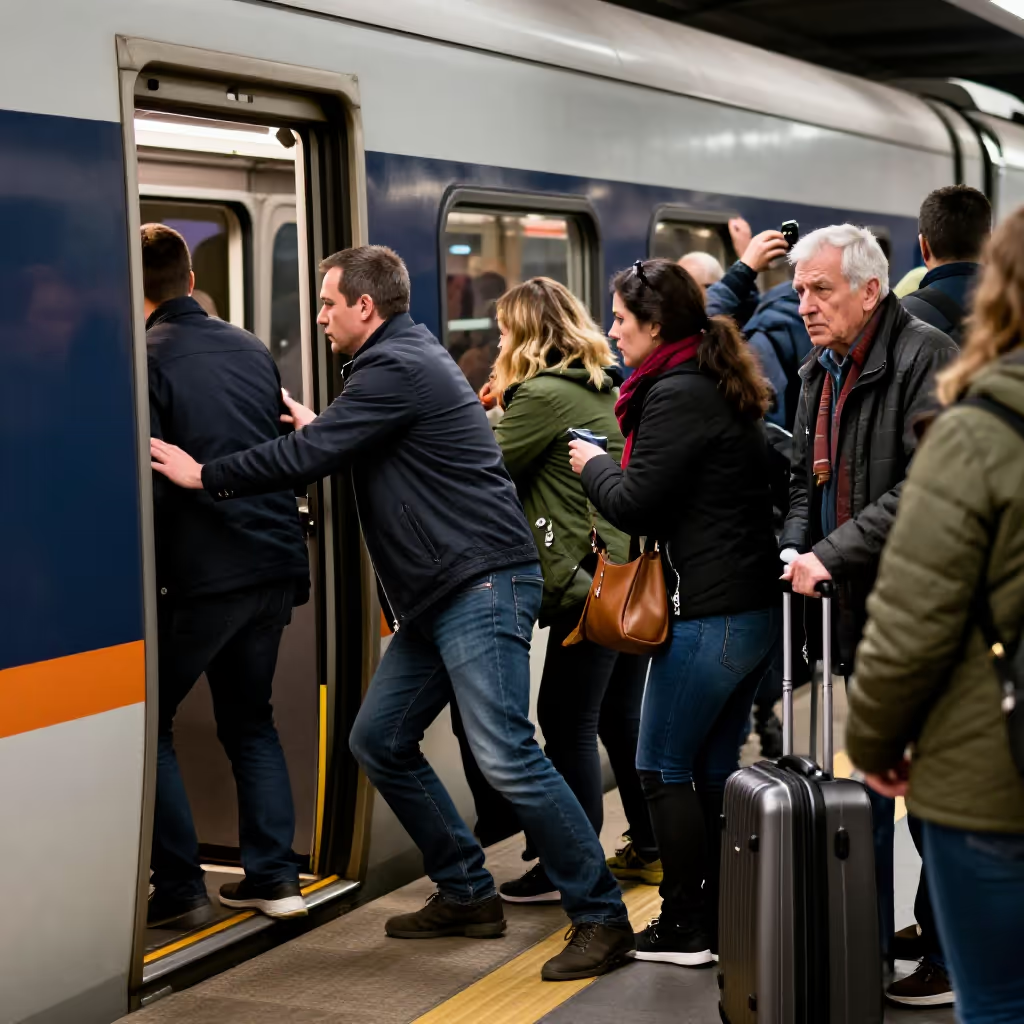
To shove forward impatiently and inconsiderately in a crowd or queue in order to get ahead faster.
example
An der Kasse haben alle Leute gedrängelt, um als Erste dranzukommen.
At the checkout, everyone was pushing to be the first to get served.

Usage tips
Word family
'Drängeln' (to push/nag) is related to the verb 'drängen' (to press, to push). The ending '-eln' often suggests a repeated action or one perceived as annoying, which fits the meaning of 'drängeln' well.
EXAMPLE
Bitte nicht drängeln, alle kommen an die Reihe.
Please don't push; everyone will get a turn.
Context clue
You can tell from context whether 'drängeln' means physical pushing or impatiently urging someone on. If it's about a queue or a crowd, the physical meaning is intended. If it's about time or a task, the figurative meaning is intended.
EXAMPLE
In der U-Bahn drängeln die Leute immer zur Tür.
On the subway, people are always pushing toward the door.
Sich vordrängeln
In the meaning 'to push ahead in a line', the reflexive form 'sich vordrängeln' (to push in / cut in line) is used very often. This emphasizes that someone is giving themselves an unfair advantage.
EXAMPLE
Es ist unhöflich, sich an der Supermarktkasse vorzudrängeln.
It's rude to cut in line at the supermarket checkout.
As a request
In the meaning 'to urge someone on', 'drängeln' (to nag) is often used as a negative request in the imperative to ask someone to stop doing it.
EXAMPLE
Drängel nicht so, ich beeile mich ja schon!
Don't nag me like that, I'm already hurrying!
Compare with
near_synonym · confusable
drängeln vs drängen
to urge / push
'drängen' and 'drängeln' can both mean that someone is putting pressure on someone or wants to move forward. 'drängen' is more general: you can urge someone to make a decision or push your way through a crowd. 'drängeln' sounds impatient and often inconsiderate. It fits especially in queues, in traffic, or when someone keeps saying that things should go faster. The words are easy to confuse because both have to do with hurry and pressure. However, 'drängeln' more strongly describes annoying or rude behavior.
drängeln
An der Kasse drängelt ein Kunde, obwohl alle warten müssen.
At the checkout, a customer pushes ahead, even though everyone has to wait.
drängen
Vor dem Termin drängt mich meine Schwester zu einer schnellen Entscheidung.
Before the appointment, my sister urges me to make a quick decision.