


dreizehn
thirteen
The cardinal number that follows twelve; the number 13.
EXAMPLE
Das Buch hat dreizehn Kapitel.
The book has thirteen chapters.
thirteen
Loading your saved state.
thirteen
The cardinal number that follows twelve; the number 13.
Das Buch hat dreizehn Kapitel.
The book has thirteen chapters.

that's the limit
An idiom expressing that a decisive, often outrageous or no longer tolerable moment has arrived, or that a boundary has been crossed.
Als der Chef auch noch Wochenendarbeit verlangte, schlug es für viele Mitarbeiter dreizehn.
When the boss also demanded weekend work, that was the limit for many employees.
The number 'dreizehn' (thirteen) is made up of 'drei' (three) and 'zehn' (ten). This pattern applies to all numbers from 13 to 19: first comes the ones digit, then 'zehn' (ten), e.g. 'vierzehn' (fourteen), 'fünfzehn' (fifteen).
Der Zug hat heute siebzehn Minuten Verspätung.
The train is seventeen minutes late today.
Pay attention to the stress so you don't confuse 'dreizehn' (thirteen) with 'dreißig' (thirty). Normally, the first syllable is stressed: DRÉIzehn. In 'dreißig' (thirty), the stress is always on the first syllable: DRÉIssig.
Ich bin dreizehn Jahre alt, nicht dreißig.
I am thirteen years old, not thirty.
The idiom 'es schlägt dreizehn' (that's the limit / enough is enough) is a fixed unit. It comes from the idea that a clock only strikes up to twelve—so the thirteenth hour is something outrageous, or the moment when a boundary is crossed.
Als er das Auto zerkratzte, schlug es für seinen Vater dreizehn.
When he scratched the car, that was the limit for his father.
twelve
Zwölf and dreizehn are simply numbers to begin with. In the idiom „Es schlägt zwölf“, zwölf stands for the last critical moment, while „Es schlägt dreizehn“ expresses that an outrageous or no longer tolerable moment has arrived or that a boundary has been crossed. Use the numbers normally outside this idiom, but choose between them within the idiom according to the intended level.
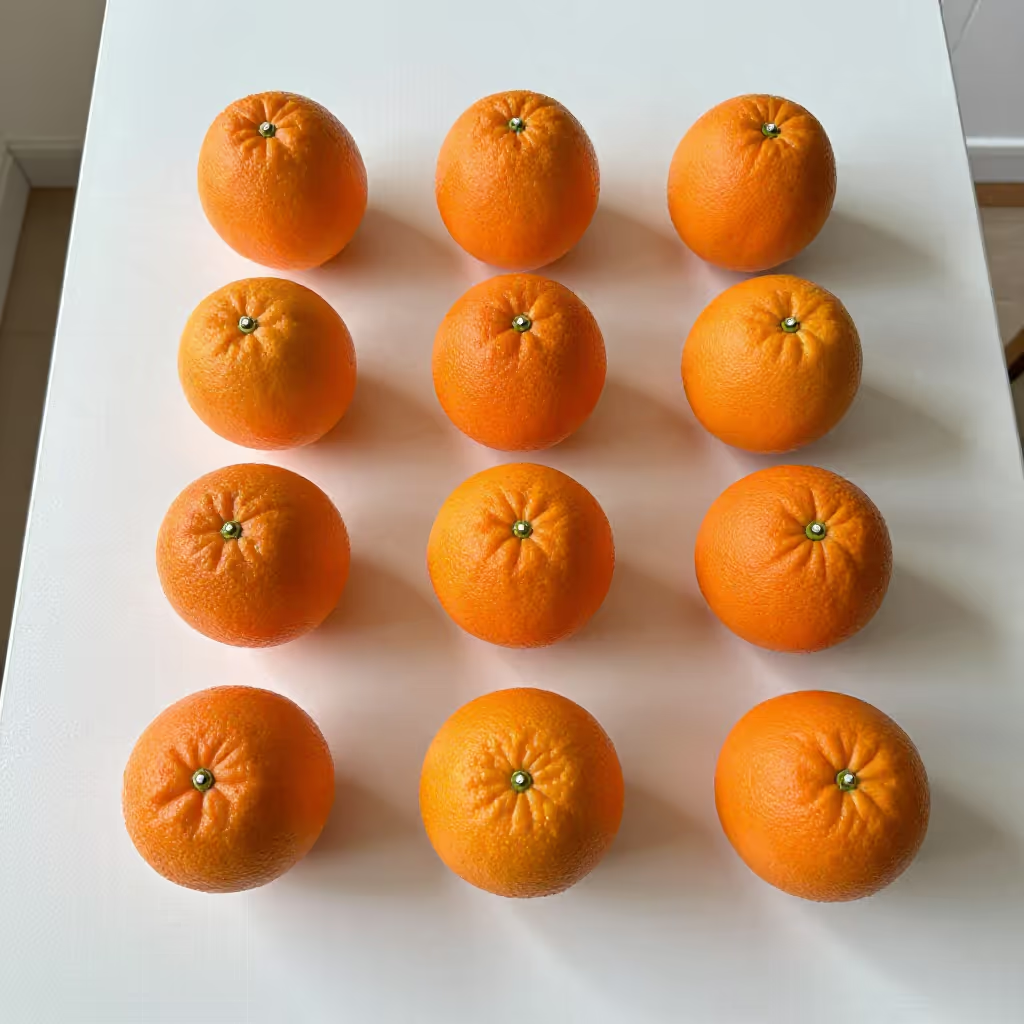
Nach diesem neuen Skandal schlägt es dreizehn, und die Menschen protestieren.
After this latest scandal, that’s the limit, and people are protesting.
Jetzt muss ich handeln, denn es schlägt zwölf.
I have to act now, because it’s now or never.