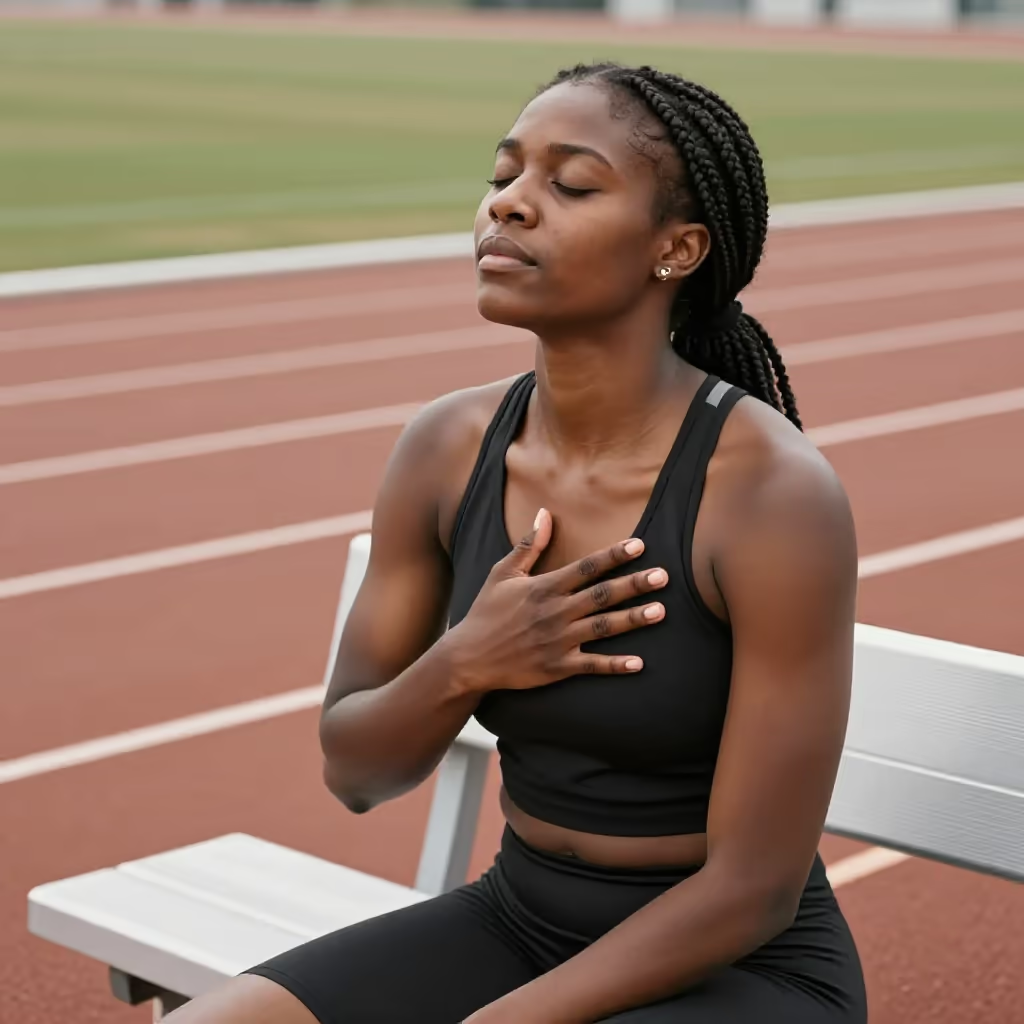
To breathe in and out deeply and fully, often in order to recover physically or calm down.
example
Nachdem er die Treppe hochgelaufen war, musste er erst einmal tief durchatmen.
After he had run up the stairs, he first had to take a deep breath.

Usage tips
Separable verb
"Durchatmen" (to take a deep breath/catch one's breath) is a separable verb. The prefix "durch" comes at the end in a main clause; in a subordinate clause the verb stays together, and in the infinitive with "zu", "zu" goes in the middle.
EXAMPLE
Atme erst einmal tief durch!
First take a deep breath!
Meaning of the prefix
The prefix "durch-" emphasizes here that the action of breathing is carried out fully or intensely. It is not just about normal breathing, but about a conscious, deep breath.
EXAMPLE
Nach dem Schreck musste sie erst einmal kräftig durchatmen.
After the shock, she first had to take a strong, deep breath.
Context clue
You can often recognize the figurative meaning from time expressions that describe a longer break. While the literal meaning refers to a brief moment, the figurative meaning refers to a recovery period such as a weekend or a vacation.
EXAMPLE
Nach diesem stressigen Projekt brauchen wir alle eine Pause zum Durchatmen.
After this stressful project, we all need a break to catch our breath.
Compare with
near_synonym
durchatmen vs entspannen
to relax
'sich entspannen' and 'durchatmen' can both mean that you become calmer after stress. 'sich entspannen' more often describes a state or a longer period of recovery. 'durchatmen' is often a brief moment: you breathe in and out deeply or take a short break to regain composure. In a figurative sense, you say 'durchatmen' when a demanding phase is briefly over. For a longer quiet period, 'sich entspannen' fits better.
durchatmen
Vor dem Termin atmet sie noch einmal tief durch.
Before the appointment, she takes one more deep breath.
entspannen
Nach dem Training entspannt sich Sofia mit einer warmen Dusche.