

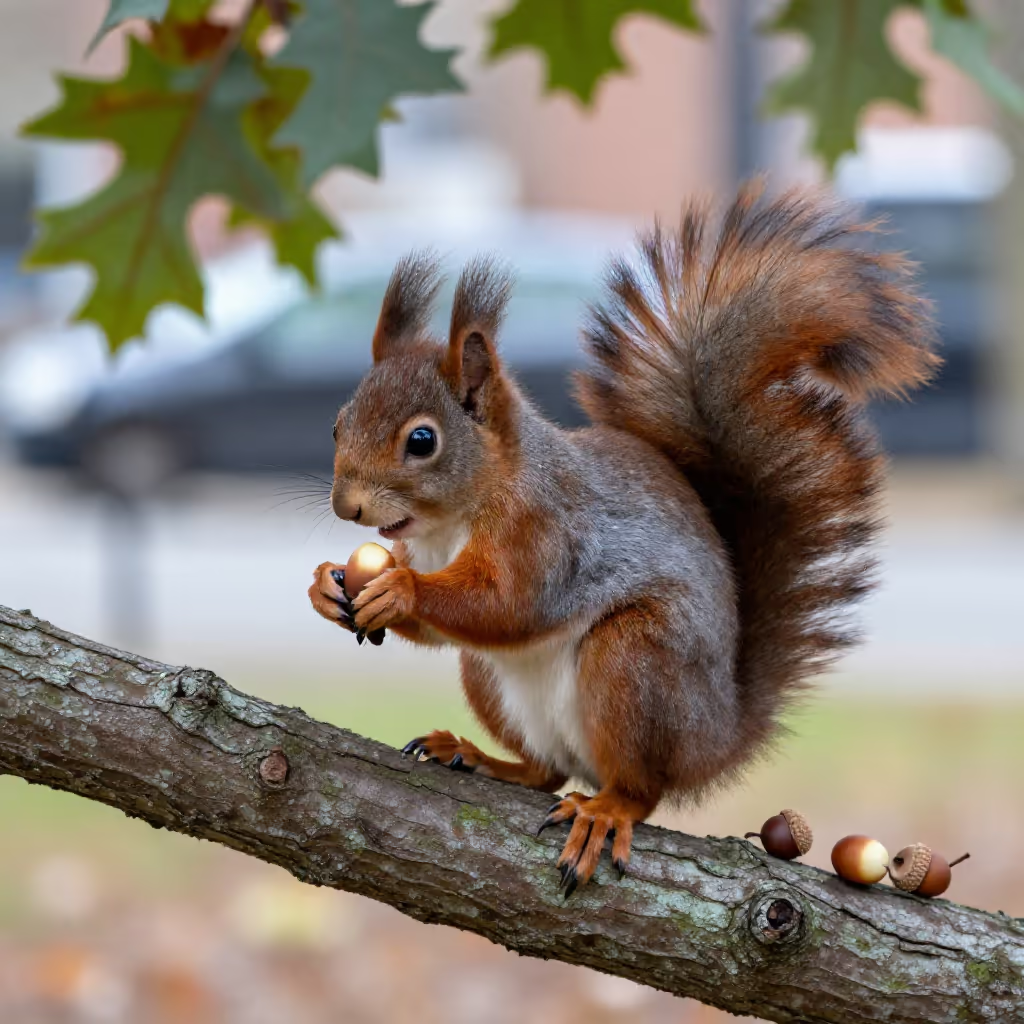
das Eichhörnchen
squirrel
A small rodent that lives in trees, has a bushy tail, and feeds mainly on nuts and seeds.
EXAMPLE
Ein flinkes Eichhörnchen kletterte den Baumstamm hinauf.
A nimble squirrel climbed up the tree trunk.
squirrel
Loading your saved state.
squirrel
A small rodent that lives in trees, has a bushy tail, and feeds mainly on nuts and seeds.
Ein flinkes Eichhörnchen kletterte den Baumstamm hinauf.
A nimble squirrel climbed up the tree trunk.
The word is made up of 'Eich-' (from 'Eiche', the oak tree) and 'Hörnchen' (little horn/croissant-shaped thing). So it describes a small animal that is often found in oak trees.
Das Eichhörnchen sprang von einem Ast der alten Eiche.
The squirrel jumped from a branch of the old oak.
The ending '-chen' is a diminutive form. Words with this ending are always neuter (they take the article 'das') and describe something small or cute.
Im Park saß ein kleines Eichhörnchen und aß eine Nuss.
A small squirrel sat in the park and ate a nut.
Typical verbs that describe the movements of a squirrel are 'klettern' (to climb), 'springen' (to jump), 'huschen' (to scurry), or 'flitzen' (to dart). A typical activity is 'Nüsse sammeln' (to collect nuts) or 'Nüsse verstecken' (to hide nuts).
Wir sahen ein Eichhörnchen, das flink den Baumstamm hinaufhuschte.
We saw a squirrel that quickly scurried up the tree trunk.