


einen
to unite
To bring different people, groups, or things together into one unit; to unify.
EXAMPLE
Der gemeinsame Gegner einte die zerstrittenen Stämme.
The common enemy united the feuding tribes.
to unite
Loading your saved state.
to unite
To bring different people, groups, or things together into one unit; to unify.
Der gemeinsame Gegner einte die zerstrittenen Stämme.
The common enemy united the feuding tribes.
The verb 'einen' (to unite) is closely related to the number 'eins' (one) and the adjective 'einig' (in agreement). The basic meaning is always to make something into one unit.
Nach langer Diskussion waren sich alle einig.
After a long discussion, everyone was in agreement.
You can 'einen' (unite) someone or something (transitive), for example 'ein Land einen' (to unite a country). The verb can also be used reflexively: 'sich einen' then means that groups or people join together or reach an agreement.
Der König versuchte, die verfeindeten Fürsten zu einen.
The king tried to unite the hostile princes.
The verb 'einen' (to unite) is rather formal and is often used in political, historical, or abstract contexts. It is frequently found in news reports or history books.
Der Wunsch nach Unabhängigkeit einte die Bevölkerung.
The desire for independence united the population.
to unite / combine
Both „vereinen“ and „einen“ can express the idea that people become united through a common goal. „Vereinen“ is more neutral, while „einen“ often sounds elevated or ceremonial. In everyday situations, „vereinen“ is therefore usually more appropriate; in a ceremonial speech, „einen“ is more likely.
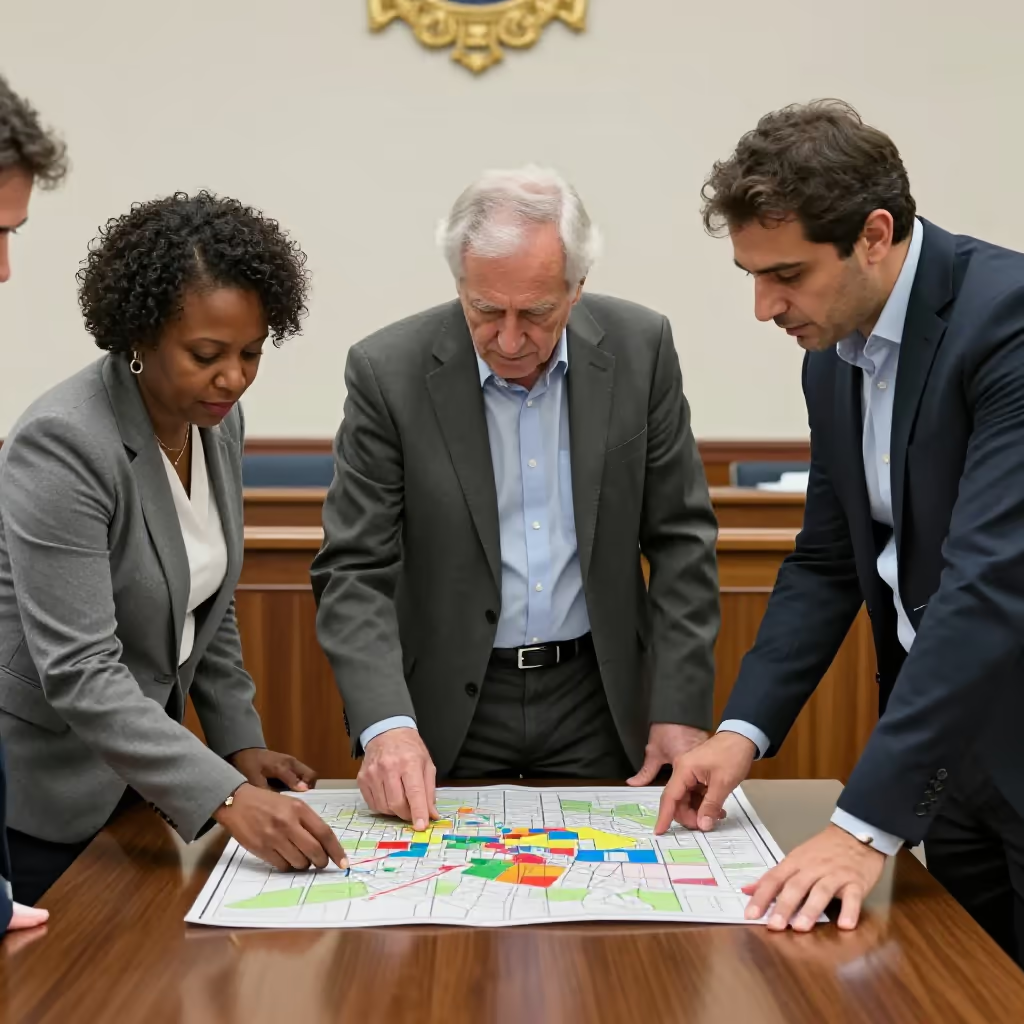
In ihrer Festrede sagt die Leiterin: „Dieses gemeinsame Ziel eint unsere drei Gruppen.“
In her ceremonial speech, the director says, “This shared goal unites our three groups.”
Das gemeinsame Ziel vereint die drei Gruppen in diesem Projekt.
The shared goal unites the three groups in this project.