

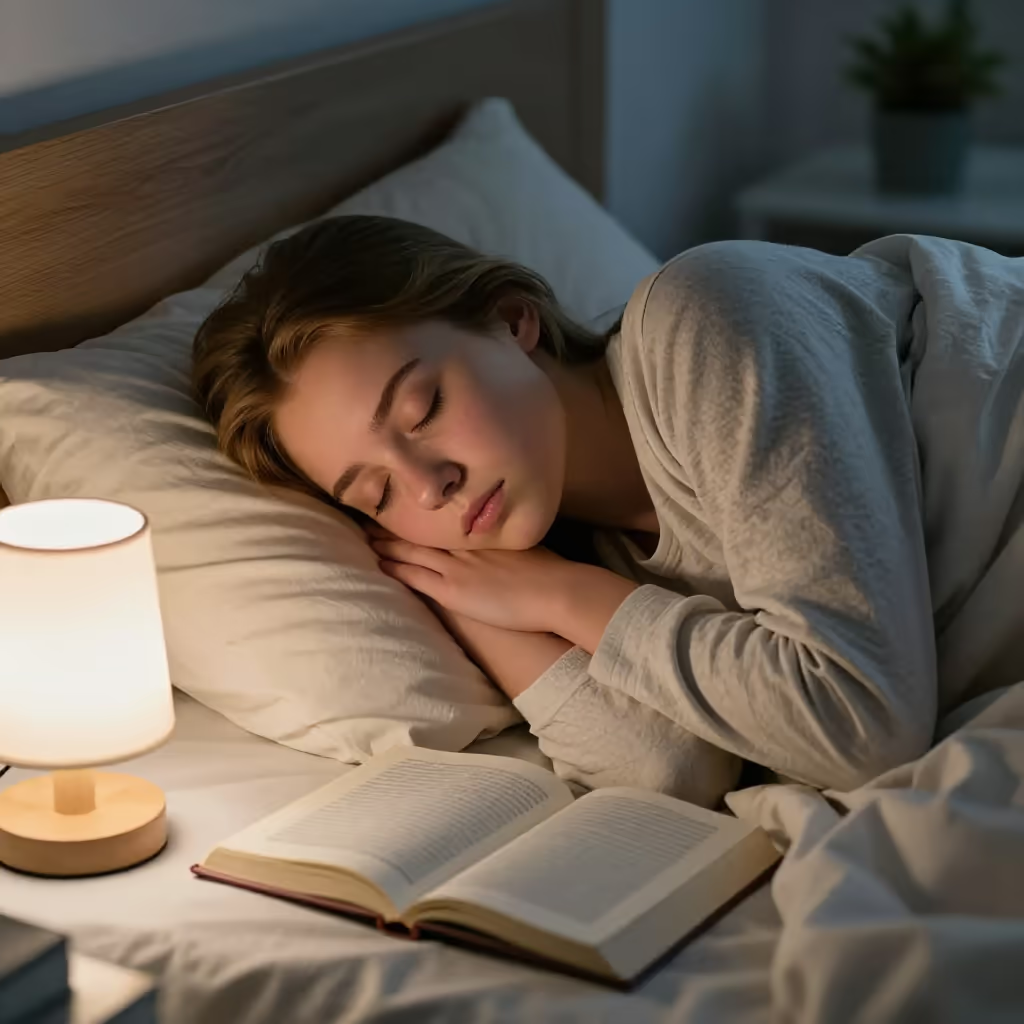
einschlafen
to fall asleep
To enter the state of sleep.
EXAMPLE
Das Baby ist nach wenigen Minuten auf meinem Arm eingeschlafen.
The baby fell asleep in my arms after just a few minutes.
to fall asleep / go numb
Loading your saved state.
to fall asleep
To enter the state of sleep.
Das Baby ist nach wenigen Minuten auf meinem Arm eingeschlafen.
The baby fell asleep in my arms after just a few minutes.
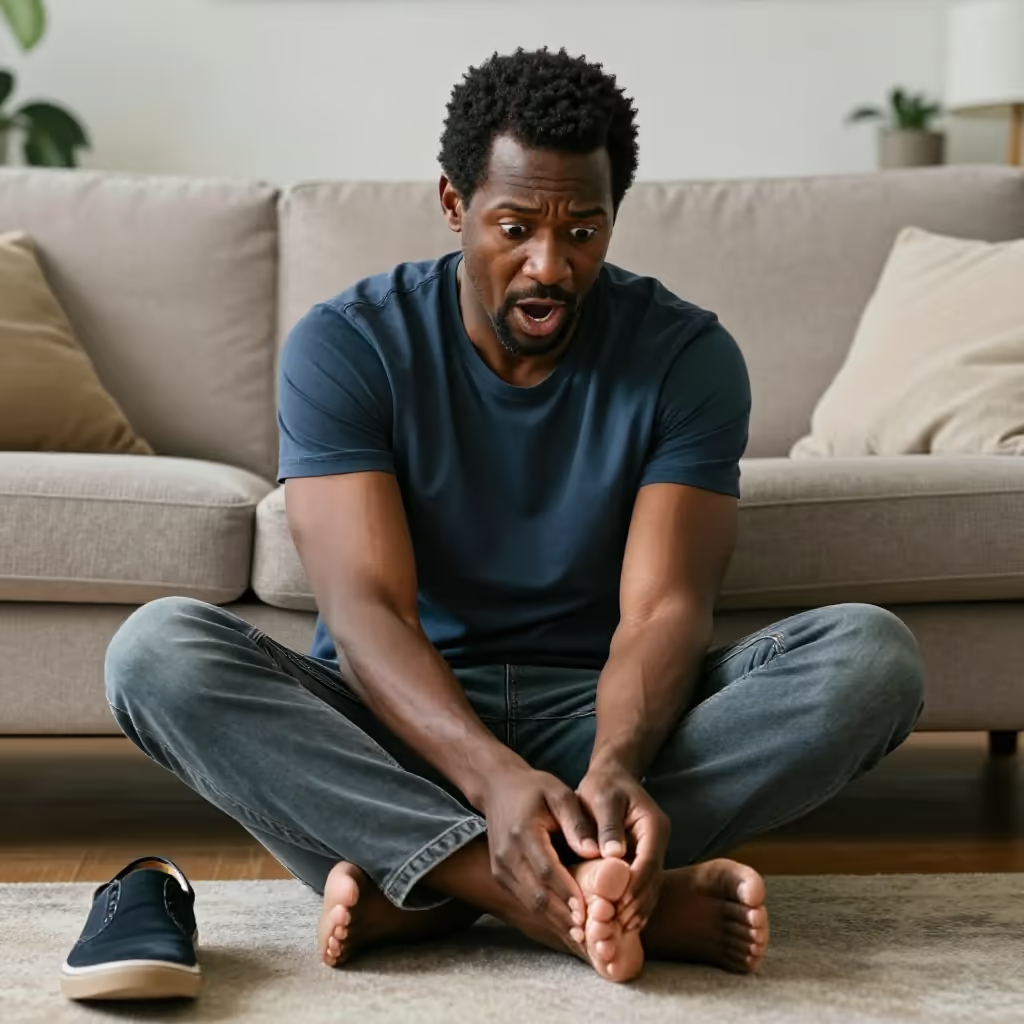
to go numb
A body part becomes numb and you feel a tingling sensation, usually because blood flow or a nerve was temporarily affected.
Nach dem langen Sitzen im Schneidersitz ist mir das Bein eingeschlafen.
After sitting cross-legged for so long, my leg went numb.

to peter out
An activity, contact, or process slowly becomes less frequent or weaker and eventually stops completely.
Der Briefkontakt zu meinem Schulfreund ist über die Jahre leider eingeschlafen.
My correspondence with my school friend unfortunately petered out over the years.

to pass away
A euphemistic expression for dying, often used when someone leaves life peacefully and without struggle.
Nach einem langen und erfüllten Leben ist unsere Großmutter friedlich eingeschlafen.
After a long and fulfilled life, our grandmother passed away peacefully.
'Einschlafen' (to fall asleep) is a separable verb. The prefix 'ein-' goes to the end in a main clause. In subordinate clauses and in the infinitive with 'zu', the verb stays together.
Ich lese jeden Abend, bis ich einschlafe.
I read every evening until I fall asleep.
'Einschlafen' (to fall asleep) describes a transition into another state. That is why the perfect tense is always formed with the auxiliary verb 'sein' (to be), not with 'haben' (to have).
Bist du gestern gut eingeschlafen?
Did you fall asleep easily yesterday?
When a body part 'einschläft' (goes numb), the person experiencing it is in the dative. The subject of the sentence is the body part.
Mir ist beim langen Sitzen der Fuß eingeschlafen.
My foot went numb while I was sitting for a long time.
In this figurative meaning, the subject is usually something abstract that slowly stops. Typical subjects are 'der Kontakt' (the contact), 'die Freundschaft' (the friendship), 'das Gespräch' (the conversation), or 'die Begeisterung' (the enthusiasm).
Nachdem er wegzog, ist unsere Freundschaft langsam eingeschlafen.
After he moved away, our friendship slowly petered out.
In the meaning of 'sterben' (to die), 'einschlafen' (to pass away) is a very gentle and respectful euphemism. It is used to express that someone died peacefully.
Er ist nach langer Krankheit im Kreise seiner Familie eingeschlafen.
After a long illness, he passed away surrounded by his family.
to die off / go numb
When a body part becomes numb and tingles, both „einschlafen“ and „absterben“ can be used. „Einschlafen“ sounds like a normal, temporary state, whereas „absterben“ sounds alarming and suggests serious damage. For ordinary, brief numbness, „einschlafen“ is usually the better choice.
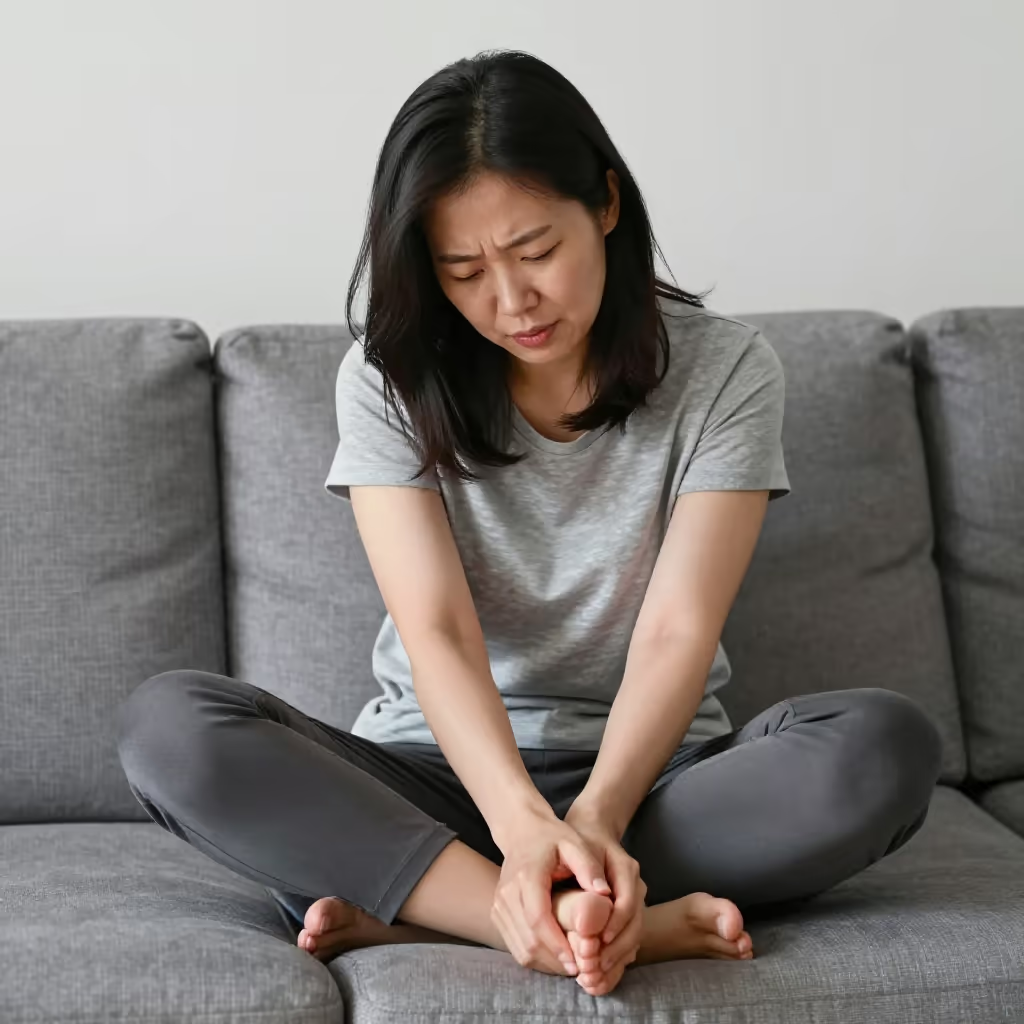
Nach dem langen Sitzen ist mein Fuß eingeschlafen, aber nach ein paar Minuten war alles wieder normal.
After sitting for a long time, my foot went numb, but everything was back to normal after a few minutes.
Sein Fuß fühlte sich nicht nur taub an, sondern schien wegen der starken Schmerzen abzusterben.
His foot felt not only numb but as if it were dying because of the severe pain.