

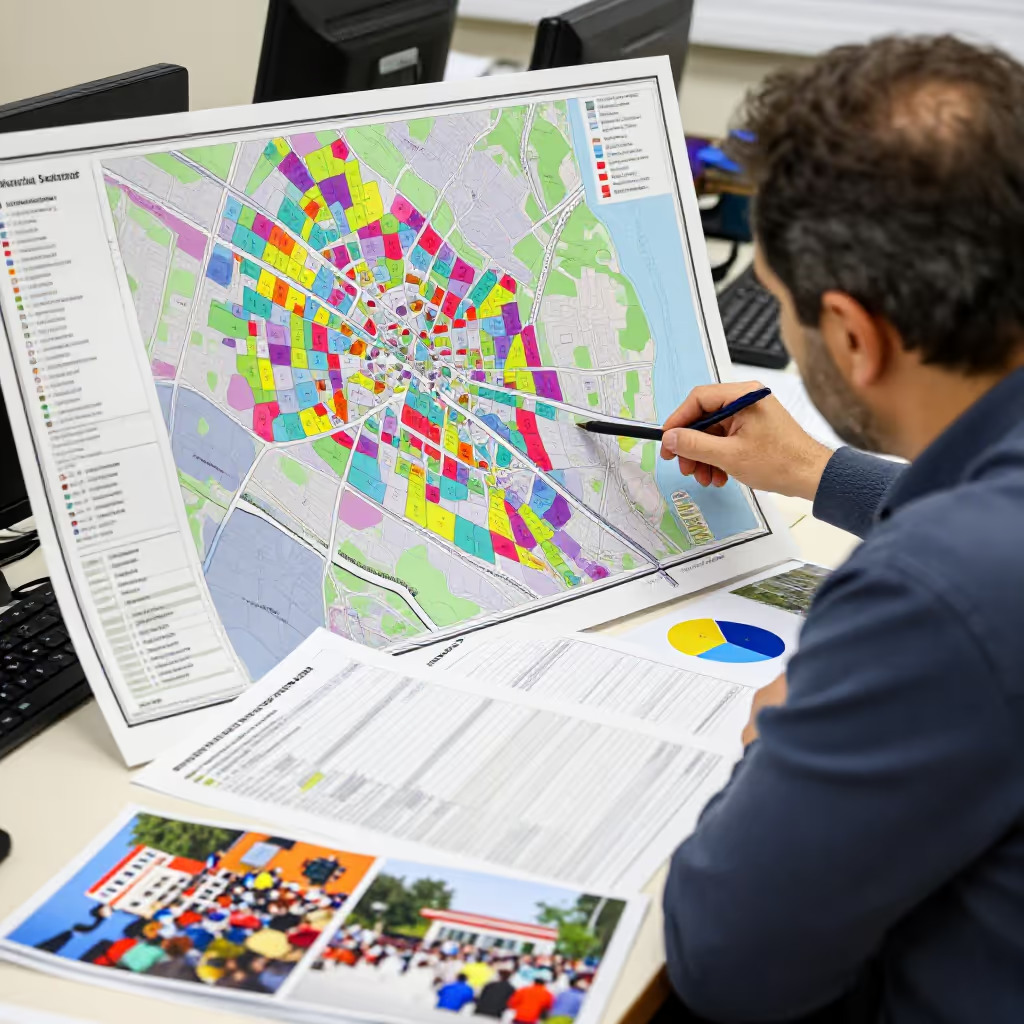
The total number of people who live in a particular place, such as a city, region, or country.
example
Die Einwohnerzahl der Stadt ist in den letzten zehn Jahren kontinuierlich gestiegen.
The city's population has risen steadily over the last ten years.
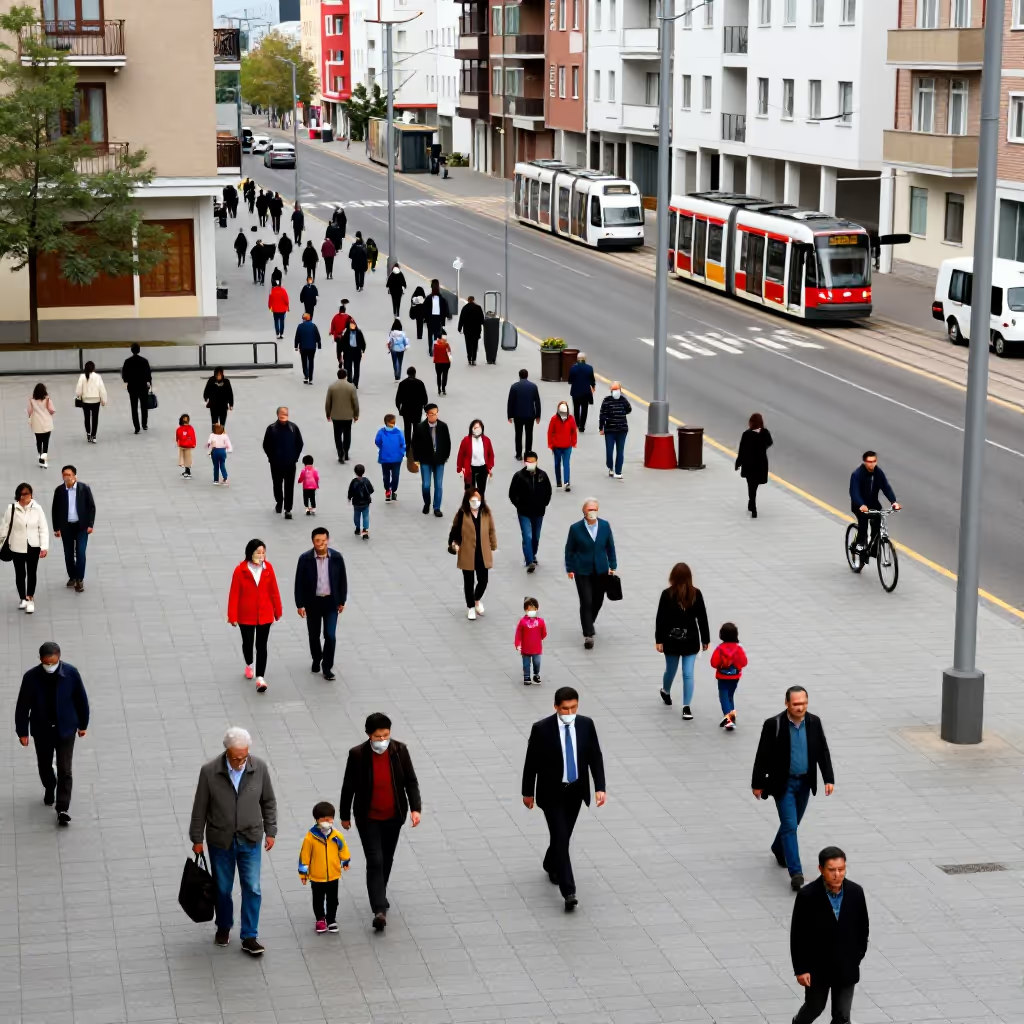
Usage tips
Word composition
The word is made up of three parts: 'Einwohner' (resident), the linking -s, and 'Zahl' (number). So it literally means the 'number of residents'.
EXAMPLE
Wie hoch ist die Einwohnerzahl von Berlin?
What is the population of Berlin?
Typical collocations
'Einwohnerzahl' (population) is often combined with verbs that describe a change, for example: 'die Einwohnerzahl steigt' (the population rises), 'sinkt' (falls), 'wächst' (grows), 'nimmt zu' (increases), or 'nimmt ab' (decreases).
EXAMPLE
Die Einwohnerzahl der ländlichen Regionen nimmt seit Jahren ab.
The population of rural regions has been decreasing for years.
Singular verb
Although 'Einwohnerzahl' (population) refers to many people, the subject of the sentence is 'die Zahl' (the number), which is singular. Therefore, the verb must always be in the singular.
EXAMPLE
Die Einwohnerzahl der Hauptstadt beträgt über eine Million.
The population of the capital is over one million.
Compare with
near_synonym · confusable
Einwohnerzahl vs Bevölkerung
population
'die Bevölkerung' and 'die Einwohnerzahl' both refer to people who live in a place. The difference is important: 'die Bevölkerung' means the people themselves as a group. 'die Einwohnerzahl' means only the number of these people. You can confuse the words because both often appear with cities, regions, or countries. When talking about the people, their situation, or their opinion, use 'Bevölkerung'. When giving a quantity or statistic, 'Einwohnerzahl' is more precise.
Einwohnerzahl
Die Einwohnerzahl des Dorfes liegt bei etwa 3.000.
The village's population is around 3,000.
Bevölkerung
Die Bevölkerung wurde über das neue Bauprojekt informiert.
The population was informed about the new construction project.