

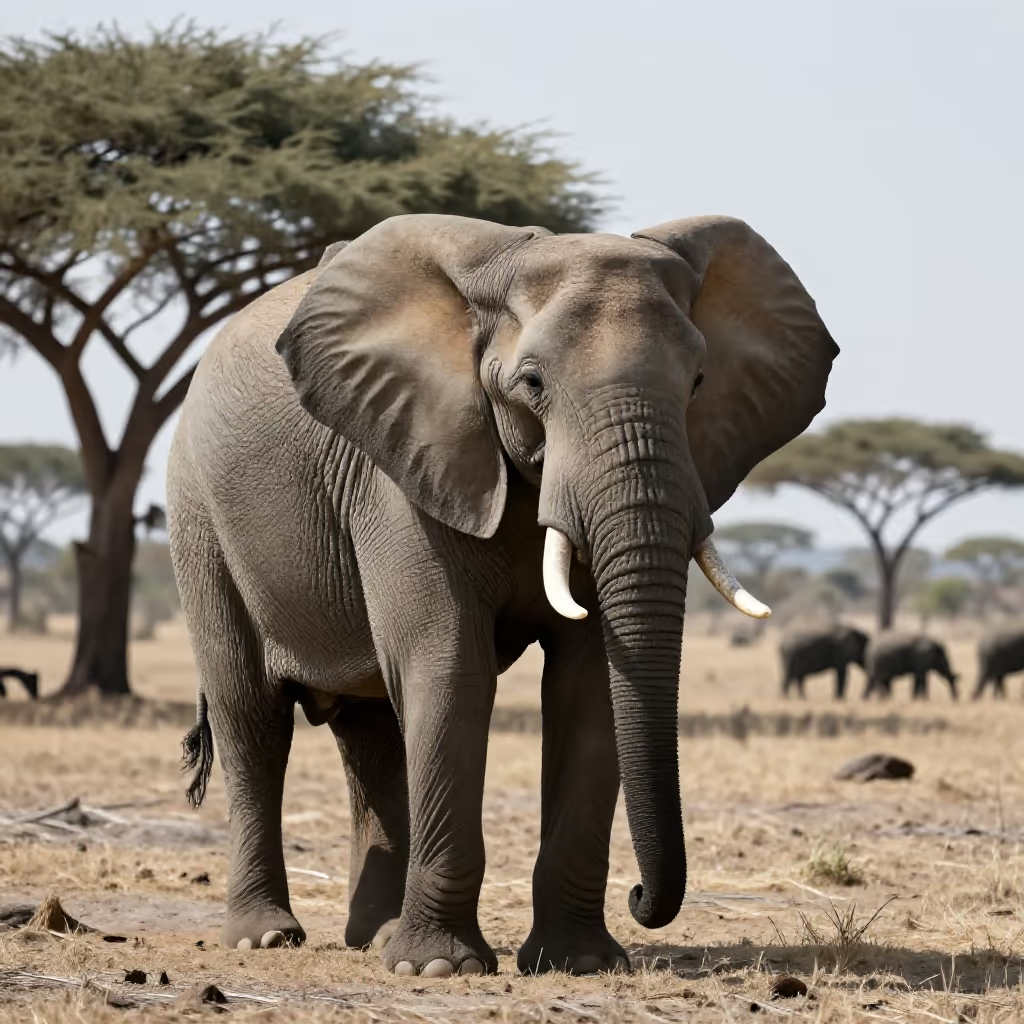
der Elefant
elephant
A very large, gray mammal with a trunk, tusks, and large ears that lives in Africa and Asia.
Im Nationalpark konnten wir eine Herde Elefanten beobachten.
In the national park, we were able to observe a herd of elephants.

elephant
Loading your saved state.
elephant
A very large, gray mammal with a trunk, tusks, and large ears that lives in Africa and Asia.
Im Nationalpark konnten wir eine Herde Elefanten beobachten.
In the national park, we were able to observe a herd of elephants.

'Elefant' (elephant) is a masculine noun of the N-declension. This means it takes the ending '-en' in all cases except the nominative singular.
Der Wärter füttert den Elefanten.
The keeper feeds the elephant.
The expression 'ein Gedächtnis wie ein Elefant haben' (to have a memory like an elephant) means that someone has a very good memory and forgets nothing.
Meine Großmutter ist 90 Jahre alt, aber sie hat ein Gedächtnis wie ein Elefant.
My grandmother is 90 years old, but she has a memory like an elephant.
The expression 'sich wie ein Elefant im Porzellanladen benehmen' (to behave like a bull in a china shop) is often used with the verb 'sich benehmen' (to behave). It describes a person who behaves very clumsily or tactlessly in a sensitive situation.
Er hat bei dem Meeting seine Kollegen kritisiert und sich wie ein Elefant im Porzellanladen benommen.
He criticized his colleagues during the meeting and behaved like a bull in a china shop.
mammoth
'der Elefant' and 'das Mammut' both refer to very large animals with trunks and tusks. The important difference is time: elephants live today in Africa and Asia. Mammoths lived during the Ice Age and are extinct. Learners may confuse the words because mammoths look similar to elephants. If you are talking about an animal alive today in a zoo or in nature, you say 'Elefant'. If you are talking about an extinct animal from the Ice Age, you say 'Mammut'.

Im Zoo fütterte die Pflegerin den Elefanten mit Äpfeln.
At the zoo, the keeper fed the elephant apples.
Im Museum sahen die Kinder das Skelett eines Mammuts aus der Eiszeit.
At the museum, the children saw the skeleton of a mammoth from the Ice Age.