

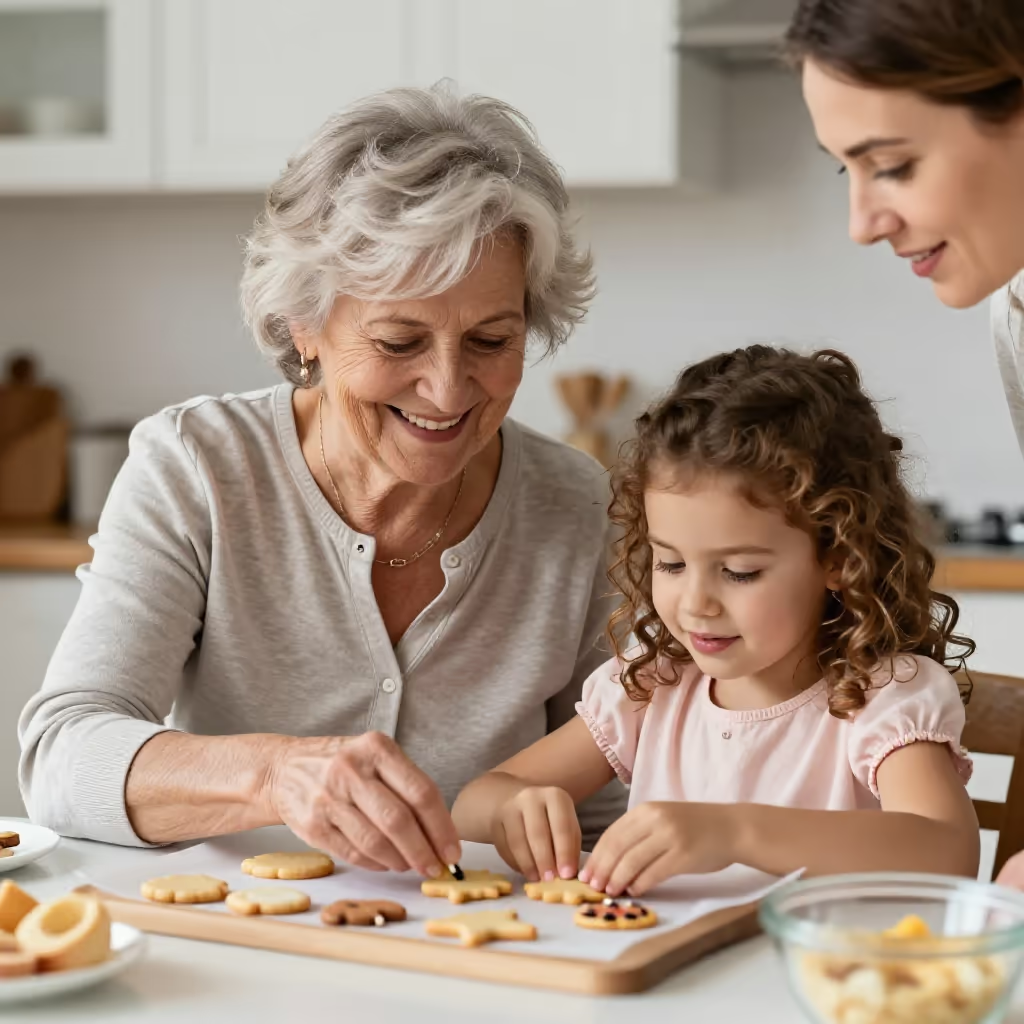
die Enkelin
granddaughter
The daughter of one's own son or daughter.
EXAMPLE
Meine Großmutter freut sich immer, wenn ihre Enkelin sie besucht.
My grandmother is always happy when her granddaughter visits her.
granddaughter
Loading your saved state.
granddaughter
The daughter of one's own son or daughter.
Meine Großmutter freut sich immer, wenn ihre Enkelin sie besucht.
My grandmother is always happy when her granddaughter visits her.
The word is derived from the masculine form 'der Enkel' (grandson) with the ending '-in'. This ending is the most common way to form female personal nouns in German.
Der Enkel spielt Fußball, die Enkelin liest ein Buch.
The grandson is playing soccer; the granddaughter is reading a book.
'Enkelin' (granddaughter) belongs to the word family related to descendants. This includes 'der Enkel' (grandson), 'das Enkelkind' (grandchild), and 'die Enkelkinder' (grandchildren, plural for all genders).
Die Großeltern haben drei Enkelkinder.
The grandparents have three grandchildren.
To express belonging, you usually use the genitive or the preposition 'von'. The genitive is more formal, while 'von' + dative is very common in everyday speech.
Das ist die Enkelin meiner Nachbarin.
That is my neighbor's granddaughter.