

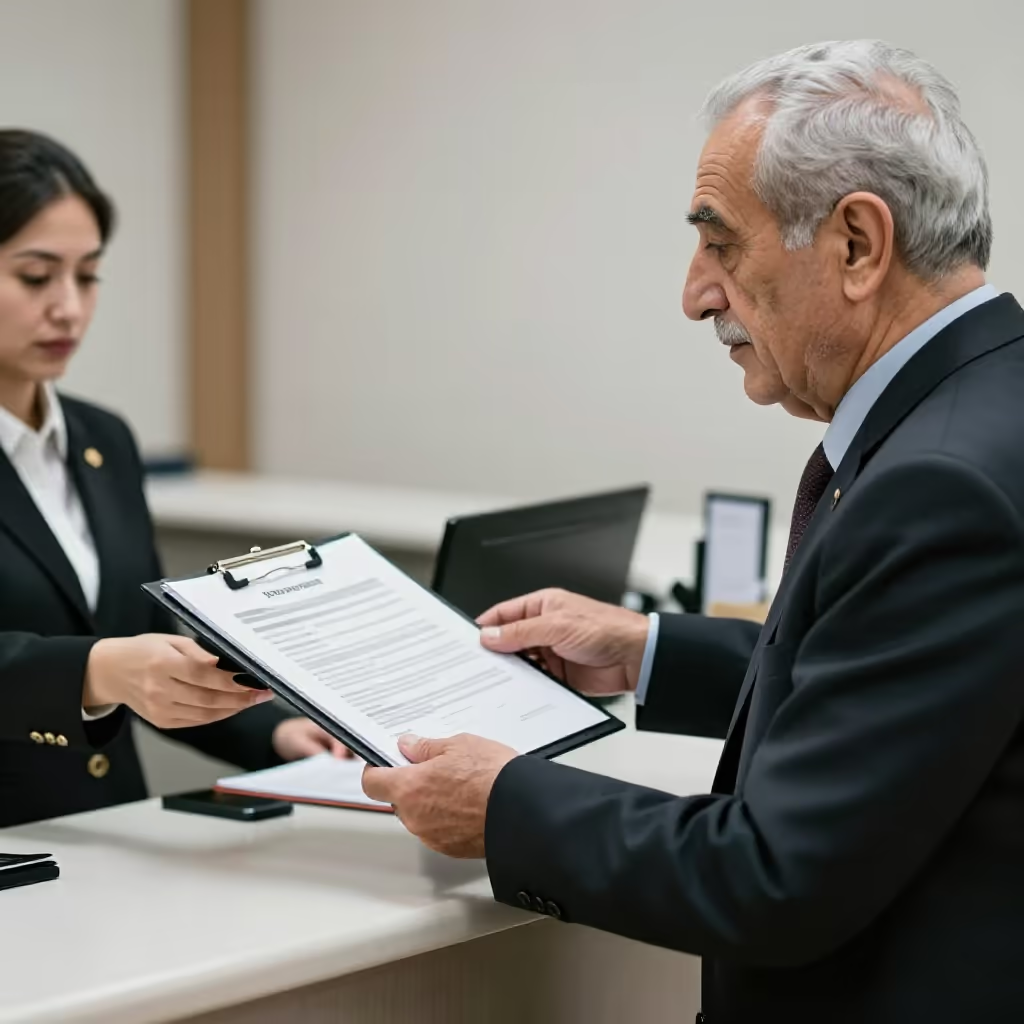
To ask for something in a polite, formal, or emphatic way. It expresses an urgent or respectful wish.
example
Für die Planung erbitten wir Ihre Rückmeldung bis Ende der Woche.
For planning purposes, we request your response by the end of the week.

Usage tips
Inseparable verb
'Erbitten' (to request) is an inseparable verb. The prefix 'er-' always remains attached to the stem 'bitten' (to ask/request) and gives the verb a more formal and more emphatic character.
EXAMPLE
Die Organisation erbat in einem Brief Spenden für ihr neues Projekt.
The organization requested donations for its new project in a letter.
Register
This verb belongs to a very formal register and is used almost exclusively in written language, for example in official letters, emails, or applications.
EXAMPLE
Wir erbitten Ihre Zustimmung zu dem vorliegenden Plan.
We request your approval of the present plan.
Sentence structure
You can either use a direct accusative object or use the preposition 'um' (for) with the accusative. Both constructions are correct and very formal.
EXAMPLE
Der Anwalt erbat weitere Informationen zum Fall.
The lawyer requested further information about the case.
Compare with
near_synonym · confusable
erbitten vs fordern
to demand / challenge
'fordern' and 'erbitten' can both mean that you want something from another person. However, the tone is very different. 'fordern' sounds strong and emphatic; often, you believe you have a right to something. 'erbitten' sounds polite, formal, or respectful, even if the request may be urgent. The words can be confused because in both cases a request or demand is being expressed. As a practical rule: use 'fordern' for a claim or a clear demand, and use 'erbitten' more for a polite official request.
erbitten
Für die Anmeldung erbitten wir eine kurze Nachricht bis Freitag.
For registration, we request a short message by Friday.
fordern
Die Mieter fordern eine schnelle Reparatur der Heizung.
The tenants are demanding that the heating be repaired quickly.