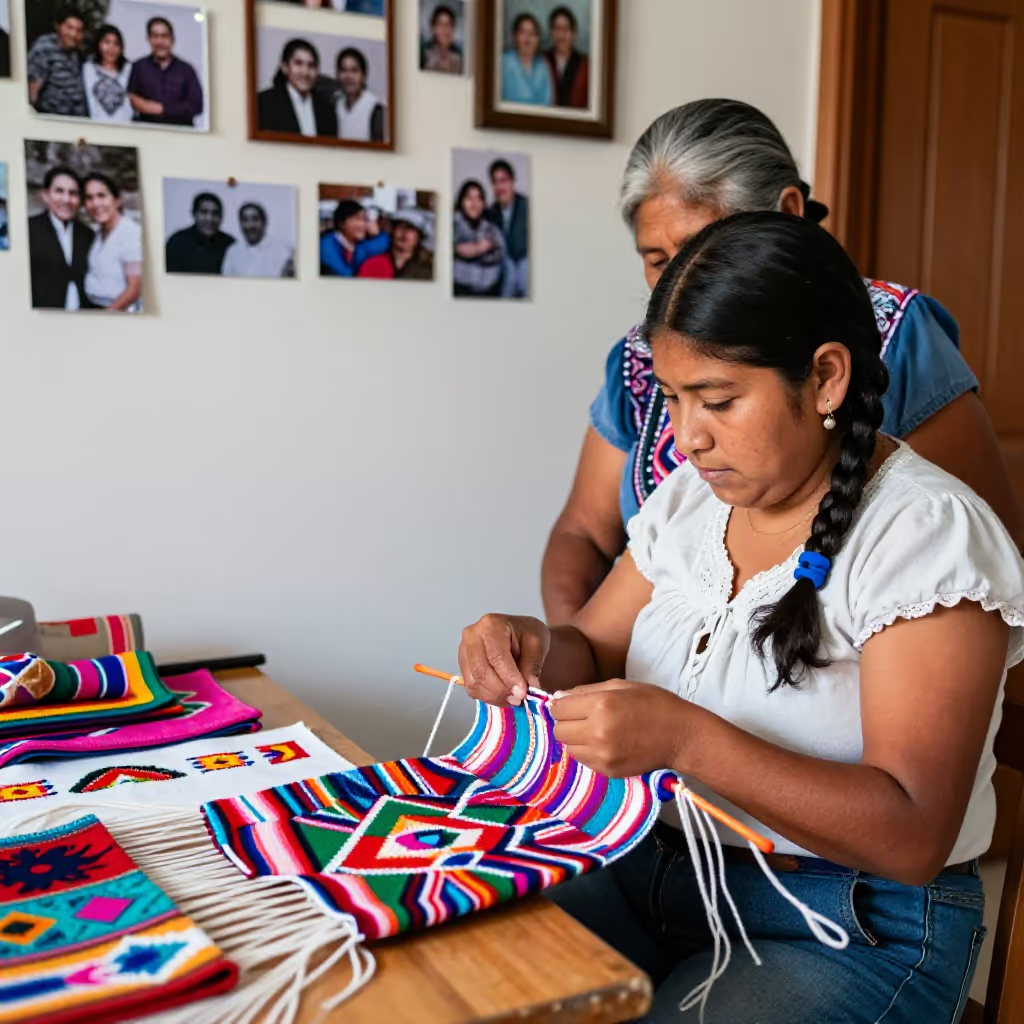
The assets, property, or debts that a person receives after the death of another person (the testator).
example
Mit der Erbschaft seiner Tante konnte er sich ein kleines Haus kaufen.
With the inheritance from his aunt, he was able to buy himself a small house.

Usage tips
Word family
'Die Erbschaft' (inheritance) belongs to the word family of 'erben' (to inherit) and 'das Erbe' (inheritance / heritage). While 'das Erbe' often means the inherited property itself, 'die Erbschaft' more often describes the whole process or the legal concept.
EXAMPLE
Wer etwas erbt, macht eine Erbschaft.
Someone who inherits something receives an inheritance.
Important verbs
In legal and financial contexts, there are fixed verb combinations. You can 'annehmen' (accept) or 'antreten' (enter into / take up) an inheritance. It is especially important that you can also 'ausschlagen' (refuse) an inheritance, for example if it consists only of debts.
EXAMPLE
Da die Erbschaft vor allem aus Schulden bestand, hat er sie ausgeschlagen.
Since the inheritance consisted mainly of debts, he refused it.
Register and style
In its figurative meaning, 'Erbschaft' (legacy) is a rather formal and educated-sounding word. It is often used in discussions about history, culture, or politics to describe a legacy.
EXAMPLE
Der Schutz der Menschenrechte ist eine wichtige kulturelle Erbschaft der Aufklärung.
The protection of human rights is an important cultural legacy of the Enlightenment.
Context clues
The meaning can be recognized easily from the context. If it is about money, a house, or the death of a specific person, the financial or legal meaning is intended. If it is about history, ideas, or culture, the figurative meaning is intended.
EXAMPLE
Er stritt mit seinem Bruder um die Erbschaft des Vaters.
He argued with his brother about their father's inheritance.
Compare with
near_synonym · confusable
Erbschaft vs Tradition
tradition
'die Tradition' and 'die Erbschaft' can both mean something that comes from earlier generations. The difference lies in the focus: a tradition is mainly a custom, behavior, or belief that people continue. Here, 'Erbschaft' means something taken over as a legacy, for example culturally or intellectually. Learners may confuse the words because both have to do with passing things on. When it is about customs and regular actions, 'Tradition' fits better. When you want to emphasize that something has remained as an inheritance from the past, 'Erbschaft' is more appropriate.
Erbschaft
Die alten Lieder sind eine wichtige Erbschaft früherer Generationen.
The old songs are an important legacy of earlier generations.
Tradition
In unserer Familie ist es Tradition, am Sonntag zusammen zu frühstücken.
In our family, it is a tradition to have breakfast together on Sundays.