

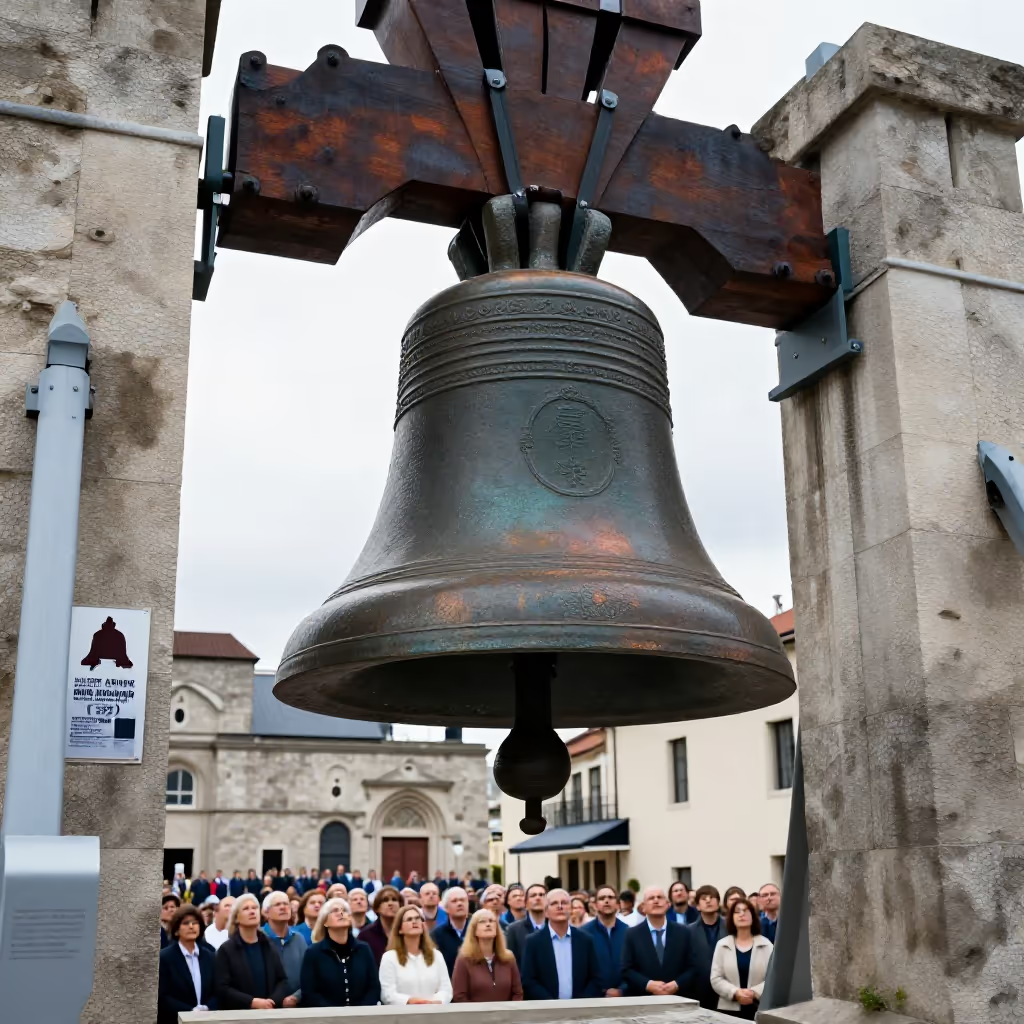
erklingen
to resound
To begin to sound or ring out, often in a solemn or loud way. Used for music, voices, or bells.
EXAMPLE
Pünktlich um Mitternacht erklangen die Glocken des Doms.
Right at midnight, the bells of the cathedral resounded.
to resound
Loading your saved state.
to resound
To begin to sound or ring out, often in a solemn or loud way. Used for music, voices, or bells.
Pünktlich um Mitternacht erklangen die Glocken des Doms.
Right at midnight, the bells of the cathedral resounded.
'Erklingen' (to resound) is an inseparable verb. The prefix 'er-' often describes the beginning of an action. So the verb means 'to begin to sound'.
Als der Vorhang aufging, erklang die Ouvertüre.
When the curtain rose, the overture resounded.
The verb 'erklingen' (to resound) forms the perfect tense with the auxiliary verb 'sein' (to be), because it describes a change of state from silence to sound.
Nach der Rede ist die Nationalhymne erklungen.
After the speech, the national anthem resounded.
This word has an elevated, often poetic or solemn style. It is used for music, bells, or hymns, but not for everyday noises like a telephone.
Im Konzertsaal erklang eine wunderschöne Melodie.
A beautiful melody resounded in the concert hall.
to sound
Klingen describes the sound itself or the impression it creates. Erklingen, by contrast, emphasizes the beginning of an audible sound, especially with music, voices, or bells. Use klingen for the quality of the sound and erklingen for the moment it begins.

Zu Beginn der Feier erklingt der Chor.
At the beginning of the ceremony, the choir rings out.
Der Chor klingt feierlich und kraftvoll.
The choir sounds solemn and powerful.