
erleichtern
to make easier
To make something simpler, less difficult, or less time-consuming.
Der neue Aufzug erleichtert den Zugang zu den oberen Stockwerken erheblich.
The new elevator makes access to the upper floors considerably easier.

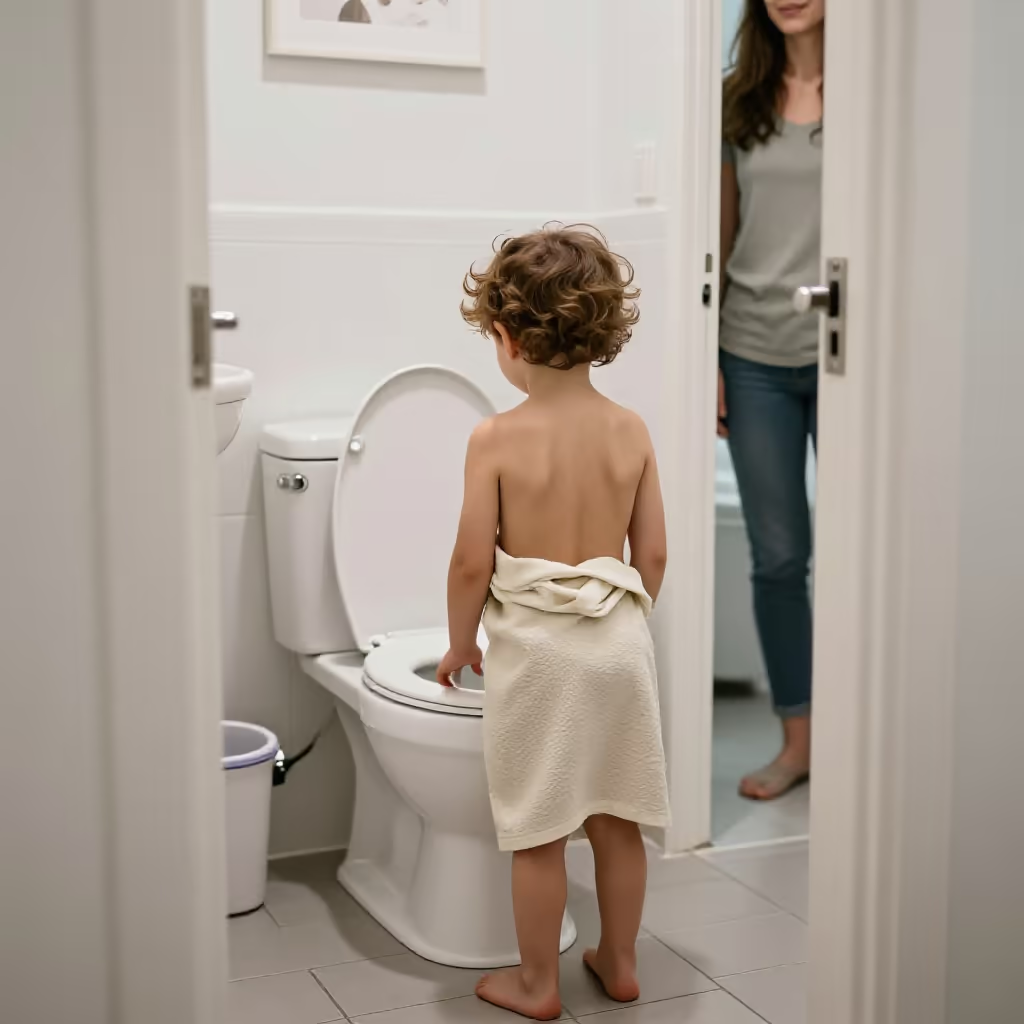
to make easier / relieve
Loading your saved state.
to make easier
To make something simpler, less difficult, or less time-consuming.
Der neue Aufzug erleichtert den Zugang zu den oberen Stockwerken erheblich.
The new elevator makes access to the upper floors considerably easier.

The verb 'erleichtern' (to make easier/relieve) is inseparable. The prefix 'er-' remains firmly attached to the verb in all sentence forms and tenses.
Diese Maschine erleichtert die Produktion.
This machine makes production easier.
The word is derived from the adjective 'leicht' (light/easy). The prefix 'er-' often describes the process of reaching a state. So 'erleichtern' literally means to make something 'lighter/easier'.
Ein gutes Wörterbuch erleichtert das Sprachenlernen.
A good dictionary makes language learning easier.
'Erleichtern' is very often used with a person in the dative and a thing in the accusative. The structure is: someone (subject) + 'erleichtert' + someone (dative) + something (accusative).
Die neue Software erleichtert mir die Arbeit sehr.
The new software makes my work much easier.
The reflexive form 'sich erleichtern' (to relieve oneself) is a euphemistic expression for going to the toilet. It is used to address the topic discreetly.
Der Wanderer suchte einen Platz, um sich im Wald zu erleichtern.
The hiker looked for a place to relieve himself in the forest.
In the colloquial meaning 'stehlen' (to steal), 'erleichtern' is always used with the preposition 'um' and an accusative object. This structure is a clear signal for this ironic meaning.
Der Betrüger hat die alte Dame um ihre gesamten Ersparnisse erleichtert.
The fraudster relieved the old lady of all her savings.
to support
'unterstützen' and 'erleichtern' can both mean that a situation becomes better or easier for someone. However, 'unterstützen' says more strongly that someone actively helps, for example with money, time, or practical assistance. 'erleichtern' emphasizes the result: something becomes less difficult, less complicated, or less emotionally burdensome. Learners may confuse the words because support often makes something easier. In practice: when the helping person or concrete help is important, 'unterstützen' fits better. When the task, situation, or worry becomes lighter or easier, 'erleichtern' is more natural.

Eine klare Liste erleichtert die Planung für das Wochenende.
A clear list makes planning for the weekend easier.
Mein Bruder unterstützt mich beim Umzug und trägt die schweren Kisten.
My brother helps me with the move and carries the heavy boxes.