

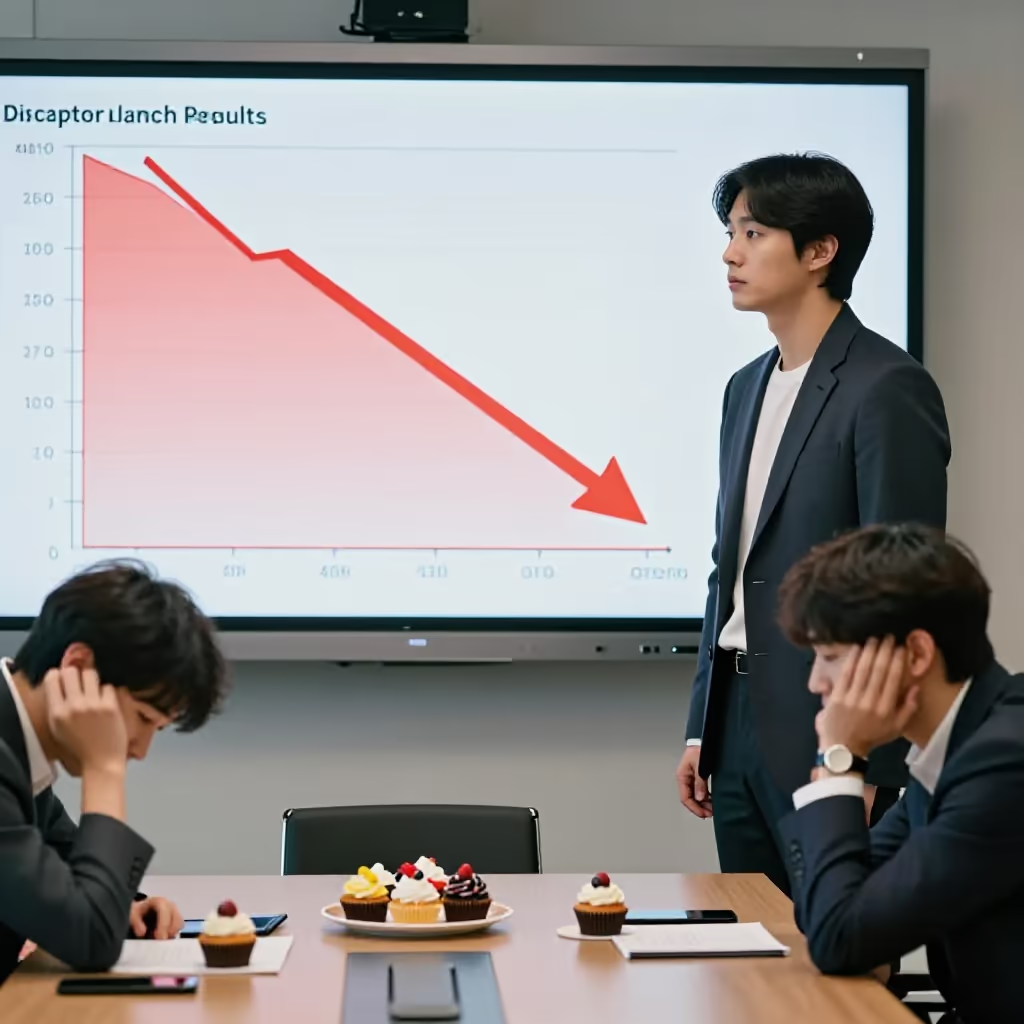
Having a disappointing effect that destroys illusions or inflated expectations and brings one back to reality.
example
Nach all der harten Arbeit war das ernüchternde Ergebnis ein Schock für das Team.
After all the hard work, the sobering result was a shock for the team.

Usage tips
Word structure
"Ernüchternd" is the present participle of the verb "ernüchtern" (to sober up / to disillusion). This is derived from "nüchtern" (sober, not drunk) and means to bring someone back from an illusion into reality. So "ernüchternd" describes something that has this effect.
EXAMPLE
Seine Reaktion auf meine Idee war ziemlich ernüchternd.
His reaction to my idea was pretty sobering.
Typical collocations
This adjective often describes abstract nouns that express a result or insight. Typical combinations are "ein ernüchterndes Ergebnis" (a sobering result), "eine ernüchternde Bilanz" (a sobering assessment), or "eine ernüchternde Erkenntnis" (a sobering realization).
EXAMPLE
Die Firma zog am Jahresende eine ernüchternde Bilanz.
At the end of the year, the company made a sobering assessment.
Use in a sentence
"Ernüchternd" can be used as an adjective before a noun or as an adverb to describe a verb or state.
EXAMPLE
Die Zahlen für das letzte Quartal sind ernüchternd.
The figures for the last quarter are sobering.
Compare with
confusable
ernüchternd vs nüchtern
fasting / sober
'nüchtern' and 'ernüchternd' look similar and both have to do with looking at reality, but they are used differently. 'nüchtern' describes a level-headed way of speaking or thinking, a person, an analysis, or a style. It is about speaking or thinking without strong emotions. 'ernüchternd', on the other hand, describes an effect: something is disappointing and takes away overly high expectations. Learners may confuse the words because both sound objective. Remember: an analysis can be nüchtern; a result can be ernüchternd.
ernüchternd
Das Ergebnis der Prüfung war für Omar ernüchternd.
The result of the exam was sobering for Omar.
nüchtern
Trotz der schlechten Nachrichten blieb der Chef nüchtern und suchte nach einer Lösung.
Despite the bad news, the boss remained level-headed and looked for a solution.