

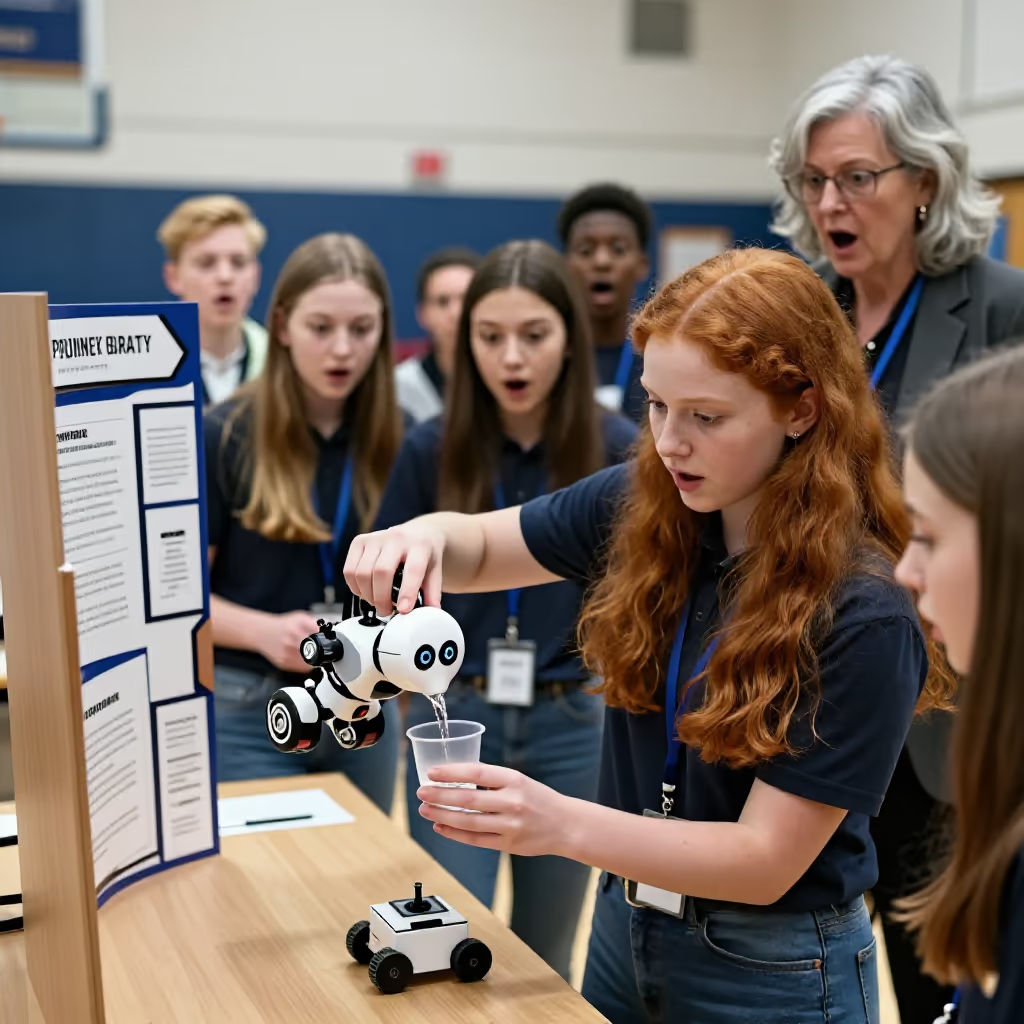
Describes something that causes surprise or astonishment because it is unexpected, unusual, or very impressive.
example
Es ist erstaunlich, wie schnell sie die neue Sprache gelernt hat.
It is amazing how quickly she learned the new language.

Usage tips
Word family
The adjective 'erstaunlich' (amazing) is closely related to the verb 'staunen' (to be amazed, to be impressed). So something that is 'erstaunlich' makes you marvel or be amazed.
EXAMPLE
Ihre Fortschritte im Deutschen sind wirklich erstaunlich.
Her progress in German is truly amazing.
Sentence structure with „es“
A very common construction is 'Es ist erstaunlich, ...' (It is amazing ...), followed by a subordinate clause with 'wie' (how), 'dass' (that), or 'was' (what). The 'es' serves as a placeholder here.
EXAMPLE
Es ist erstaunlich, wie viel du in so kurzer Zeit geschafft hast.
It is amazing how much you have accomplished in such a short time.
Use as an adverb
'Erstaunlich' can also be used as an adverb to modify another adjective or a verb. It then means something like 'surprisingly'.
EXAMPLE
Der Film war erstaunlich gut, obwohl ich nichts erwartet hatte.
The film was surprisingly good, even though I had expected nothing.
Compare with
near_synonym
erstaunlich vs unglaublich
incredible
'unglaublich' and 'erstaunlich' both describe something that is not normal and causes surprise. 'erstaunlich' fits well when something is unexpected or impressive and makes you wonder. 'unglaublich' is stronger: it sounds as if something is almost hard to believe because it is very great, extreme, or special. 'erstaunlich' often feels calmer and more factual, while 'unglaublich' is more emotional and stronger.
erstaunlich
Es ist erstaunlich, wie schnell Anna das neue Programm verstanden hat.
It is amazing how quickly Anna understood the new program.
unglaublich
Der Blick vom Berg war unglaublich schön.
The view from the mountain was incredibly beautiful.