

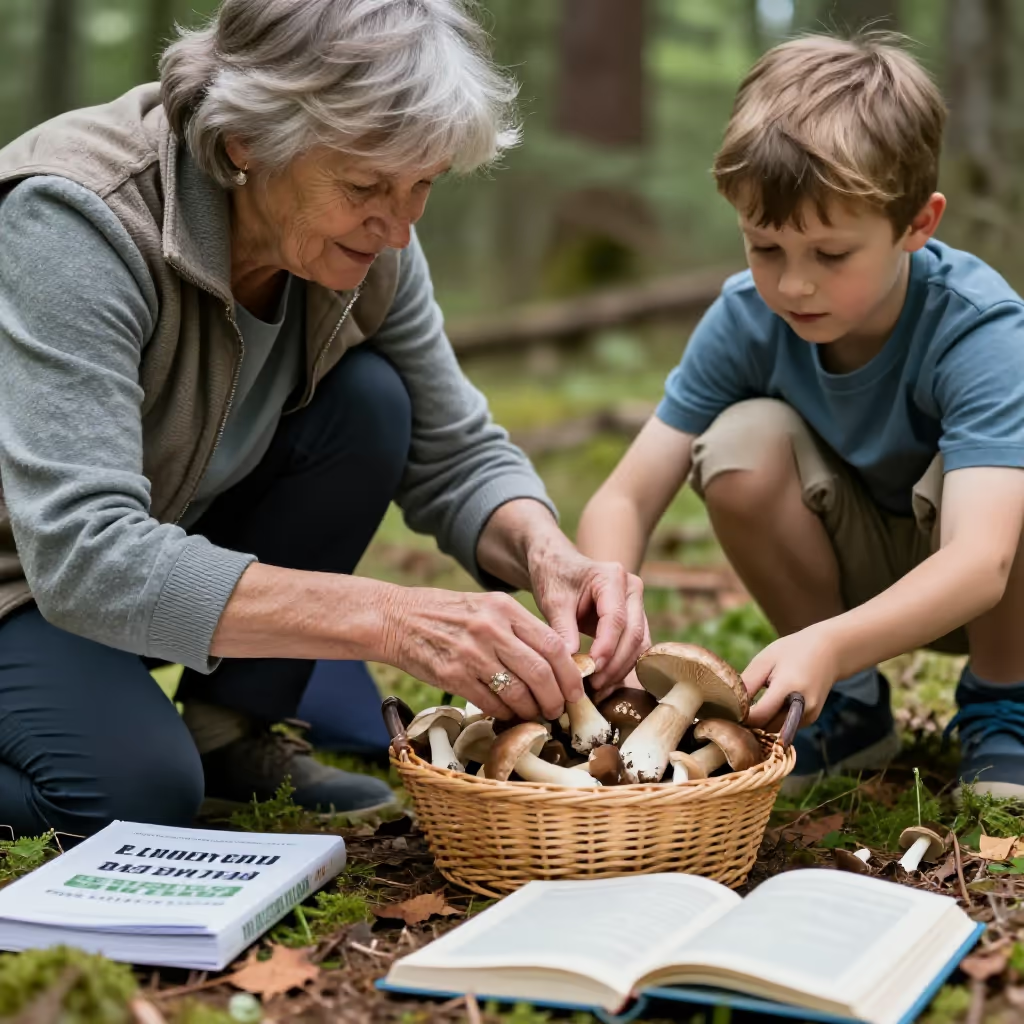
Describes something that can be eaten without becoming ill or being harmed. It is not poisonous and is suitable for human consumption.
example
Nicht alle Pilze im Wald sind essbar, manche sind sogar tödlich.
Not all mushrooms in the forest are edible; some are even deadly.

Usage tips
Word structure
The adjective is formed from the verb 'essen' (to eat) and the ending '-bar' (-able). The ending '-bar' expresses possibility and here means 'can be eaten'.
EXAMPLE
Die Früchte dieses Baumes sind essbar und schmecken süß.
The fruits of this tree are edible and taste sweet.
Typical collocations
'Essbar' (edible) is often used in connection with things from nature. Common combinations are 'essbare Pilze' (edible mushrooms), 'essbare Pflanzen' (edible plants), 'essbare Blüten' (edible flowers), or 'essbare Beeren' (edible berries).
EXAMPLE
Im Garten wachsen viele essbare Kräuter für die Küche.
Many edible herbs for the kitchen grow in the garden.
Common usage
Very often the word is used in its negative form as a warning. A sign saying 'nicht essbar' (not edible) means that something is poisonous or not fit to eat.
EXAMPLE
Achtung, diese Beeren sind für Menschen nicht essbar!
Warning, these berries are not edible for humans!
Compare with
antonym
essbar vs giftig
poisonous / venomous
'giftig' and 'essbar' are opposites especially when talking about plants, mushrooms, or foods. 'giftig' means that something harms the body and can make you ill or be deadly. 'essbar' means that you can eat something without being harmed by it. However, the contrast is not always absolute: some things are not poisonous, but still not suitable for eating. When it comes to food safety, 'essbar' is more precise than just 'nicht giftig' (not poisonous).
essbar
Die Lehrerin zeigt der Klasse, welche Wildkräuter essbar sind.
The teacher shows the class which wild herbs are edible.
giftig
Im Wald sammelt Anna keine unbekannten Pilze, weil einige giftig sind.
In the forest, Anna does not pick unknown mushrooms because some are poisonous.