

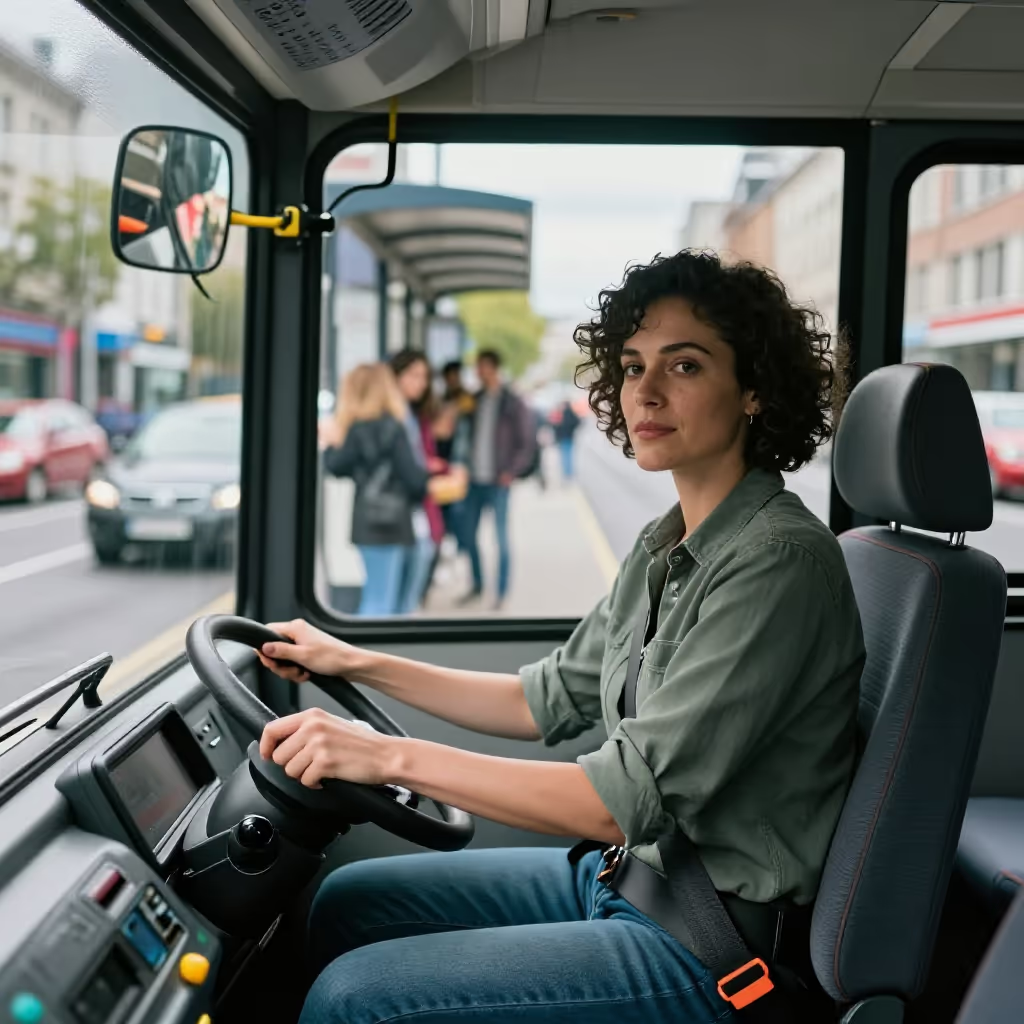
A female person who drives or operates a vehicle such as a car, bus, bicycle, or truck.
example
Die Fahrerin des blauen Wagens hat an der Kreuzung nicht aufgepasst.
The female driver of the blue car wasn't paying attention at the intersection.
Usage tips
Word structure
The word is derived from the verb 'fahren' (to drive/go). The ending '-in' marks the feminine form. The structure is: verb (fahren) → male person (der Fahrer) → female person (die Fahrerin).
EXAMPLE
Die neue Busfahrerin ist sehr freundlich.
The new female bus driver is very friendly.
Sentence structure and usage
To specify which vehicle is being driven, German usually uses the genitive or a 'von' construction. The genitive is somewhat more formal.
EXAMPLE
Die Fahrerin des Taxis kannte eine Abkürzung.
The female taxi driver knew a shortcut.
Typical collocations
'Fahrerin' often becomes part of compound nouns to specify the profession or the type of vehicle. Typical examples are 'Busfahrerin' (female bus driver), 'Taxifahrerin' (female taxi driver), or 'Radfahrerin' (female cyclist).
EXAMPLE
Als LKW-Fahrerin ist sie in ganz Europa unterwegs.
As a female truck driver, she travels all over Europe.
Compare with
near_synonym · confusable
Fahrerin vs Fahrer
driver
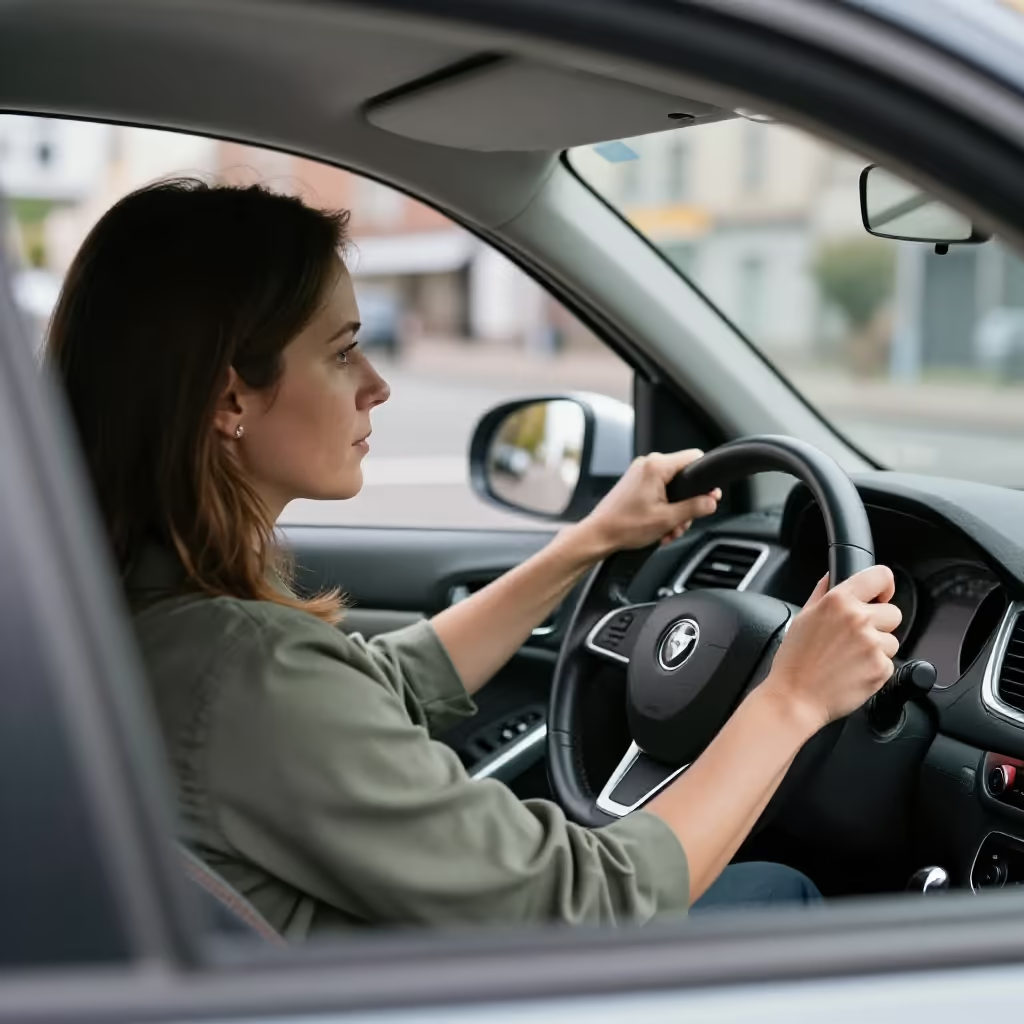
'der Fahrer' and 'die Fahrerin' both refer to a person who operates a vehicle. The most important difference is the gender of the person: 'der Fahrer' is the masculine form, and 'die Fahrerin' is the feminine form. Both can be used for a car, bus, truck, bicycle, or similar vehicles. Learners may confuse the words because the role is the same, but the form depends on the person. If you are talking about a woman, 'die Fahrerin' is more precise and more natural.
Fahrerin
Die Fahrerin fuhr vorsichtig durch den engen Tunnel.
The driver drove carefully through the narrow tunnel.
Fahrer
Der Fahrer hielt den Bus an der nächsten Haltestelle an.