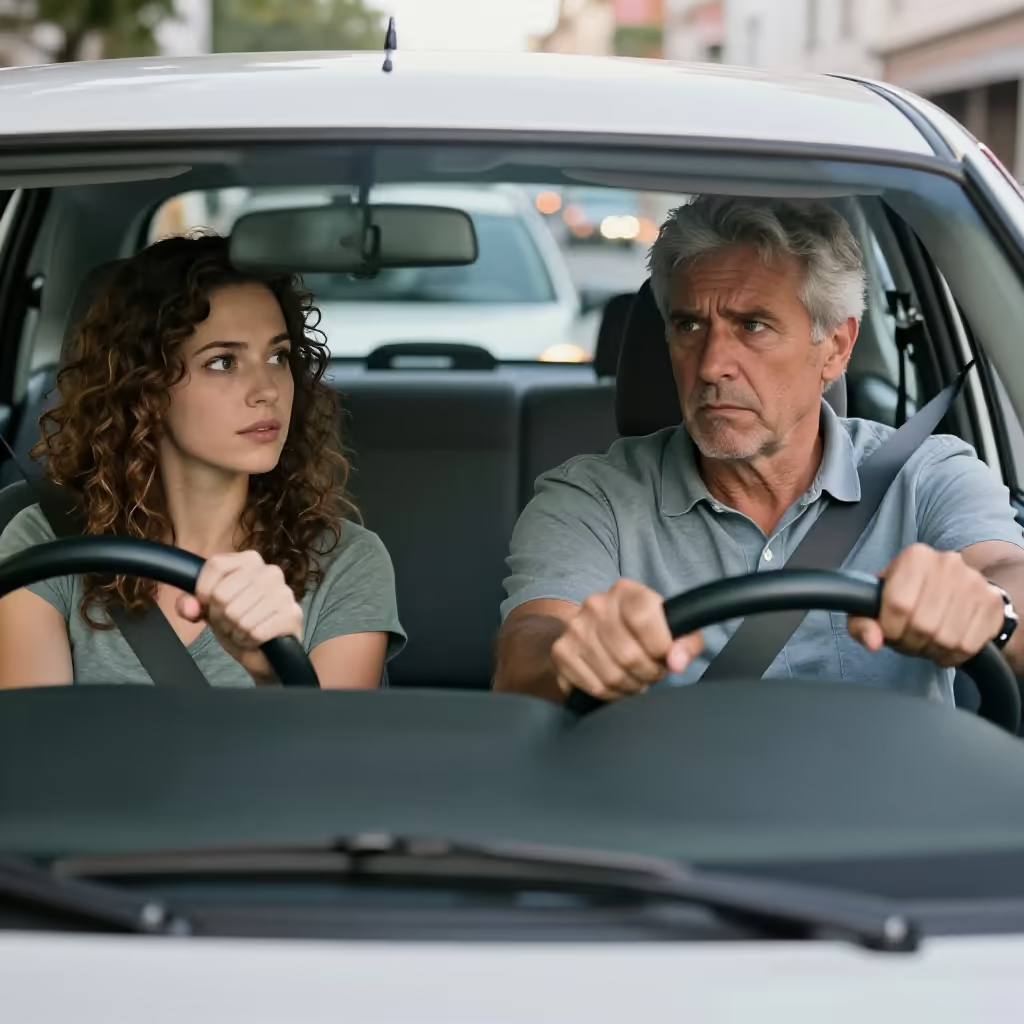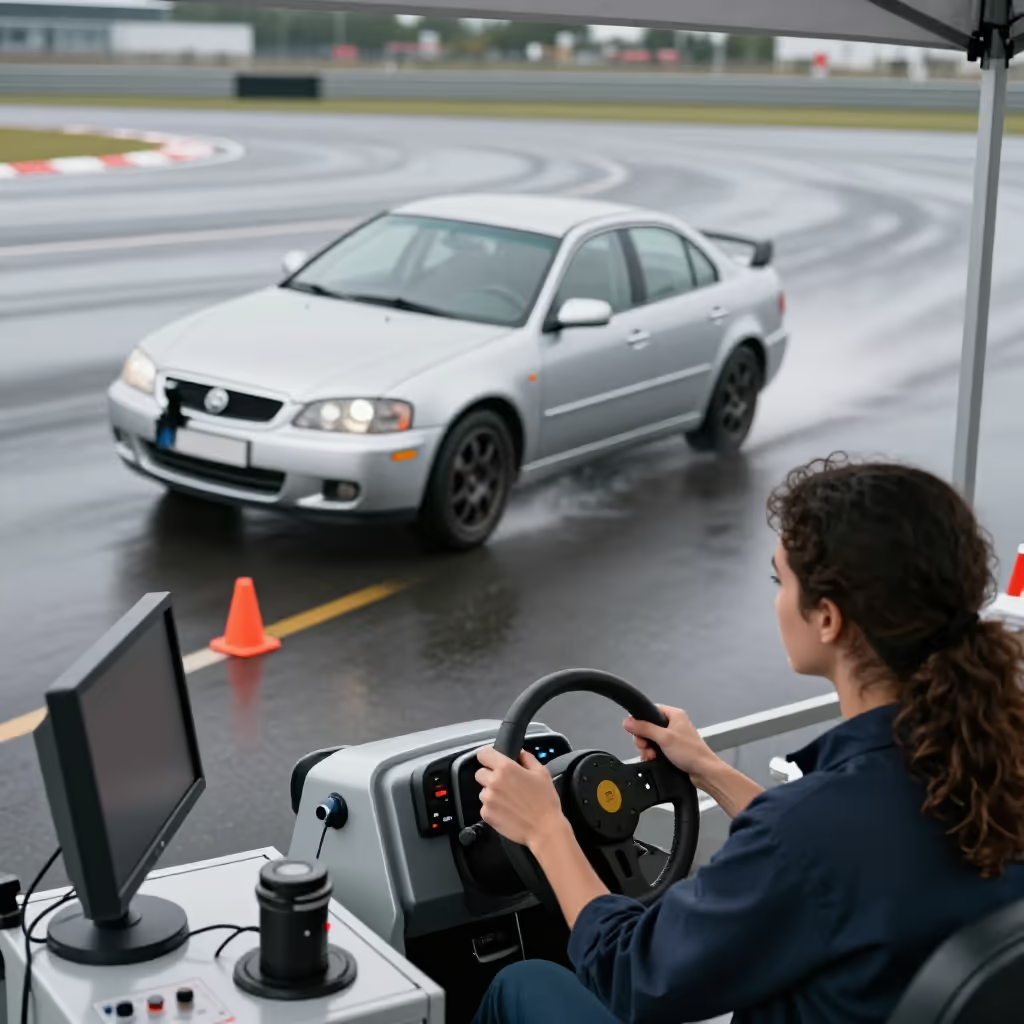
The way a vehicle responds to the driver's controls and to road conditions, especially in terms of stability, steering, and braking.
example
Das neue Sportfahrwerk verbessert das Fahrverhalten des Autos in schnellen Kurven deutlich.
The new sports suspension significantly improves the car's handling in fast corners.
Usage tips
Word composition
The word is made up of 'fahren' (to drive) and 'Verhalten' (behavior). The 's' in the middle is a linking s, which connects the two parts of the word. So it describes behavior while driving.
EXAMPLE
Ein gutes Fahrverhalten des Autos sorgt für mehr Sicherheit.
Good handling of the car provides greater safety.
Context clue
The meaning of the word depends on the context. If people are talking about technical aspects such as stability or cornering, the vehicle is meant. If they are talking about actions such as recklessness or caution, the driver is meant.
EXAMPLE
Das Fahrverhalten des Wagens ist bei Nässe sehr instabil.
The car's handling is very unstable on wet roads.
Typical adjectives (vehicle)
When referring to the vehicle, 'Fahrverhalten' (handling) is often described with technical adjectives such as 'stabil' (stable), 'sicher' (safe), 'dynamisch' (dynamic), 'sportlich' (sporty), or 'komfortabel' (comfortable).
EXAMPLE
Trotz seiner Größe hat der SUV ein überraschend agiles Fahrverhalten.
Despite its size, the SUV has surprisingly agile handling.
Typical adjectives (driver)
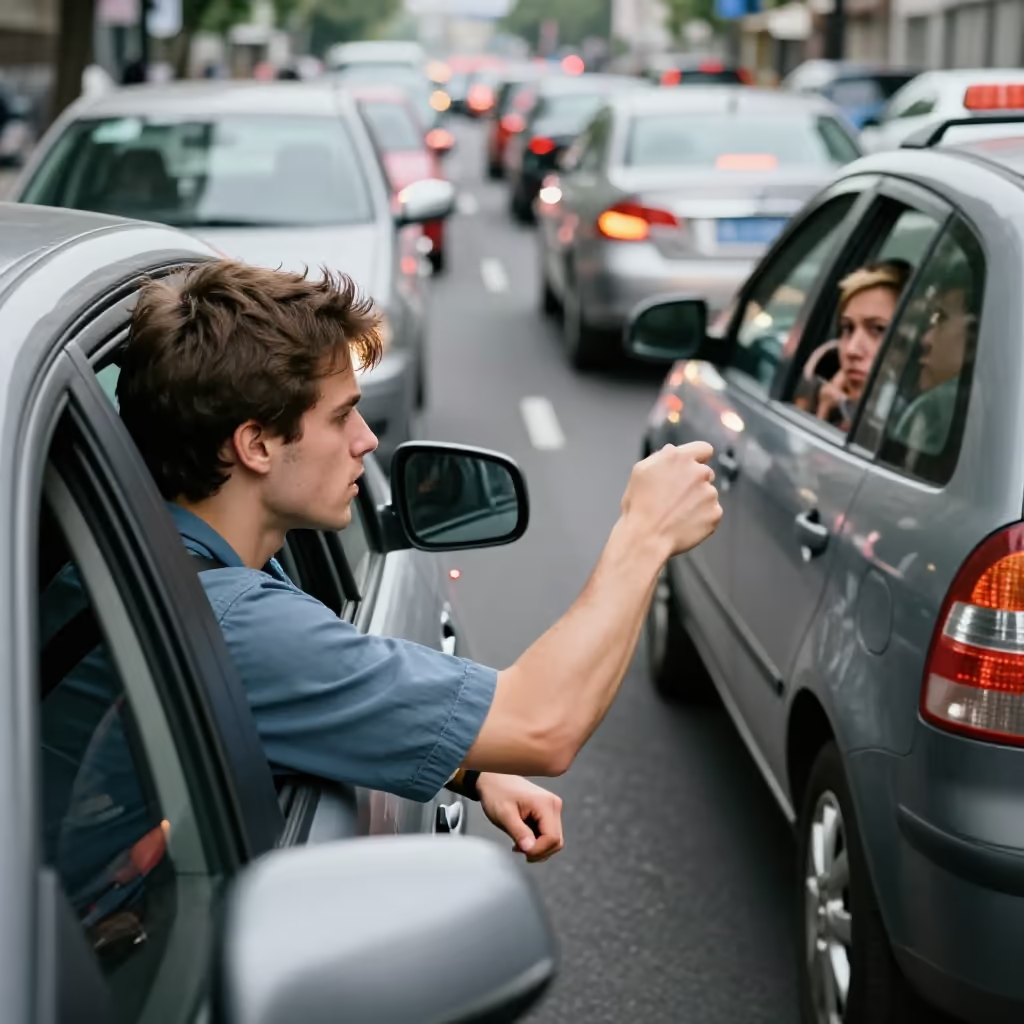
When referring to the driver, adjectives such as 'rücksichtslos' (reckless), 'aggressiv' (aggressive), 'vorsichtig' (careful), 'defensiv' (defensive), or 'vorausschauend' (anticipatory) describe the driving behavior.
EXAMPLE
Ein vorausschauendes Fahrverhalten kann Unfälle verhindern.
Anticipatory driving behavior can prevent accidents.
Compare with
near_synonym · confusable
Fahrverhalten vs Fahrweise
driving style
'Fahrweise' and 'Fahrverhalten' can both describe how someone drives a vehicle. 'Fahrweise' usually means a driver's personal driving style, for example cautious, fast, or aggressive. 'Fahrverhalten' can also mean the person's behavior in traffic, but it is very often used for the vehicle itself: how it steers, brakes, or handles on the road. Learners may confuse the words because both have to do with driving. As a simple guide: for the person, 'Fahrweise' often fits; for the car itself, 'Fahrverhalten' is more likely.
Fahrverhalten
Nach dem Reifenwechsel ist das Fahrverhalten des Autos viel ruhiger.
After the tire change, the car's handling is much smoother.
Fahrweise
Wegen seiner riskanten Fahrweise fühlen sich die anderen im Auto unsicher.
Because of his risky driving style, the others in the car feel unsafe.