

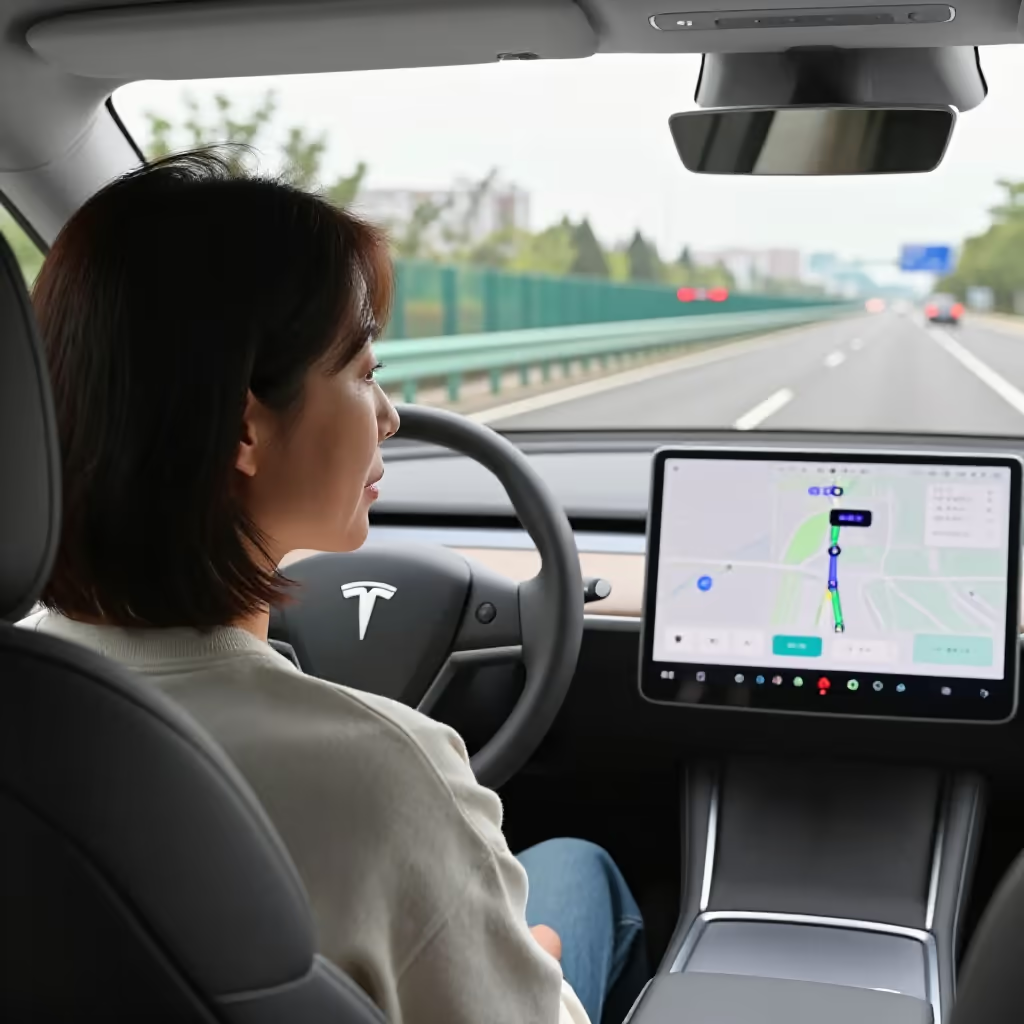
die Fahrzeit
travel time
The amount of time needed for a trip by vehicle from one place to another.
EXAMPLE
Wegen des Staus verlängerte sich die Fahrzeit um eine ganze Stunde.
Because of the traffic jam, the travel time increased by a whole hour.
travel time
Loading your saved state.
travel time
The amount of time needed for a trip by vehicle from one place to another.
Wegen des Staus verlängerte sich die Fahrzeit um eine ganze Stunde.
Because of the traffic jam, the travel time increased by a whole hour.
'Fahrzeit' is made up of the stem of the verb 'fahren' (to drive/travel) (Fahr-) and the noun 'Zeit' (time). So it literally describes the time needed for a trip.
Die reine Fahrzeit ohne Pausen beträgt etwa vier Stunden.
The pure travel time without breaks is about four hours.
The pattern '[activity] + -zeit' is very productive in German. Other examples are 'die Arbeitszeit' (working hours), 'die Lernzeit' (study time), or 'die Schlafenszeit' (bedtime). If you know this pattern, you can understand many words.
Meine Arbeitszeit beginnt um 8 Uhr morgens.
My working hours begin at 8 in the morning.
To talk about duration, the verb 'betragen' (to amount to/be) is often used. To describe a change, you use 'sich verlängern' (to become longer/increase) or 'sich verkürzen' (to become shorter/decrease).
Die Fahrzeit zum Flughafen beträgt normalerweise 30 Minuten.
The travel time to the airport is normally 30 minutes.
travel time / travel season
“Fahrzeit” refers to the duration of the actual trip in a vehicle. “Reisezeit” is a more general term for the duration of the entire journey and can therefore also include transfers or waiting times. Without such additional parts, the two time periods can be the same.
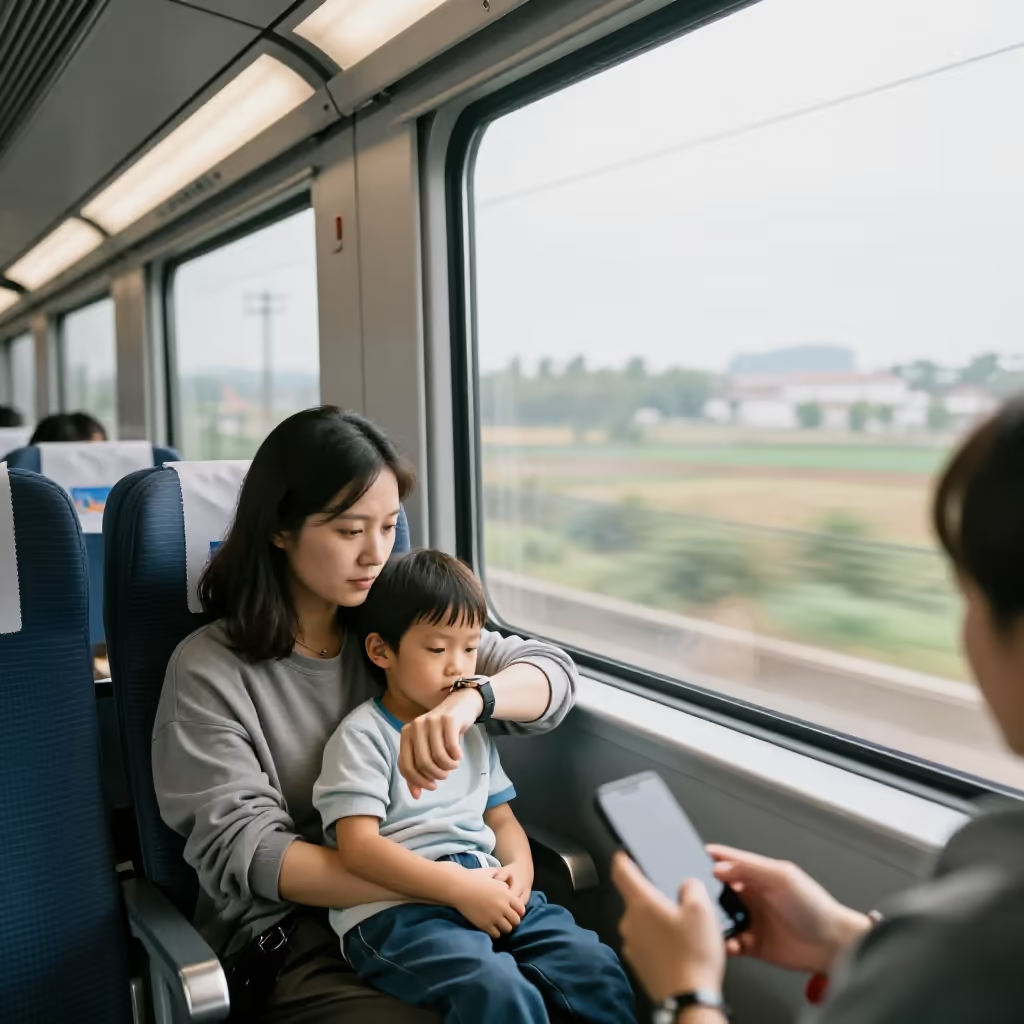
Die Fahrzeit im Zug von Köln nach Berlin beträgt vier Stunden.
The travel time by train from Cologne to Berlin is four hours.
Mit Umstieg und Wartezeit beträgt die Reisezeit von Köln nach Berlin fünf Stunden.
Including the transfer and waiting time, the journey from Cologne to Berlin takes five hours.