

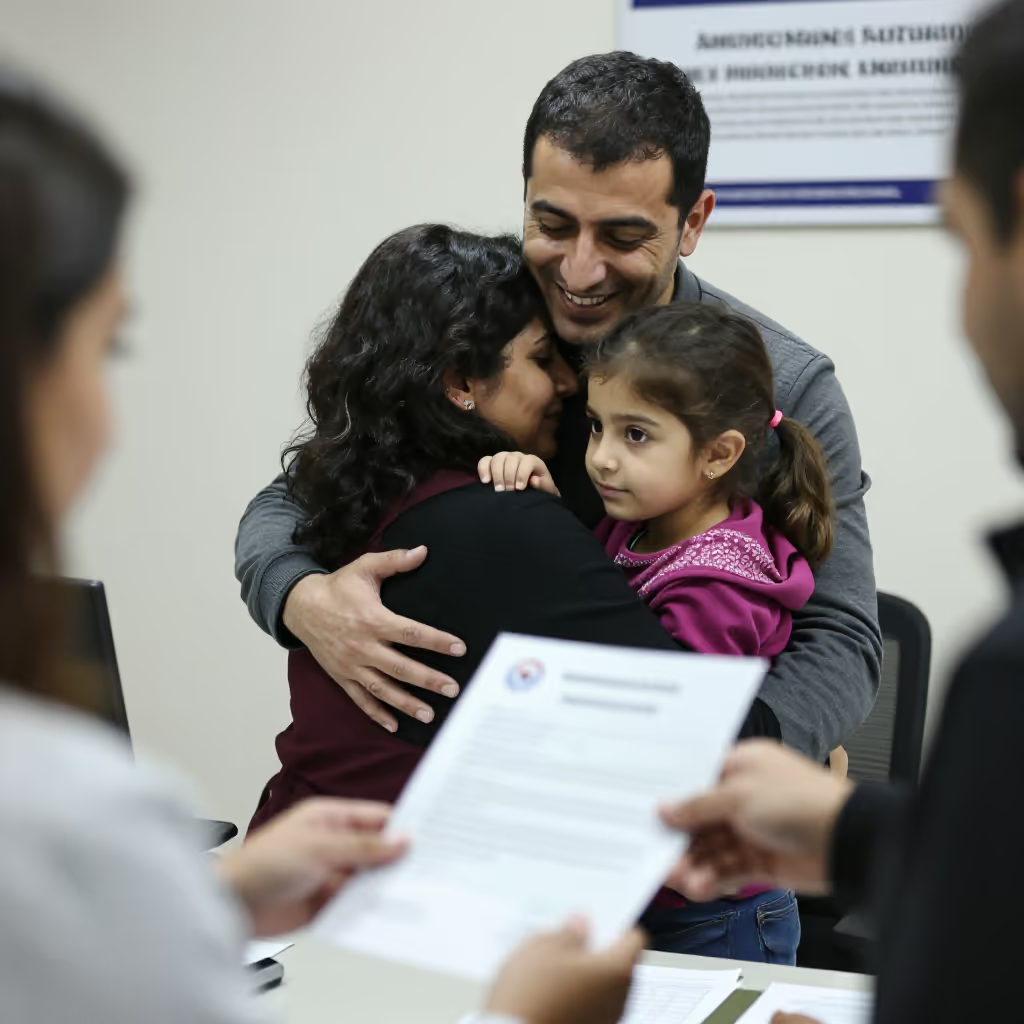
The legal process by which family members (e.g., spouse, children) of a person living in a country are allowed to move to that country in order to live together with them.
example
Nachdem er die Arbeitserlaubnis erhalten hatte, beantragte er den Familiennachzug für seine Frau und seine beiden Kinder.
After he had received the work permit, he applied for family reunification for his wife and his two children.
Usage tips
Word composition
The word is made up of three parts: 'Familie' (family), the linking element '-n-', and 'Nachzug'. 'Nachzug' itself consists of 'nach' (after/behind) and 'Zug' (from 'ziehen' — to pull/move), so it literally means the family's 'moving after' someone.
EXAMPLE
Der Familiennachzug ist ein wichtiger Bestandteil des Einwanderungsrechts.
Family reunification is an important part of immigration law.
Typical collocations
Since this is a legal process, the word is often combined with verbs from the administrative sphere. Typical phrases are: 'den Familiennachzug beantragen' (to apply for family reunification), 'genehmigen' (to approve), or 'ablehnen' (to reject).
EXAMPLE
Die Behörde hat den Familiennachzug genehmigt.
The authority approved the family reunification.
Register and context
This word belongs primarily to administrative and legal language. It is used less often in everyday conversation, unless people are specifically talking about immigration or legal procedures.
EXAMPLE
Im Gesetz sind die Voraussetzungen für den Familiennachzug genau geregelt.
The requirements for family reunification are precisely regulated in the law.