

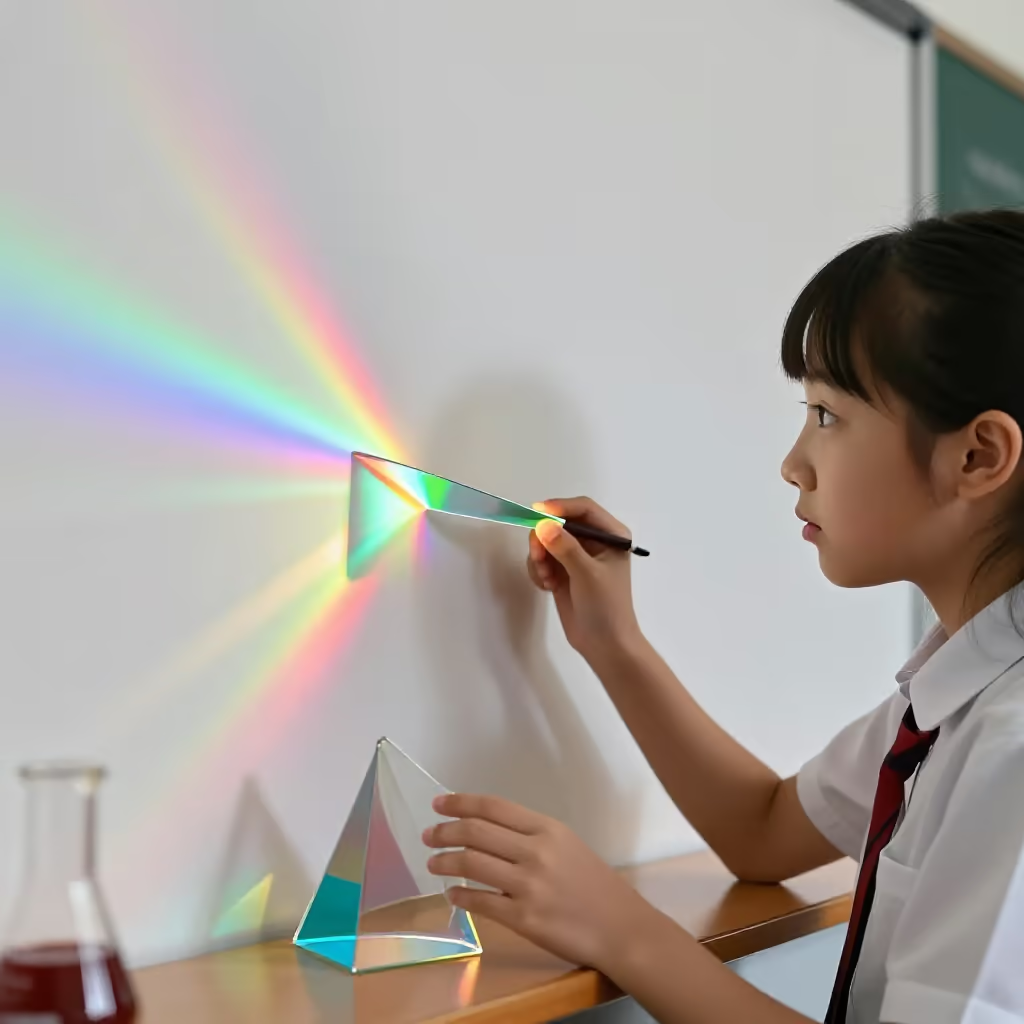
die Farbe
color
The property of light that arises from different wavelengths and is perceived by the eye, such as red, blue, or green.
EXAMPLE
Meine Lieblingsfarbe ist Blau.
My favorite color is blue.
color / paint
Loading your saved state.
color
The property of light that arises from different wavelengths and is perceived by the eye, such as red, blue, or green.
Meine Lieblingsfarbe ist Blau.
My favorite color is blue.

paint
A liquid or paste-like substance applied to a surface in order to color or protect it.
Wir brauchen noch einen Eimer weiße Farbe für die Wand.
We still need a bucket of white paint for the wall.
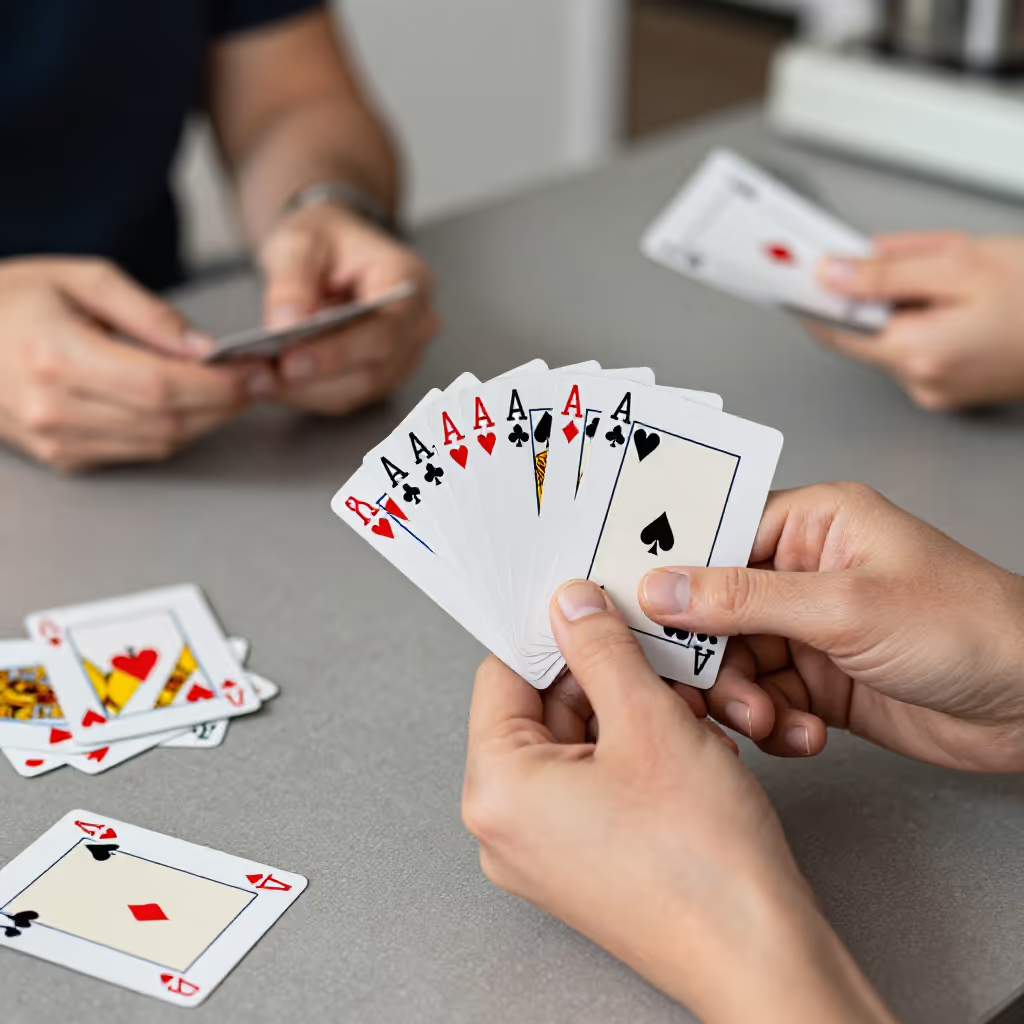
suit
In a card game, one of the groups into which cards are divided, such as hearts, diamonds, spades, or clubs.
Beim Skat ist Trumpf eine bestimmte Farbe oder die Buben.
In Skat, trump is a particular suit or the jacks.
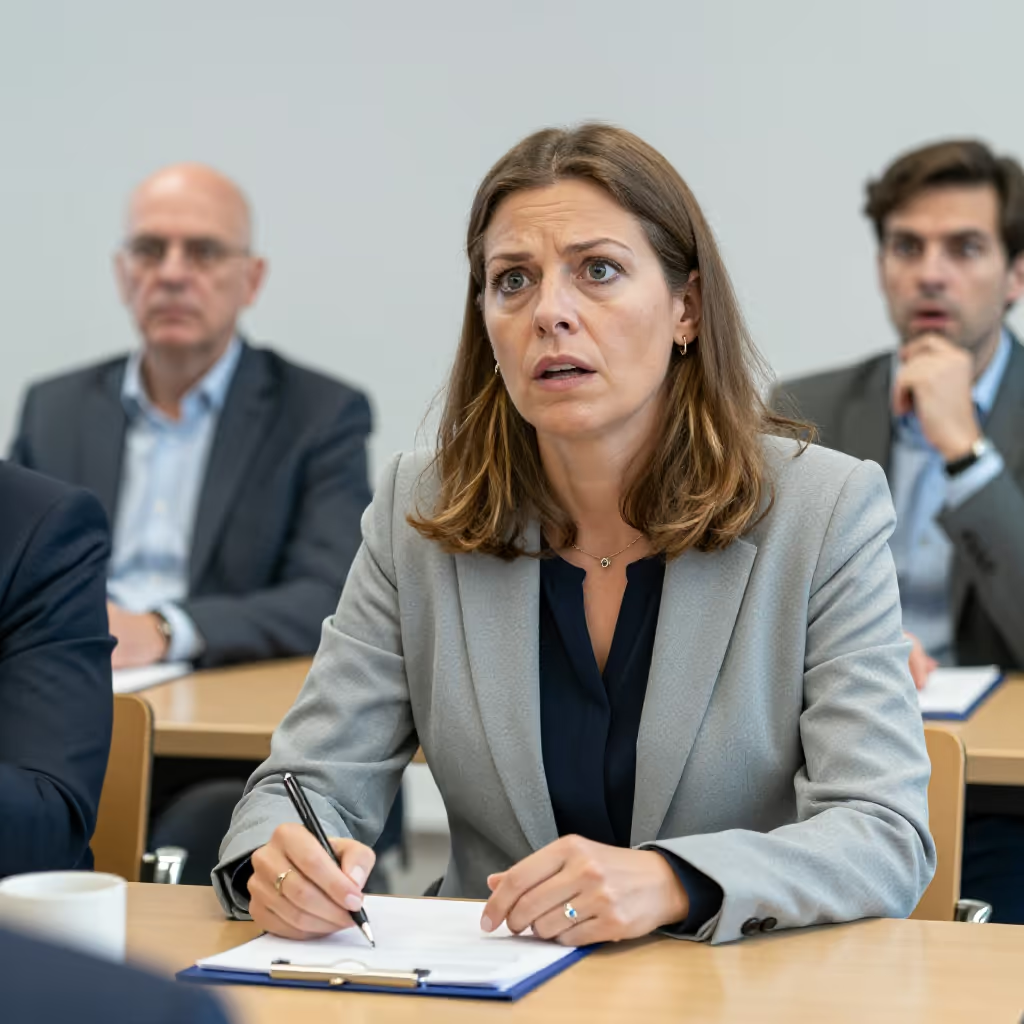
to show one's true colors
To openly show one's true opinion or intention after previously hiding it.
Nach langem Zögern musste der Politiker in der Debatte endlich Farbe bekennen.
After much hesitation, the politician finally had to show his true colors in the debate.
Pay attention to the context to distinguish between the shade of color (e.g., red) and the substance used for painting. Verbs like 'mögen' (to like) or 'haben' (to have) point to the color, while 'streichen' (to paint) or 'kaufen' (to buy) refer to the substance.
Das Auto hat eine sehr schöne Farbe.
The car has a very beautiful color.
When referring to the shade of color, 'Farbe' (color) is often described with adjectives such as 'hell' (light), 'dunkel' (dark), 'kräftig' (strong/vivid), 'leuchtend' (bright), or 'bunt' (colorful).
Der Himmel hatte heute Morgen eine leuchtende Farbe.
The sky had a bright color this morning.
When the substance used for painting is meant, typical combinations are 'Farbe auftragen' (to apply paint), 'Farbe trocknet' (paint dries), or quantity expressions such as 'ein Eimer Farbe' (a bucket of paint) or 'eine Tube Farbe' (a tube of paint).
Lass die Farbe gut trocknen, bevor du das Bild anfasst.
Let the paint dry well before you touch the picture.
The meaning 'Kartensymbol' (card suit), e.g., hearts or diamonds, is used exclusively in the context of card games. Signal words are 'Karte' (card), 'Trumpf' (trump), 'Spiel' (game), or 'stechen' (to take a trick).
Bei diesem Spiel musst du immer die gleiche Farbe bedienen.
In this game, you must always follow suit.
'Farbe bekennen' (to show one's true colors) is a fixed idiom. It means to show one's true opinion or position. The expression is used as a whole.
In der Diskussion musste der Minister endlich Farbe bekennen und seine Pläne offenlegen.
In the discussion, the minister finally had to show his true colors and reveal his plans.
lacquer / varnish
Farbe is the general term for the substance used to color or protect a surface. Lack is a more specific coating that usually forms a smooth and often shiny protective layer. Use Farbe for painting in general and Lack for this kind of special protective or glossy coating.
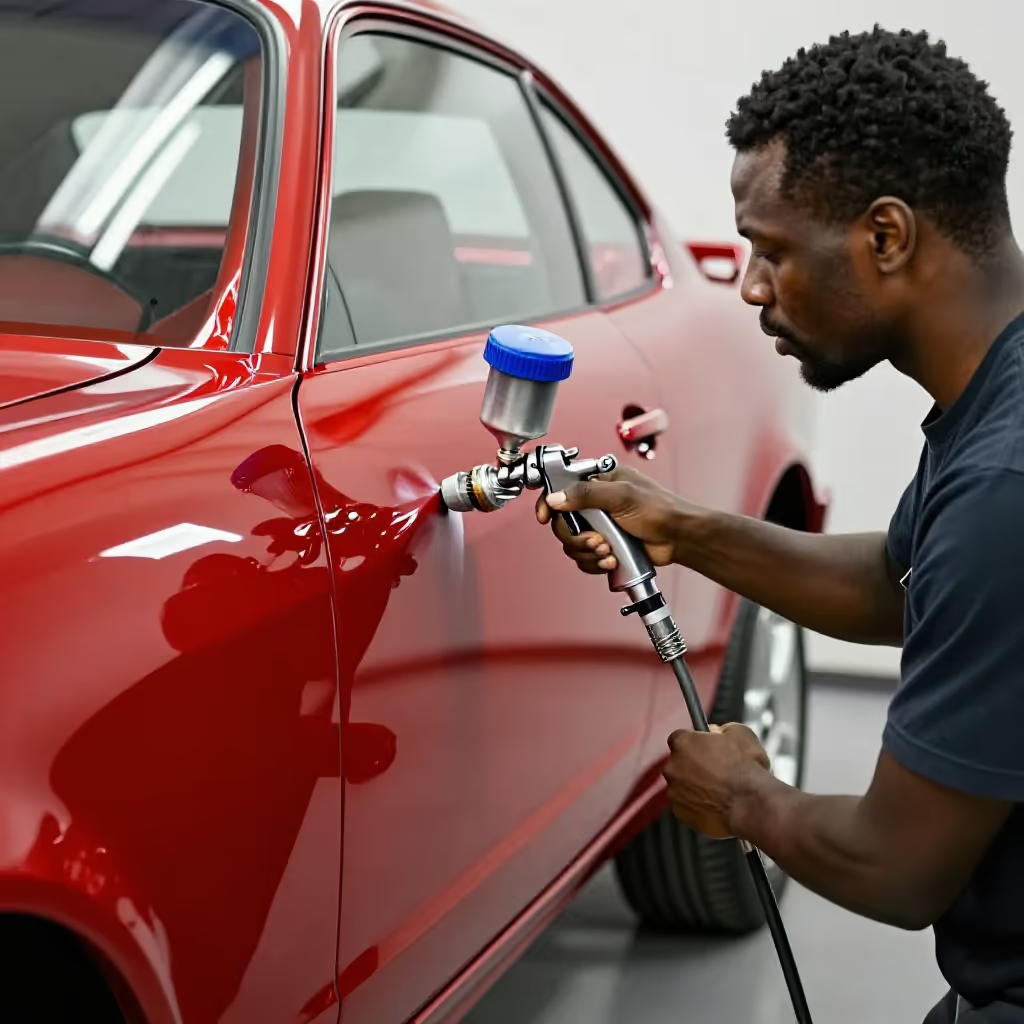
Für die Wand im Kinderzimmer kauft Anna eine grüne Farbe.
Anna buys green paint for the wall in the children's room.
Für den Holztisch kauft Anna einen klaren Lack mit glänzender Oberfläche.
Anna buys clear varnish with a glossy finish for the wooden table.