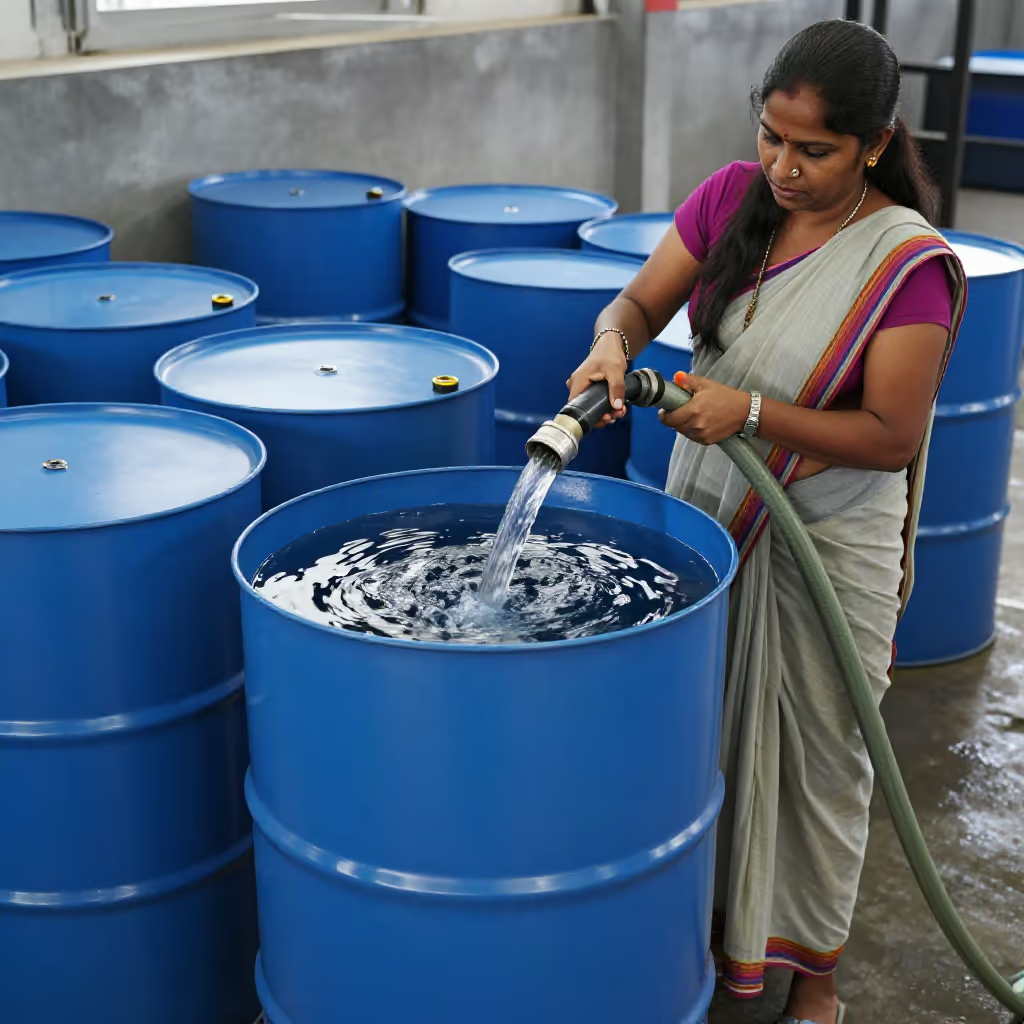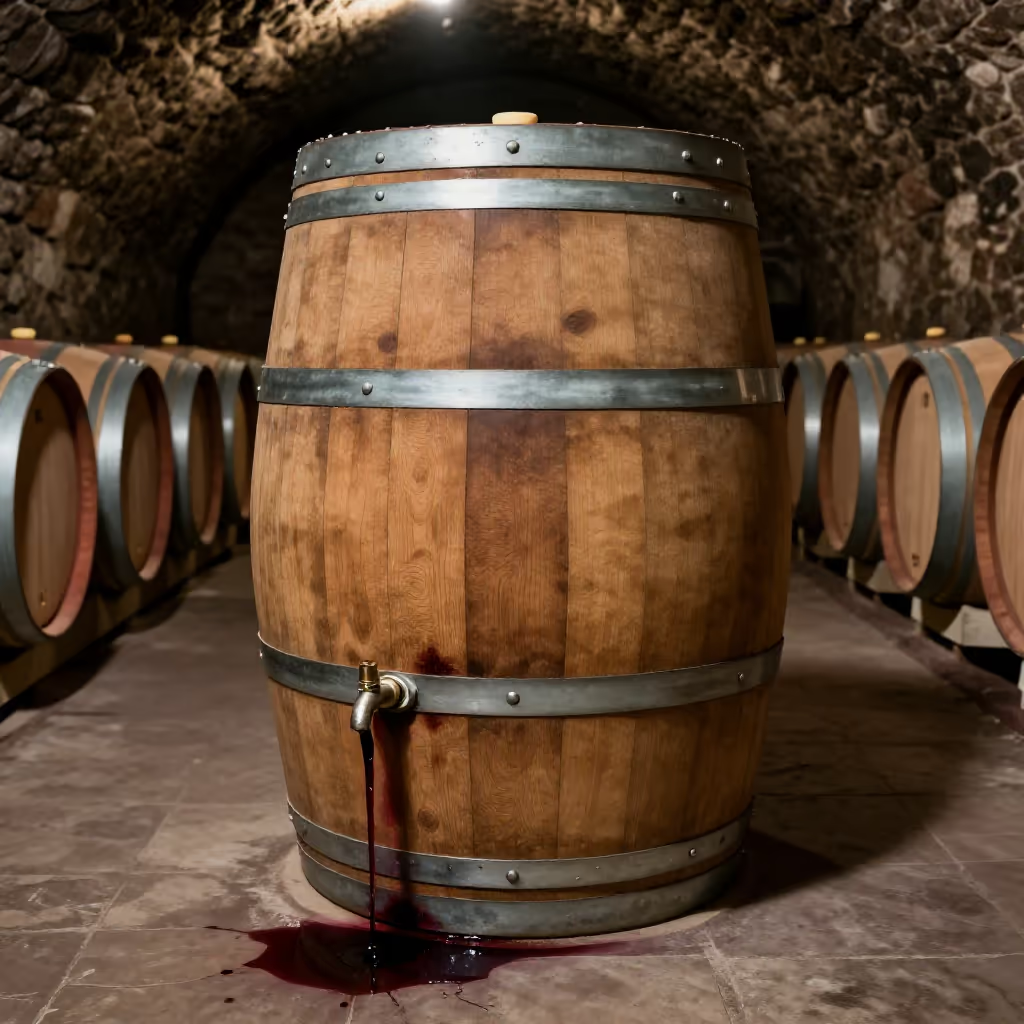
das Fass
barrel
A large, bulging container, usually made of wood or metal, used for storing liquids such as wine, beer, or oil.
Der Winzer lagert seinen besten Rotwein in Eichenfässern.
The winemaker stores his best red wine in oak barrels.


barrel
Loading your saved state.
barrel
A large, bulging container, usually made of wood or metal, used for storing liquids such as wine, beer, or oil.
Der Winzer lagert seinen besten Rotwein in Eichenfässern.
The winemaker stores his best red wine in oak barrels.

'Das Fass' (the barrel) is a good example of a word that is often used in fixed idioms. In these expressions, it does not have the literal meaning of a container, but symbolically represents a situation or a limit of patience.
Wegen dieser Kleinigkeit musst du nicht gleich ein Fass aufmachen.
You don't need to make a fuss over this little thing.
For the literal barrel, the prepositions 'in' and 'aus' are important. You store something 'in einem Fass' (in a barrel; dative) or fill something 'in ein Fass' (into a barrel; accusative). You take something 'aus einem Fass' (out of a barrel; dative).
Der Whiskey reift zehn Jahre in einem alten Holzfass.
The whiskey matures for ten years in an old wooden barrel.
In its literal meaning, 'Fass' (barrel) is often combined with liquids that are stored in it. Typical examples are 'ein Fass Bier' (a barrel of beer), 'ein Fass Wein' (a barrel of wine), or 'ein Fass Öl' (a barrel of oil).
Für die Party haben wir ein ganzes Fass Bier bestellt.
We ordered a whole barrel of beer for the party.
The idiom 'das Fass zum Überlaufen bringen' (to be the final straw / to make the barrel overflow) has a fixed structure. The last drop, meaning the trigger, is the subject of the sentence. The person whose patience has run out is often not mentioned directly.
Seine unhöfliche Antwort war der Tropfen, der das Fass zum Überlaufen brachte.
His rude answer was the last straw that made the barrel overflow.
In the expression 'ein Fass aufmachen' (to make a fuss), the person who reacts in an exaggerated way is the subject. You can also say 'weswegen' or 'wegen einer Sache' to indicate what a fuss is being made about. The expression is often negated or phrased as a question.
Nur weil der Zug fünf Minuten Verspätung hat, brauchen wir kein Fass aufzumachen.
Just because the train is five minutes late, we don't need to make a fuss.
The expression 'ein Fass ohne Boden' (a bottomless pit) is used to describe a project or task. That project is then the subject of the sentence, often in combination with verbs like 'sein' (to be) or 'sich erweisen als' (to turn out to be).
Die Renovierung des alten Hauses ist ein Fass ohne Boden.
The renovation of the old house is a bottomless pit.
bin / ton
'die Tonne' and 'das Fass' can both be large containers. The difference is in their typical use: a 'Tonne' is often a bin for waste or a simple large container made of plastic or metal. A 'Fass' is usually rounded or bulging and is used especially for liquids such as wine, beer, or oil. The words can be confused because both can be round and large. For waste, you almost always say 'Tonne'; for stored drinks or oil, 'Fass' sounds more natural.

Im Keller lagert ein großes Fass mit altem Wein.
A large barrel of old wine is stored in the cellar.
Nach dem Aufräumen stellt Paul die volle Tonne an die Straße.
After tidying up, Paul puts the full bin out by the street.