


die Faust
fist
The closed hand, with the fingers clenched tightly into the palm.
EXAMPLE
Aus Wut schlug er mit der Faust auf den Tisch.
Out of anger, he hit the table with his fist.
fist
Loading your saved state.
fist
The closed hand, with the fingers clenched tightly into the palm.
Aus Wut schlug er mit der Faust auf den Tisch.
Out of anger, he hit the table with his fist.

on one's own
To do something independently, without instructions or help from others.
Da niemand mitkommen wollte, erkundete sie die Stadt auf eigene Faust.
Since no one wanted to come along, she explored the city on her own.
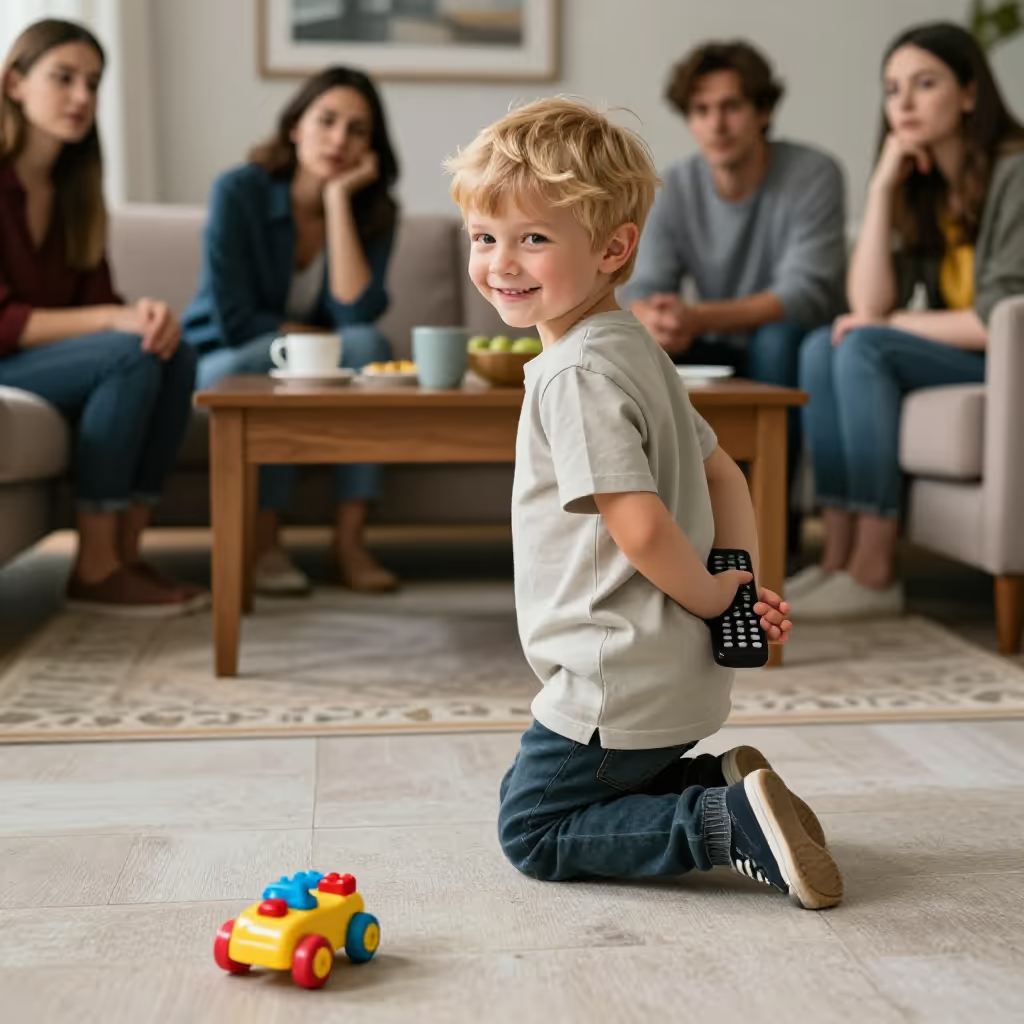
to be crafty
To be very clever, cunning, or sly, even though one may appear harmless.
Der Junge sieht zwar unschuldig aus, aber er hat es faustdick hinter den Ohren.
The boy may look innocent, but he's craftier than he looks.
In its literal meaning, 'Faust' (fist) is often combined with certain verbs. Common expressions are 'die Faust ballen' (to clench one's fist), 'mit der Faust drohen' (to threaten with one's fist), or 'eine Faust machen' (to make a fist).
Vor dem Kampf ballte der Boxer die Fäuste.
Before the fight, the boxer clenched his fists.
The expression 'auf eigene Faust' (on one's own) is very common and means that someone does something independently and without help or instructions. The expression is grammatically fixed and is not changed.
Er beschloss, das Problem auf eigene Faust zu lösen.
He decided to solve the problem on his own.
The expression 'es faustdick hinter den Ohren haben' describes a person who is very clever or cunning. The 'es' is a fixed part of the expression.
Lass dich von ihrem Lächeln nicht täuschen, sie hat es faustdick hinter den Ohren.
Don't be fooled by her smile; she's craftier than she looks.