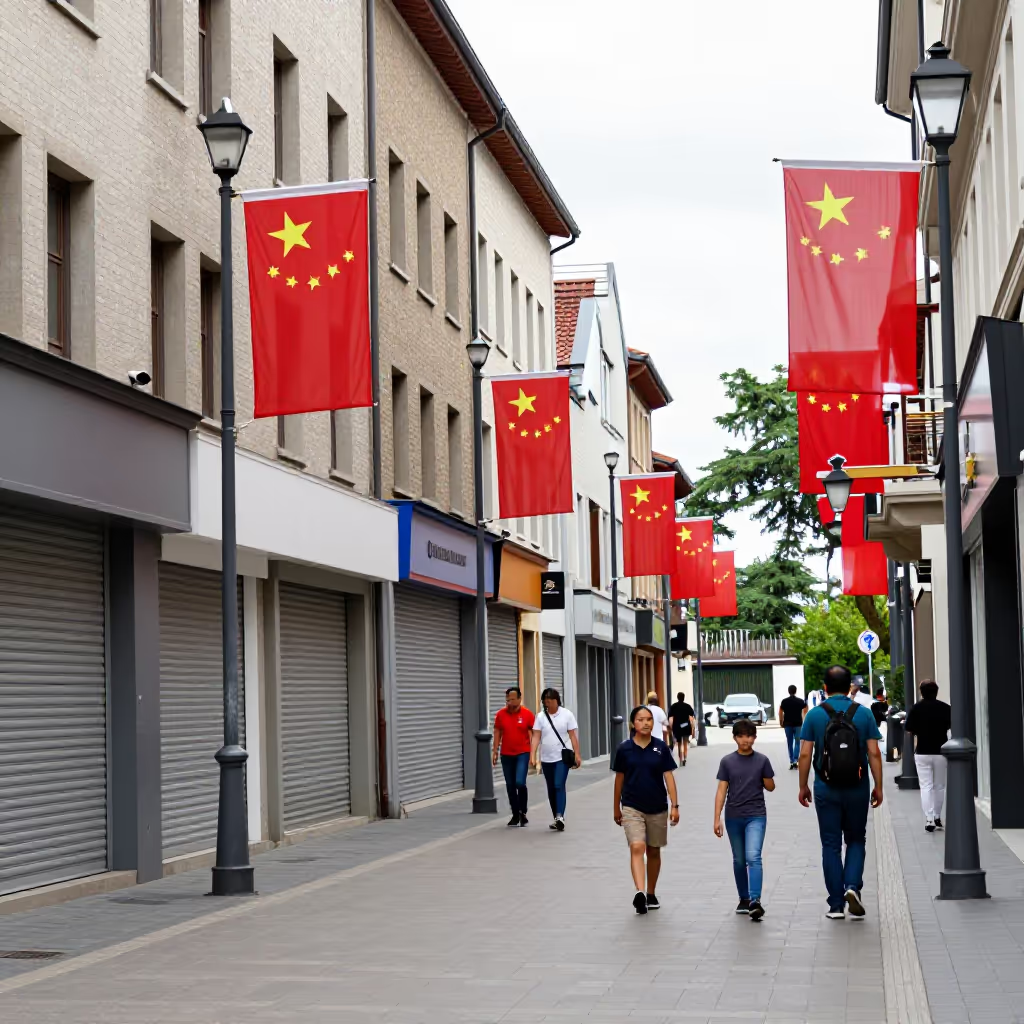
A legally designated day on which people generally do not work because of a religious, national, or cultural occasion.
example
Weihnachten ist ein christlicher Feiertag, an dem die meisten Geschäfte geschlossen sind.
Christmas is a Christian holiday on which most shops are closed.
Usage tips
Compound word
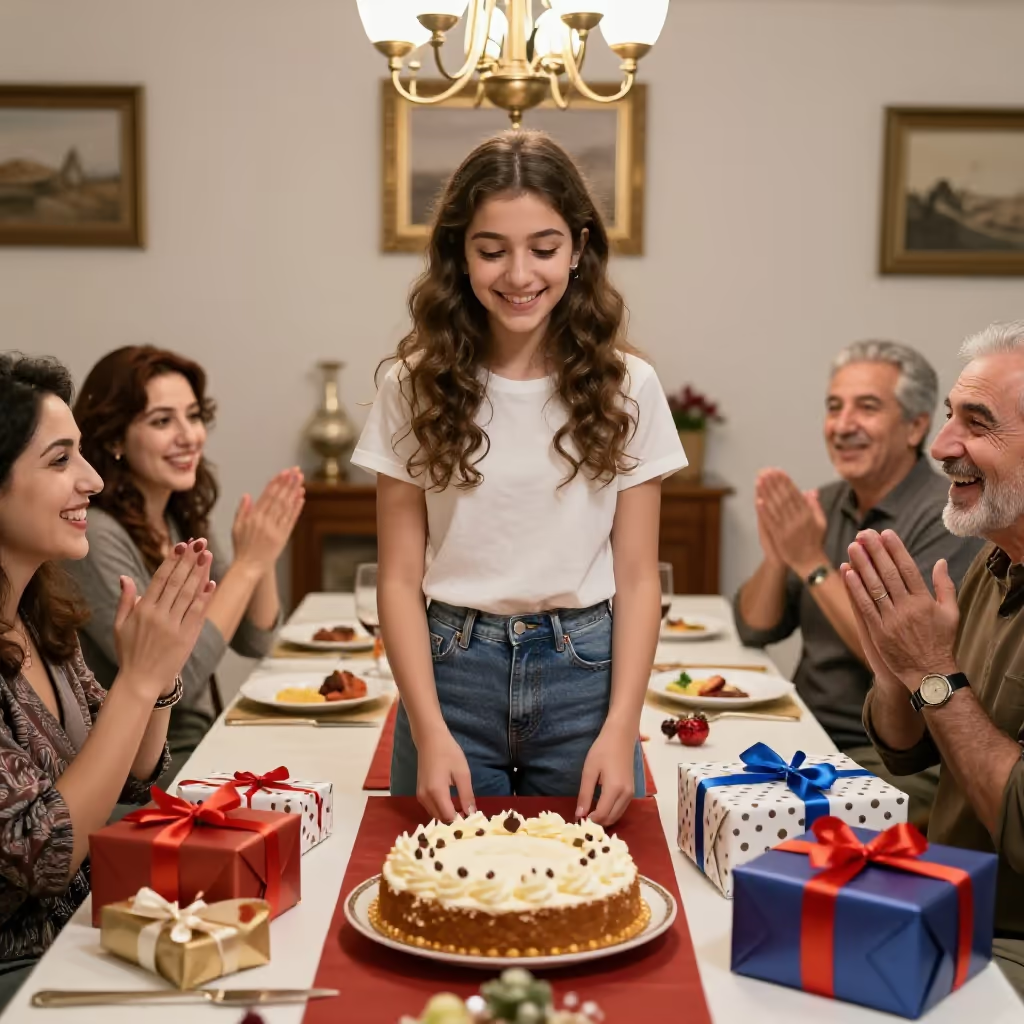
'Der Feiertag' (holiday) is a compound noun made up of 'feiern' (to celebrate), or 'die Feier' (celebration), and 'der Tag' (day). So literally, it is a day on which people celebrate.
EXAMPLE
Der 3. Oktober ist in Deutschland ein nationaler Feiertag.
October 3rd is a national holiday in Germany.
Cultural context
On public holidays in Germany, Austria, and Switzerland, most shops are closed and most people do not have to work. It is important to take this into account when planning shopping or appointments.
EXAMPLE
Morgen ist Feiertag, also müssen wir heute noch einkaufen gehen.
Tomorrow is a holiday, so we still have to go shopping today.
Correct preposition
To express that something takes place on this day, you use the preposition 'an' (on). In spoken language, this is often shortened to 'am' (an dem).
EXAMPLE
An Feiertagen schlafe ich gerne lange.
On holidays, I like to sleep in.
Typical collocations
Common adjectives that describe holidays more precisely are 'gesetzlich' (statutory/public), 'kirchlich' (church/religious), or 'national' (national). These words clarify the type and origin of the holiday.
EXAMPLE
Ostern ist ein wichtiger kirchlicher Feiertag.
Easter is an important church holiday.
Context clue
The figurative meaning of a personal day of joy is often signaled by words like 'echt' (real), 'persönlich' (personal), or 'für mich' (for me). The context makes it clear that it is not about an official holiday.
EXAMPLE
Als mein Buch veröffentlicht wurde, war das ein echter Feiertag für mich.
When my book was published, that was a real holiday for me.
Compare with
confusable
Feiertag vs Sonntag
Sunday
'der Sonntag' and 'der Feiertag' can both be days off, so they are easy to confuse. However, 'der Sonntag' is always a specific day of the week: the day after Saturday. 'der Feiertag' is a special day because of a religious, national, cultural, or personal occasion. A public holiday can fall on a Sunday, but it does not have to. If you mean the day of the week, 'Sonntag' is correct. If you mean the special occasion or the official day off, 'Feiertag' fits better.
Feiertag
Morgen ist ein Feiertag, deshalb haben viele Geschäfte geschlossen.
Tomorrow is a public holiday, so many shops are closed.
Sonntag
Am Sonntag bleibt Frau Schmidt zu Hause und liest ein Buch.
On Sunday, Ms. Schmidt stays at home and reads a book.