

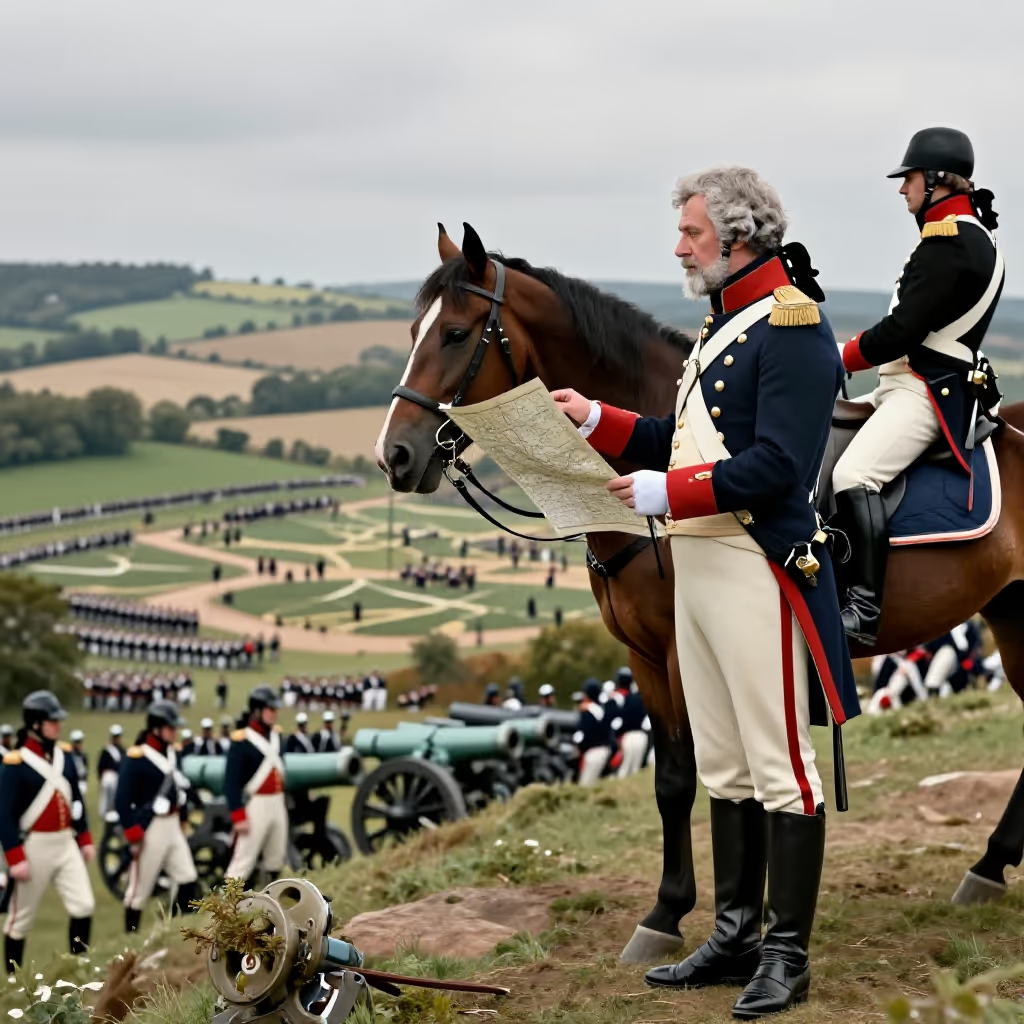
The supreme commander of an army or military formation in war who leads the troops directly in the field. Today, the term is used mainly in historical contexts.
example
Napoleon gilt als einer der größten Feldherren der Geschichte.
Napoleon is considered one of the greatest military commanders in history.
Usage tips
Compound word
The word is made up of 'Feld' (field) and 'Herr' (lord/master). Here, 'Feld' refers to the battlefield and 'Herr' to the ruler or leader. A Feldherr (military commander) is therefore literally the 'lord of the battlefield'.
EXAMPLE
Schon in jungen Jahren bewies er sein Talent als Feldherr.
Even at a young age, he proved his talent as a military commander.
Historical term
This term is used almost exclusively for military leaders in historical contexts, for example in antiquity or in the Napoleonic Wars. For modern generals, the word is unusual.
EXAMPLE
Hannibal war ein berühmter karthagischer Feldherr.
Hannibal was a famous Carthaginian military commander.
Typical collocations
'Feldherr' is often combined with adjectives that describe his abilities, such as 'ein genialer Feldherr' (a brilliant military commander), 'ein großer Feldherr' (a great military commander), or 'ein strategischer Feldherr' (a strategic military commander).
EXAMPLE
Man nannte ihn einen brillanten, aber auch rücksichtslosen Feldherrn.
They called him a brilliant but also ruthless military commander.
Compare with
near_synonym · confusable
Feldherr vs General
general
'der General' and 'der Feldherr' can both refer to a military leader. 'General' is mainly a rank: a person is a general in the army or air force. 'Feldherr' places more emphasis on the role in war: this person leads an army or large groups of troops in the field. Today, the word 'Feldherr' usually sounds historical or formal. The words can be confused because a 'Feldherr' is often also a high-ranking officer. If you mean the military rank, use 'General'; if you are talking about a historical military commander in war, 'Feldherr' fits better.
Feldherr
Der Feldherr führte seine Truppen über die Berge.
The military commander led his troops across the mountains.
General
Bei der Zeremonie erhielt der General eine hohe Auszeichnung.
At the ceremony, the general received a high honor.