

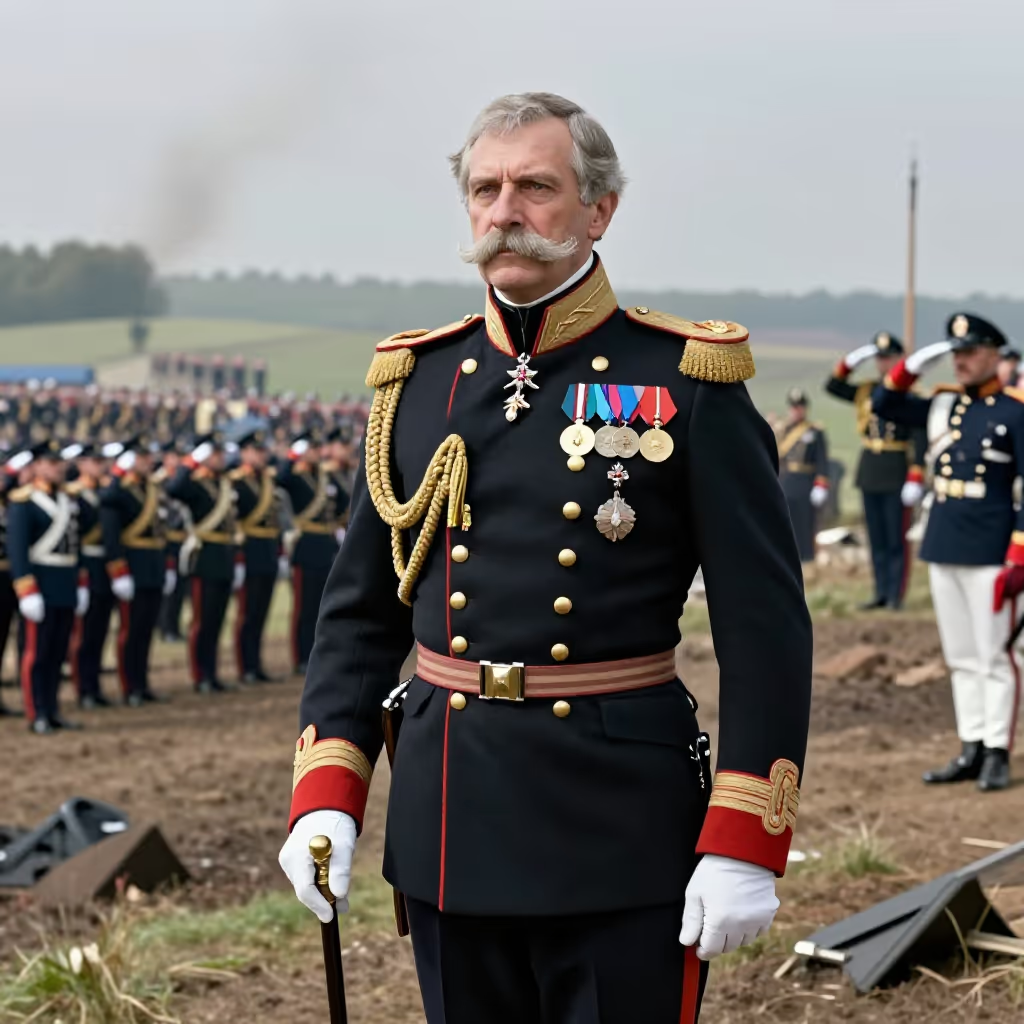
The highest military rank in the armies of many states, especially in historical contexts.
example
Der König ernannte seinen erfolgreichsten General zum Feldmarschall.
The king appointed his most successful general as field marshal.
Usage tips
Compound word
The word is made up of 'Feld' (field) and 'Marschall' (marshal). Here, 'Feld' refers to the battlefield, that is, the place of military action.
EXAMPLE
Der Feldmarschall plante die nächste Offensive.
The field marshal planned the next offensive.
Historical context
Today, this rank is mainly relevant historically. In the modern German army, the Bundeswehr, the rank of field marshal no longer exists.
EXAMPLE
Im Museum sahen wir ein Porträt des berühmten Feldmarschalls.
In the museum, we saw a portrait of the famous field marshal.
Typical collocations
This noun is often used with the verb 'ernennen' (to appoint). The typical construction is: 'jemanden zum Feldmarschall ernennen' (to appoint someone as field marshal).
EXAMPLE
Nach der siegreichen Schlacht wurde der General zum Feldmarschall ernannt.
After the victorious battle, the general was appointed field marshal.
Compare with
confusable
Feldmarschall vs General
general
'der General' and 'der Feldmarschall' both refer to very high military ranks. 'General' is the more general term and fits in many modern contexts when talking about a very high-ranking officer. 'Feldmarschall' refers in many armies to the highest rank and often sounds historical today. Learners may confuse the words because both have to do with high-ranking officers and war. As a practical rule: in normal modern texts, 'General' is usually more natural; 'Feldmarschall' is especially suitable for history or for certain old rank systems.
Feldmarschall
Im Geschichtsbuch steht, dass der Feldmarschall die Armee im Krieg führte.
The history book says that the field marshal led the army in the war.
General
Im Bericht wurde der General als erfahrener Offizier beschrieben.
In the report, the general was described as an experienced officer.