

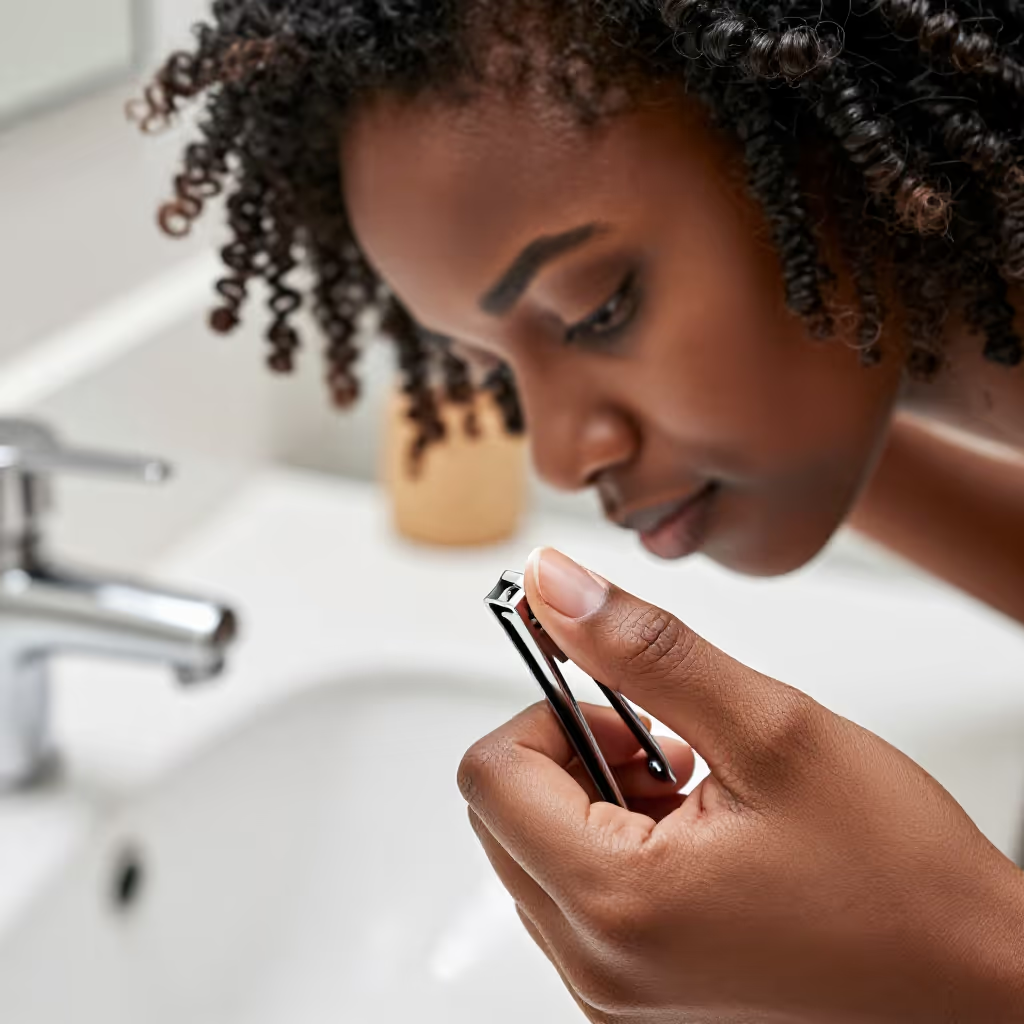
der Fingernagel
fingernail
The hard, transparent keratin plate that protects the upper side of the end of the fingers.
EXAMPLE
Er kaute nervös an seinen Fingernägeln.
He nervously chewed on his fingernails.
fingernail
Loading your saved state.
fingernail
The hard, transparent keratin plate that protects the upper side of the end of the fingers.
Er kaute nervös an seinen Fingernägeln.
He nervously chewed on his fingernails.
The word is a simple and logical compound of 'der Finger' (finger) and 'der Nagel' (nail). So it refers to the nail on a finger.
Sie hat sich beim Zwiebelschneiden in den Finger geschnitten, aber der Fingernagel ist heil geblieben.
She cut her finger while chopping onions, but the fingernail stayed intact.
Following the same pattern, 'der Zehennagel' (toenail) is also formed, composed of 'die Zehe' (toe) and 'der Nagel' (nail). If you know one word, you can easily derive the other.
Im Sommer lackiert sie sich nicht nur die Fingernägel, sondern auch die Zehennägel.
In summer, she paints not only her fingernails but also her toenails.
In everyday language, 'Fingernagel' (fingernail) is often combined with certain verbs that describe grooming actions. These include 'sich die Fingernägel schneiden' (to cut one's fingernails), 'feilen' (to file), or 'lackieren' (to paint/polish).
Ich muss mir dringend die Fingernägel schneiden, sie sind schon viel zu lang.
I urgently need to cut my fingernails; they are already much too long.
The idiom 'jemandem unter den Nägeln brennen' means that a question or problem is very urgent for someone. Although only 'Nägel' (nails) is said here, the image is that of fingernails.
Ich muss dich etwas fragen, es brennt mir unter den Nägeln!
I have to ask you something; it's really urgent!
nail
Both der Nagel and der Fingernagel can refer to the hard plate at the end of a finger. Fingernagel is unambiguous, whereas Nagel without context can also mean a metal nail used for fastening things. Fingernagel is therefore the more suitable choice when confusion should be avoided.
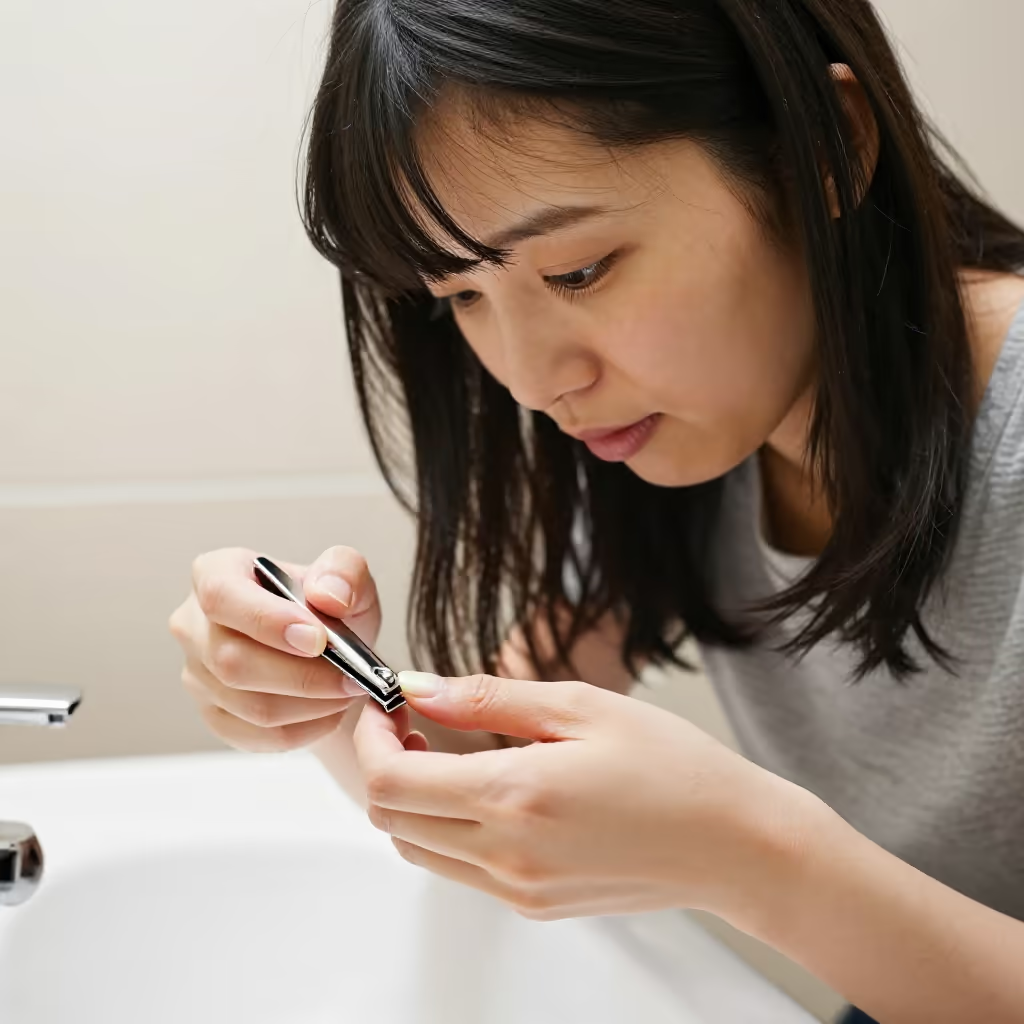
Nach dem Aufprall ist ihr ein Fingernagel am Zeigefinger eingerissen.
She split a fingernail on her index finger when she hit it.
Nach dem Aufprall ist ihr ein Nagel am Zeigefinger eingerissen.
She split a nail on her index finger when she hit it.