

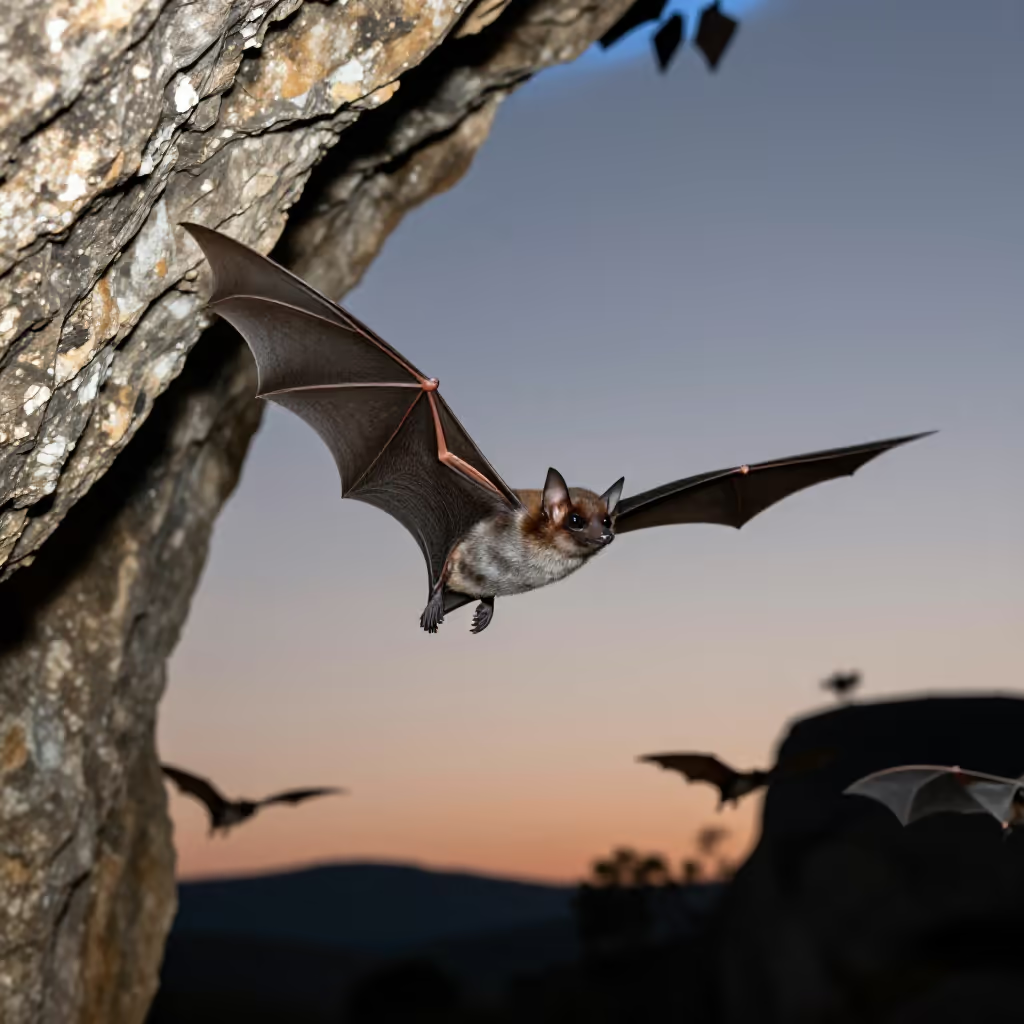
die Fledermaus
bat
A nocturnal flying mammal with wing membranes stretched between its limbs.
EXAMPLE
In der Dämmerung flogen plötzlich mehrere Fledermäuse aus der Höhle.
At dusk, several bats suddenly flew out of the cave.
bat
Loading your saved state.
bat
A nocturnal flying mammal with wing membranes stretched between its limbs.
In der Dämmerung flogen plötzlich mehrere Fledermäuse aus der Höhle.
At dusk, several bats suddenly flew out of the cave.
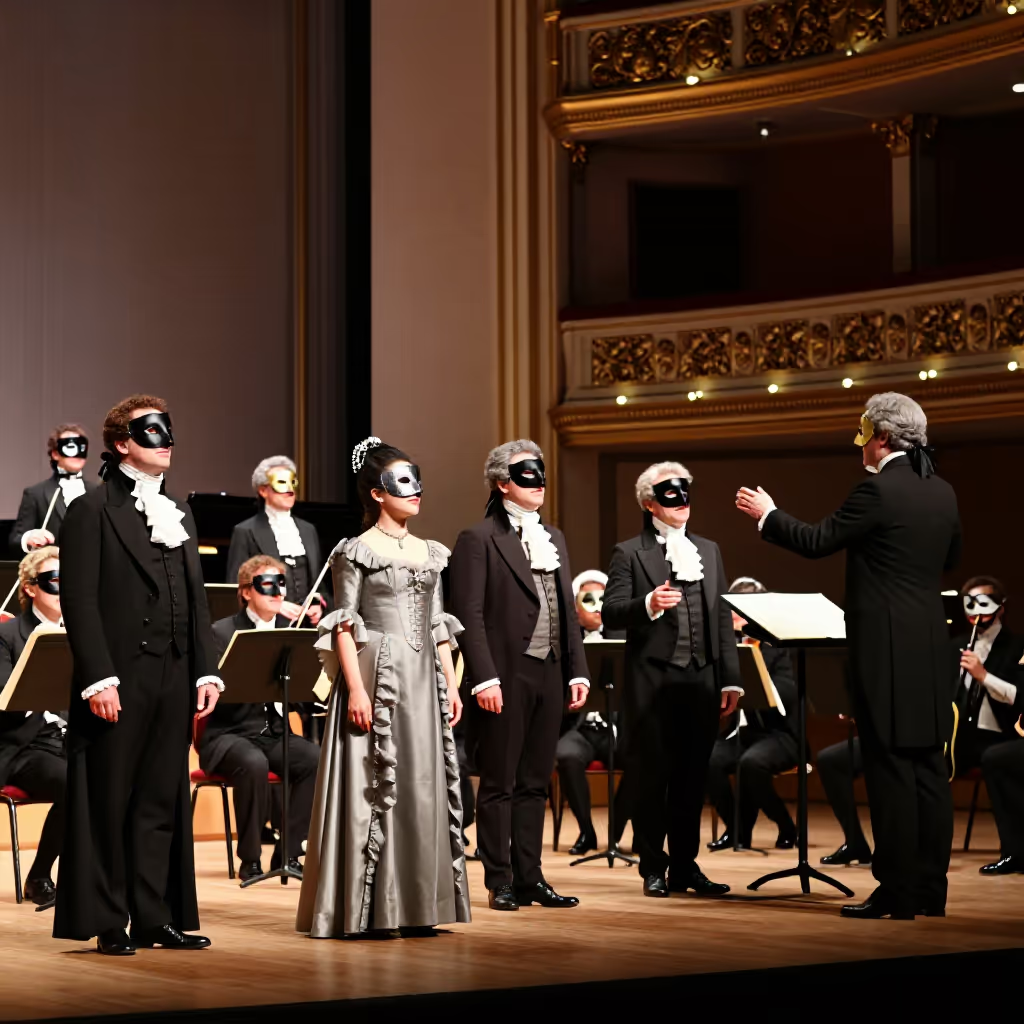
Die Fledermaus
Refers to the famous operetta 'Die Fledermaus' by Johann Strauss II.
Wir haben Karten für „Die Fledermaus“ in der Volksoper.
We have tickets for 'Die Fledermaus' at the Volksoper.
'Fledermaus' is a compound noun. The first part, 'fleder-', comes from an old word meaning 'to flutter'. Literally, a Fledermaus is therefore a 'fluttering mouse', which describes its appearance and movement well.
Das Kind nannte den Schmetterling eine „Fledermaus“.
The child called the butterfly a 'Fledermaus' (bat).
When the operetta is meant, the title is often written in quotation marks ('Die Fledermaus') or in italics. Words like 'Oper' (opera), 'Theater' (theater), 'Musik' (music), 'Aufführung' (performance), or 'sehen' (to see/watch) in a cultural context also point to the operetta.
Zu Silvester sehen wir uns traditionell „Die Fledermaus“ an.
On New Year's Eve, we traditionally watch 'Die Fledermaus'.
When the animal is meant, 'Fledermaus' is often combined with words like 'Nacht' (night), 'Dämmerung' (dusk), 'Höhle' (cave), or 'Dachboden' (attic). Typical verbs are 'fliegen' (to fly), 'jagen' (to hunt), and 'hängen' (to hang), often upside down.
Fledermäuse hängen tagsüber kopfüber in dunklen Verstecken.
Bats hang upside down in dark hiding places during the day.