

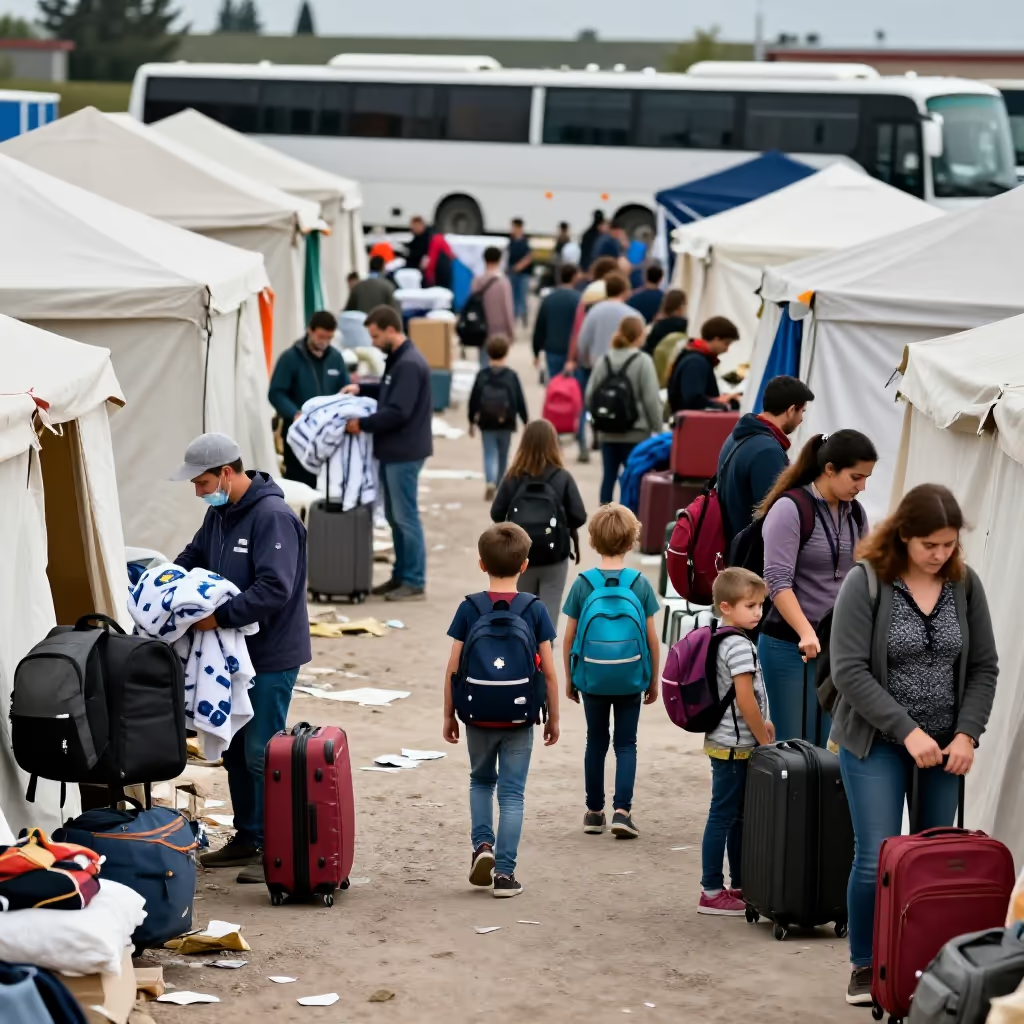
A situation in which a very large number of people are forced to leave their home country, leading to major social, political, and logistical challenges in the countries receiving them. In German-speaking areas, the term often refers to the situation in Europe from 2015 onward.
example
Die Flüchtlingskrise im Jahr 2015 hat die europäische Politik nachhaltig geprägt.
The refugee crisis in 2015 had a lasting impact on European politics.
Usage tips
Compound word
The word is made up of three parts: 'Flüchtling' (refugee), the linking -s, and 'Krise' (crisis). So it literally describes a crisis situation caused by a large number of refugees.
EXAMPLE
Die Politik diskutiert Maßnahmen zur Bewältigung der Flüchtlingskrise.
Politicians are discussing measures for dealing with the refugee crisis.
Word family
The word belongs to the word family of 'die Flucht' (flight/escape) and the verb 'flüchten' (to flee). A 'Flüchtling' (refugee) is a person who is on the run, that is, forced to leave their home.
EXAMPLE
Viele Menschen mussten wegen des Krieges aus ihrer Heimat flüchten.
Many people had to flee their homeland because of the war.
Specific context
Although the term is general, 'die Flüchtlingskrise' (the refugee crisis) is very often used in German-speaking areas as a fixed term for the situation in Europe since 2015.
EXAMPLE
Die Flüchtlingskrise von 2015 ist ein wichtiges Thema in den Geschichtsbüchern.
The refugee crisis of 2015 is an important topic in history books.