

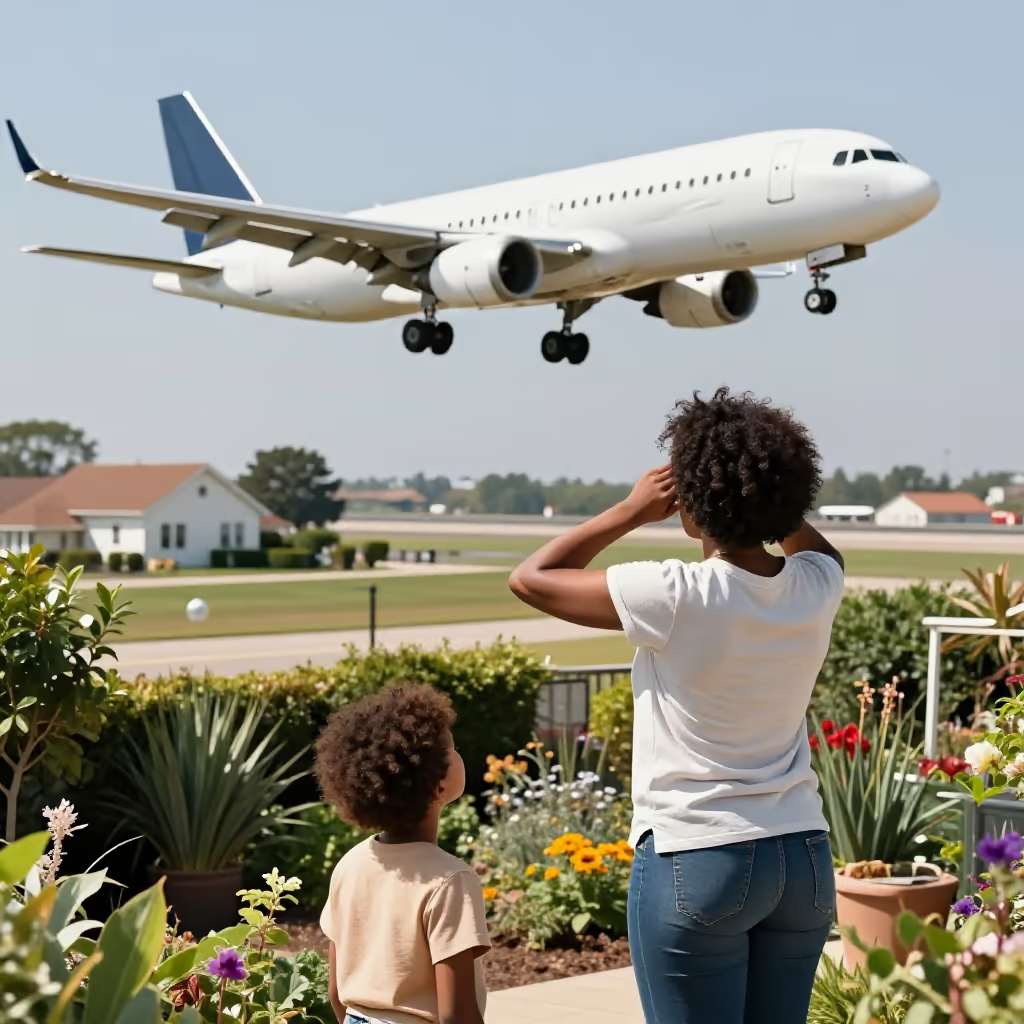
The noise caused by airplanes, especially during takeoff and landing near airports.
example
Die Anwohner protestieren seit Jahren gegen den zunehmenden Fluglärm.
The local residents have been protesting against the increasing aircraft noise for years.
Usage tips
Compound word
This word is a clear example of a German compound: it is made up of 'der Flug' (flight) and 'der Lärm' (noise). So it literally describes the noise that comes from flying.
EXAMPLE
In der Nähe des Flughafens ist der Fluglärm oft unerträglich.
Near the airport, the aircraft noise is often unbearable.
Typical collocations
'Fluglärm' (aircraft noise) is often used with verbs that describe a negative effect. Typical phrases are 'unter Fluglärm leiden' (to suffer from aircraft noise), 'sich über Fluglärm beschweren' (to complain about aircraft noise), or 'gegen Fluglärm protestieren' (to protest against aircraft noise).
EXAMPLE
Viele Menschen, die nahe am Flughafen wohnen, leiden unter dem Fluglärm.
Many people who live close to the airport suffer from aircraft noise.
Word family: Lärm
The base word '-lärm' (-noise) at the end is very productive. It is used to name the source of noise, for example also in 'Straßenlärm' (traffic noise), 'Baulärm' (construction noise), or 'Industrielärm' (industrial noise).
EXAMPLE
Ob Fluglärm oder Baulärm – Lärm kann auf Dauer krank machen.
Whether aircraft noise or construction noise — noise can make you ill in the long run.