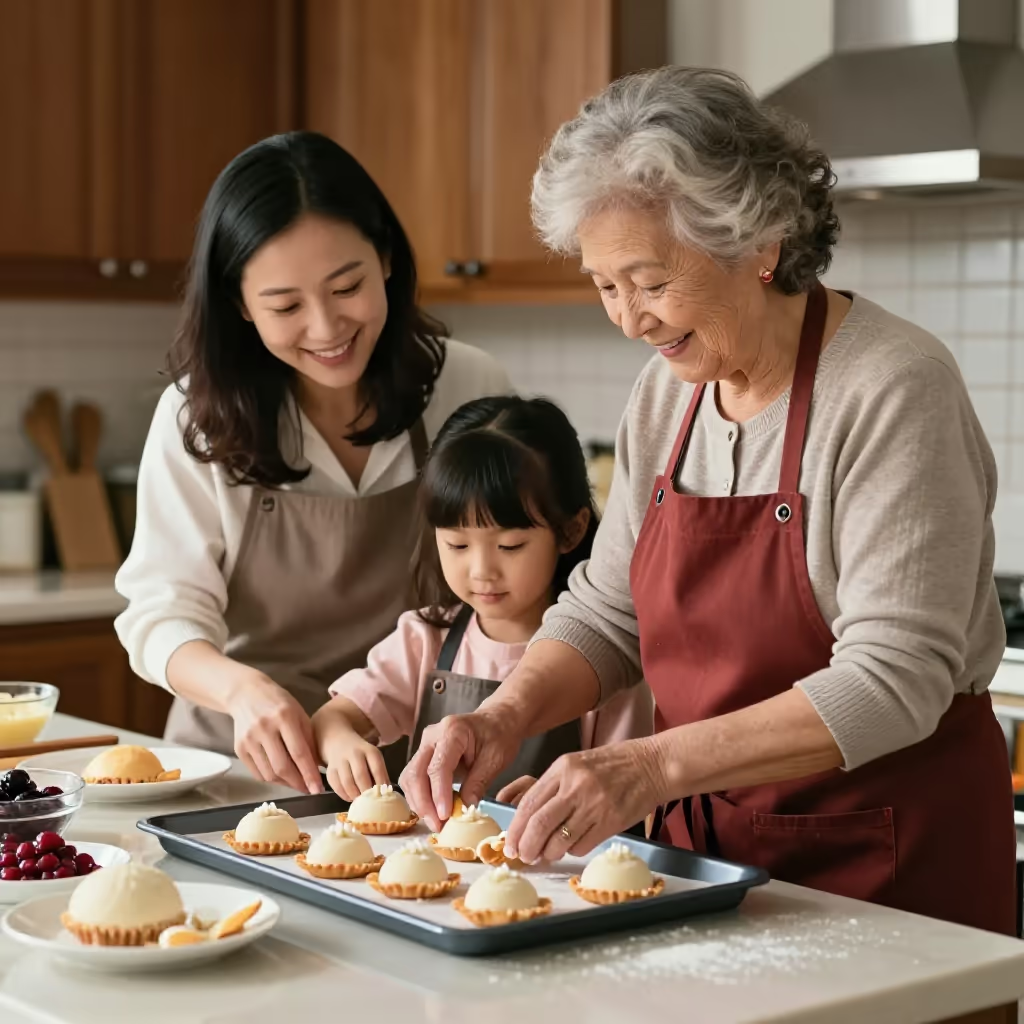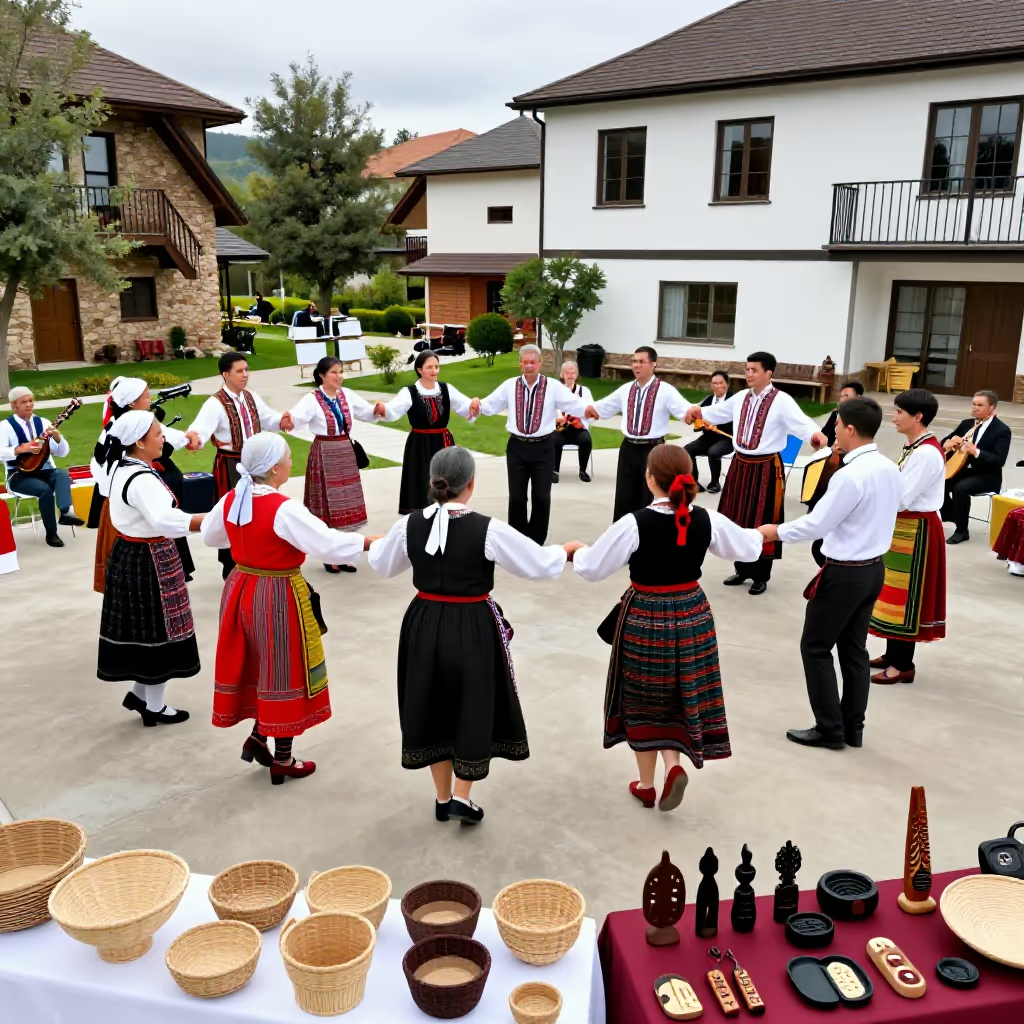
The totality of the traditional heritage of a people or community, such as songs, dances, legends, customs, and handicrafts.
example
Die irische Folklore ist reich an Geschichten über Feen und Kobolde.
Irish folklore is rich in stories about fairies and leprechauns.
Usage tips
No plural
'Folklore' is an uncountable noun (Singularetantum). It is almost always used without an article or with the definite article 'die' and has no plural form.
EXAMPLE
In diesem Museum lernen Sie viel über die lokale Folklore.
In this museum, you learn a lot about the local folklore.
Context clue
The positive meaning (tradition) is often connected with a region, e.g. 'bayerische Folklore' (Bavarian folklore). The negative, colloquial meaning (kitsch) is often signaled by words like 'reine' (pure) or 'bloße' (mere) and usually describes commercial events.
EXAMPLE
Die Tänze sind ein wichtiger Teil der schottischen Folklore.
The dances are an important part of Scottish folklore.
Typical combinations
In its main meaning, 'Folklore' is often combined with a geographic origin. Typical examples are 'alpine Folklore' (Alpine folklore), 'slawische Folklore' (Slavic folklore), or 'südamerikanische Folklore' (South American folklore).
EXAMPLE
Die Musikgruppe spielt traditionelle Lieder aus der andalusischen Folklore.
The music group plays traditional songs from Andalusian folklore.
Colloquial & disparaging
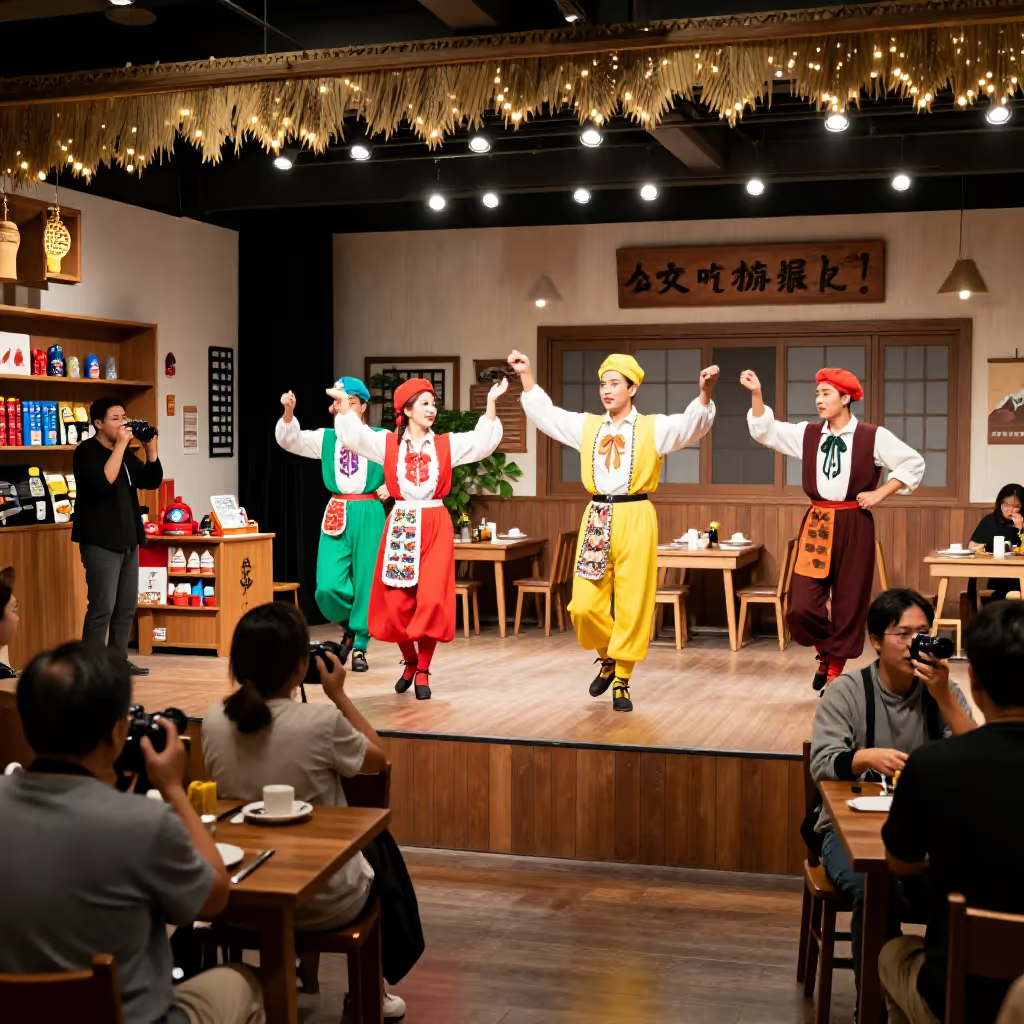
When 'Folklore' describes a kitschy event, the usage is colloquial and has a negative or disparaging meaning. It expresses that something is not authentic, but only for show.
EXAMPLE
Die Begrüßung mit Blasmusik war doch reine Folklore für die Kameras.
The welcome with brass band music was really pure folklore for the cameras.
Compare with
near_synonym · confusable
Folklore vs Tradition
tradition
'die Tradition' and 'die Folklore' are both connected with old customs and traditions. 'Tradition' is a general word for something that people pass down and continue doing for a long time. 'Folklore' refers especially to the traditional songs, dances, stories, clothing, or handicrafts of a community. The word can also sound somewhat negative if something seems artificially traditional and only meant for tourists. The words are easy to confuse because folklore often consists of traditions. However, 'Tradition' is broader, while 'Folklore' is more suitable for cultural presentations and folk culture.
Folklore
Beim Dorffest zeigte eine Gruppe Tänze und Musik aus der lokalen Folklore.
At the village festival, a group performed dances and music from the local folklore.
Tradition
Nach der Prüfung gehen alle zusammen essen, weil das an unserer Schule Tradition ist.
After the exam, everyone goes out to eat together because that is a tradition at our school.