

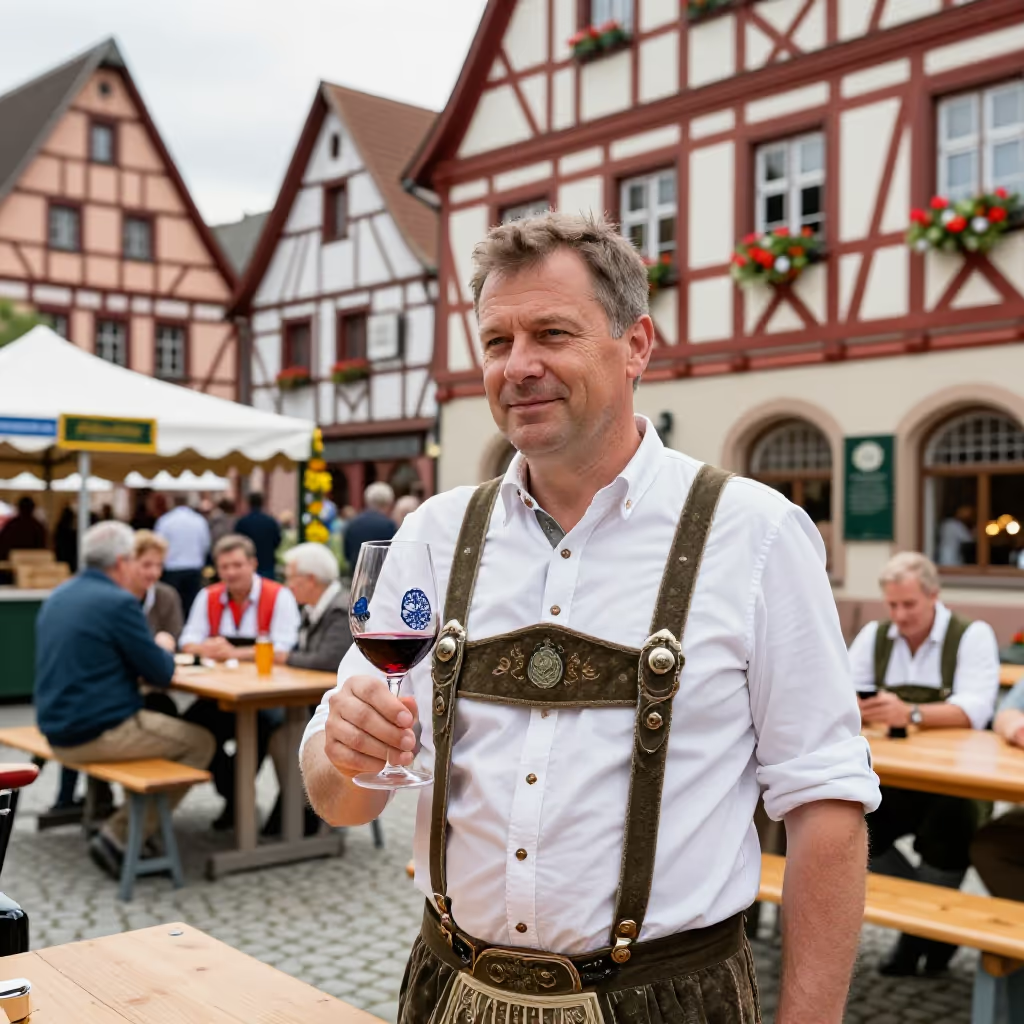
der Franke
Franconian
A resident of, or a person originally from, the German region of Franconia.
EXAMPLE
Mein Kollege ist Franke und kommt ursprünglich aus Nürnberg.
My colleague is Franconian and originally comes from Nuremberg.
Franconian / Frank
Loading your saved state.
Franconian
A resident of, or a person originally from, the German region of Franconia.
Mein Kollege ist Franke und kommt ursprünglich aus Nürnberg.
My colleague is Franconian and originally comes from Nuremberg.

Frank
A member of the historical West Germanic tribal confederation of the Franks, who established a large empire in Western Europe in the Early Middle Ages.
Die Franken unter König Chlodwig I. eroberten große Teile Galliens.
The Franks under King Clovis I conquered large parts of Gaul.
'Der Franke' (Franconian/Frank) is a weak masculine noun (N-declension). This means that in the accusative, dative, and genitive singular it takes the ending '-n'.
Ich habe gestern einen Franken kennengelernt.
I met a Franconian yesterday.
Context tells you whether the modern resident or the historical member of the tribe is meant. A modern context (job, place of residence) points to a resident of Franconia. A historical context (Middle Ages, kings, conquests) points to the Germanic tribe.
Der neue Nachbar ist Franke und spricht einen deutlichen Dialekt.
The new neighbor is Franconian and speaks with a strong dialect.
The word 'Franke' (Franconian) is derived directly from the region 'Franken' (Franconia). This pattern for forming names of residents is common in German.
Als Franke liebt er die fränkische Küche.
As a Franconian, he loves Franconian cuisine.