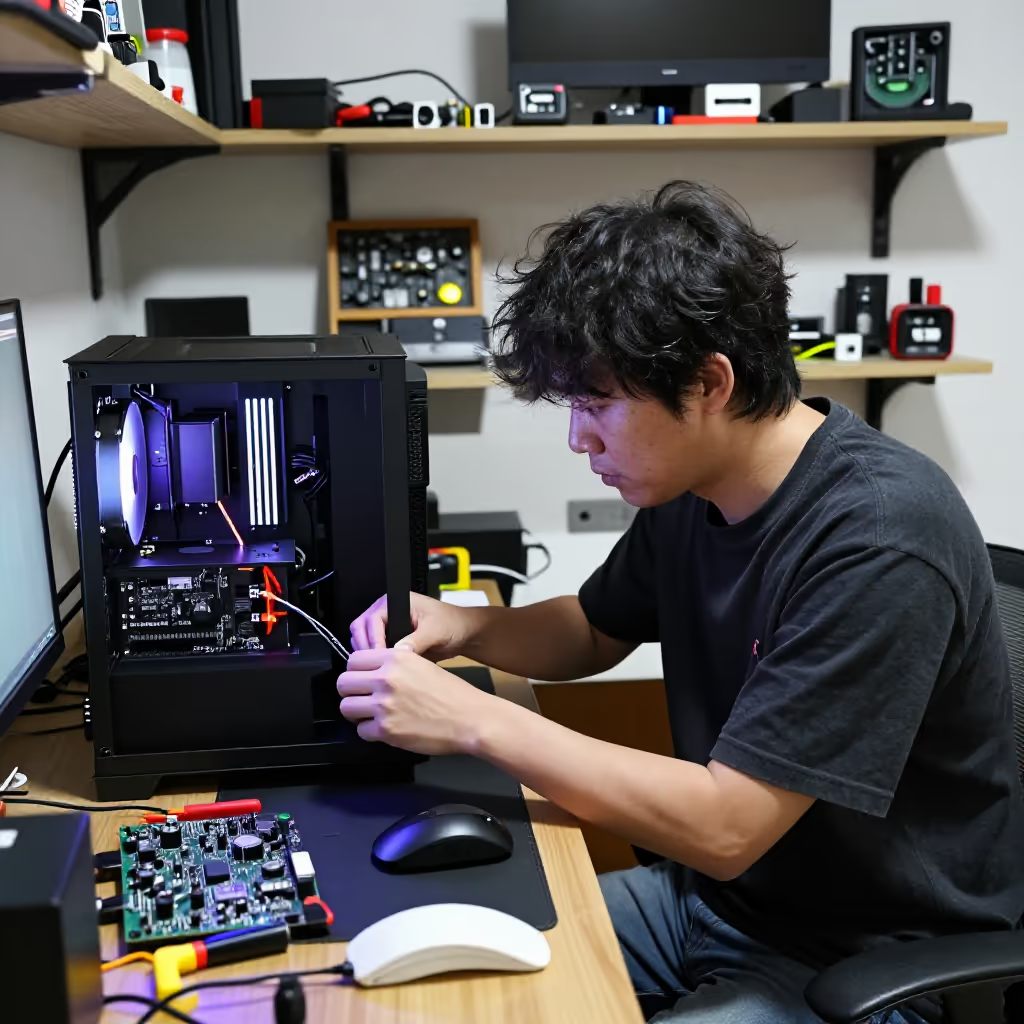
A person who is extremely enthusiastic about a particular thing and engages with it intensively, often in an unconventional way.
example
Er ist ein totaler Computer-Freak und kennt sich mit allem aus.
He is a total computer freak and knows about everything.

Usage tips
Origin and register
'Freak' is a colloquial word taken directly from English. It is mainly used in spoken language and in informal contexts.
EXAMPLE
Er ist ein echter Freak, wenn es um Star Wars geht.
He is a real freak when it comes to Star Wars.
Use as a compound
In the positive meaning 'Fan' (fan) or 'Experte' (expert), 'Freak' is very often used as the second part of a compound. The first part names the area of interest.
EXAMPLE
Mein Bruder ist ein totaler Technik-Freak.
My brother is a total technology freak.
Context clue for 'odd person'
When 'Freak' is used on its own as a label for a person, the meaning is often negative and refers to a strange or eccentric person.
EXAMPLE
Die Kinder nannten den alten Mann einen Freak, weil er allein lebte.
The children called the old man a freak because he lived alone.
Compare with
near_synonym · confusable
Freak vs Fan
fan
'der Fan' and 'der Freak' can both describe a person who likes something very much. 'Fan' is neutral and often positive: a fan admires a band, a team, a person, or likes something very much. 'Freak' is stronger. It means someone who is extremely intensely involved with something, sometimes in an unusual way. In addition, 'Freak' can also be derogatory and mean a strange person. So you should be careful with it. The words can be confused because both express enthusiasm. For normal enthusiasm, 'Fan' is more natural; for very strong, specific, or somewhat unusual enthusiasm, 'Freak' is more fitting.
Freak
Mein Bruder ist ein Technik-Freak und baut seine Computer selbst zusammen.
My brother is a tech freak and builds his computers himself.
Fan
Wir sind große Fans von dieser kleinen Pizzeria in der Altstadt.
We are big fans of this little pizzeria in the old town.