To make something that was covered, hidden, or overgrown visible again by removing the covering.
example
Archäologen haben die Fundamente einer alten römischen Villa freigelegt.
Archaeologists uncovered the foundations of an old Roman villa.
Usage tips
Separable verb
'Freilegen' (to uncover / to expose) is a separable verb. The prefix 'frei-' comes at the end in a main clause and means that something is made accessible or visible.
EXAMPLE
Der Gärtner legt die Wurzeln der Pflanze frei.
The gardener exposes the roots of the plant.
Frequent use in the passive
Since the result is often the focus and not the person performing the action, 'freilegen' (to uncover / to expose) is very often used in the passive. The object of the active sentence then becomes the subject.
EXAMPLE
Die alten Münzen wurden bei Bauarbeiten freigelegt.
The old coins were uncovered during construction work.
Typical collocations
This verb is often used in the context of archaeology or construction work. Typical objects are 'Fundamente' (foundations), 'Mauern' (walls), 'Ruinen' (ruins), or 'historische Artefakte' (historical artifacts).
EXAMPLE
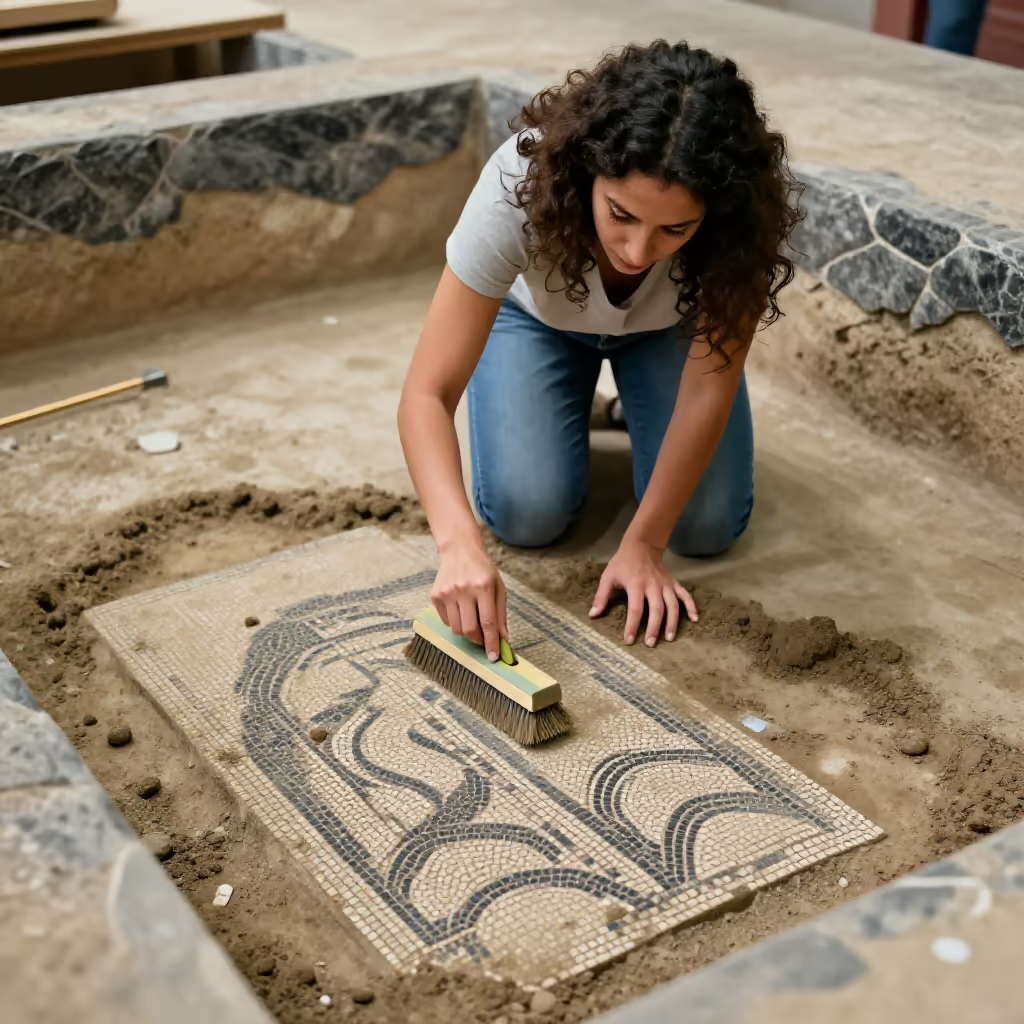
Bei den Ausgrabungen legten die Forscher ein altes Mosaik frei.
During the excavations, the researchers uncovered an old mosaic.
Context: technology and medicine
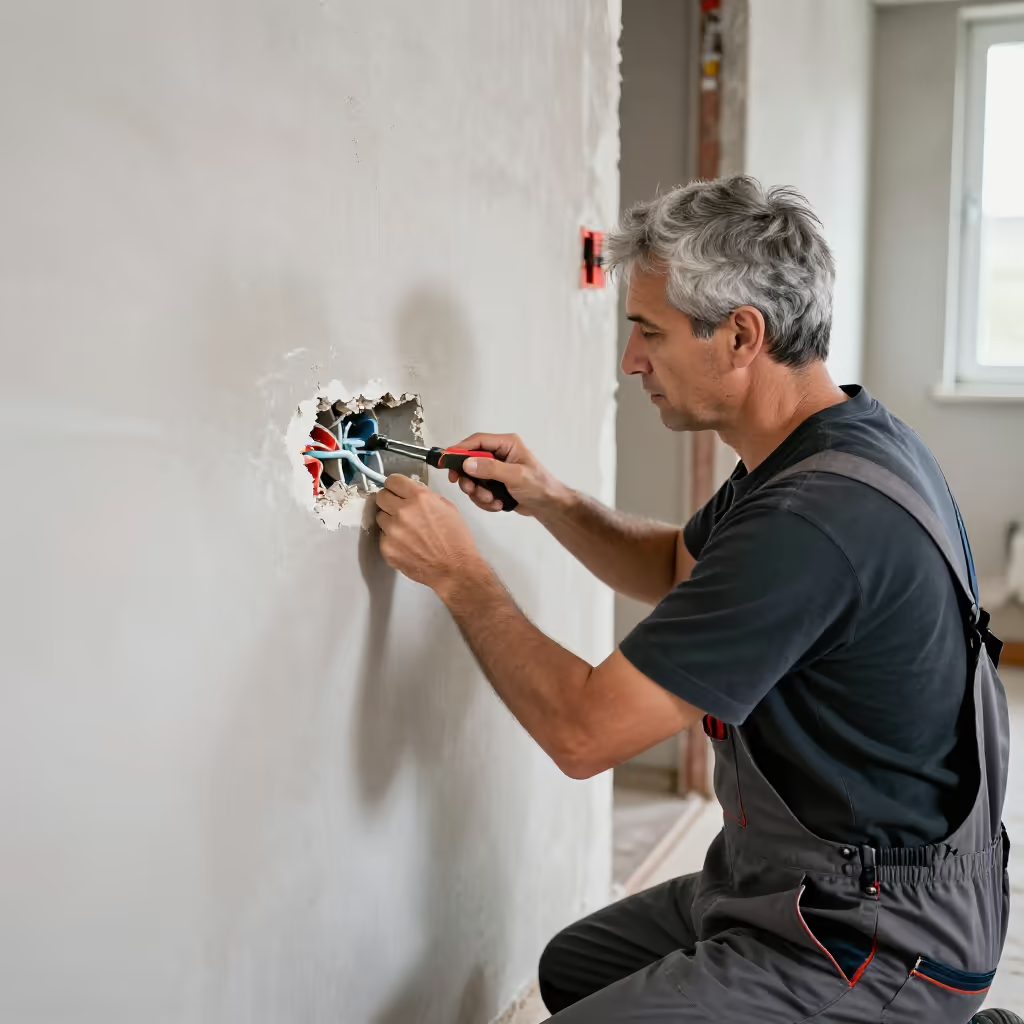
In technical or medical reports, 'freilegen' (to expose) means to make a certain structure accessible for a repair or treatment. For example, you expose 'Kabel' (cables), 'Rohre' (pipes), or 'Nerven' (nerves).
EXAMPLE
Der Chirurg musste den Nerv vorsichtig freilegen.
The surgeon had to carefully expose the nerve.
Compare with
antonym
freilegen vs bedecken
to cover
'bedecken' and 'freilegen' describe opposite movements. With 'bedecken', something goes over a surface so that you can no longer see it, or can see only part of it. With 'freilegen', you remove this layer again so that something hidden becomes visible. So 'bedecken' fits when something is closed up or covered. 'freilegen' fits when you make something visible again, for example under soil, snow, or old layers.
freilegen
Im Garten legt mein Nachbar alte Steine frei, die unter der Erde lagen.
In the garden, my neighbor is uncovering old stones that were under the soil.
bedecken
Am Abend bedeckt Schnee die Dächer im Dorf.
In the evening, snow covers the roofs in the village.