

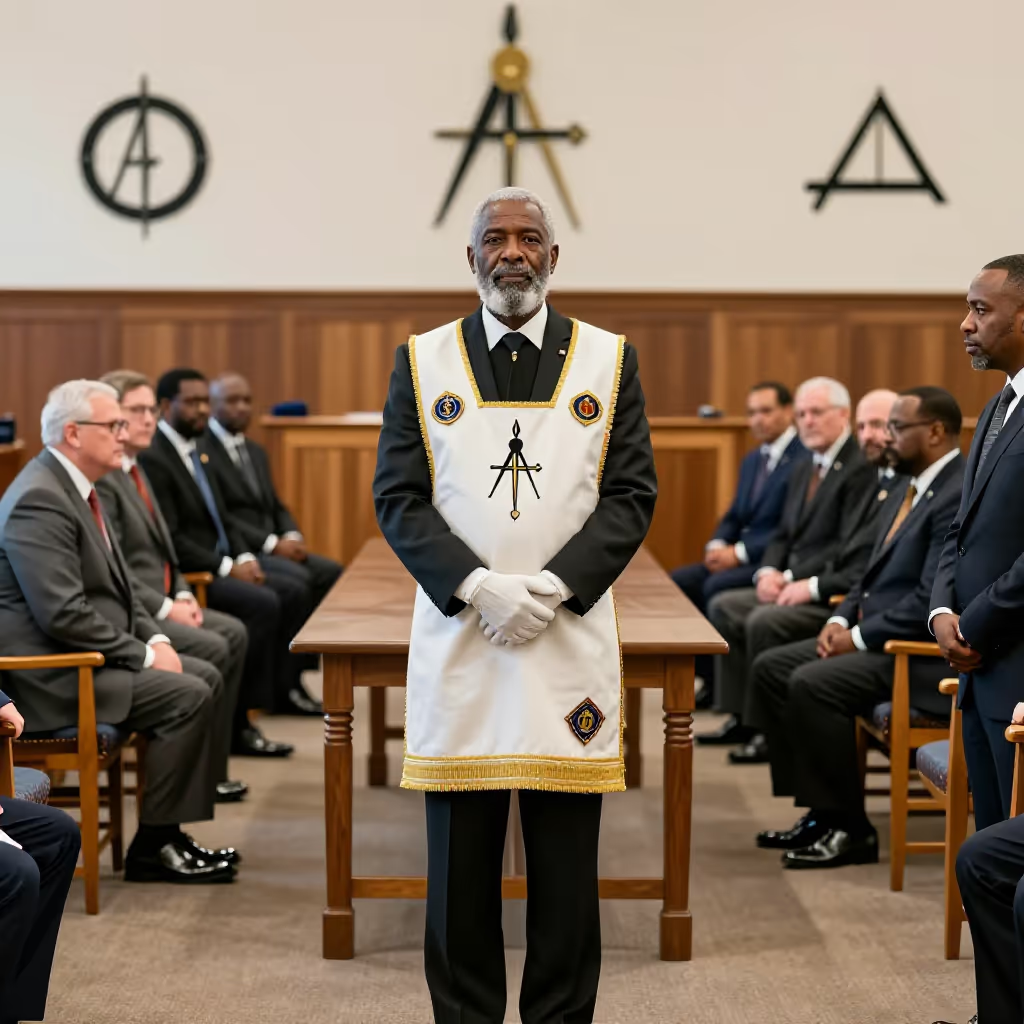
A member of Freemasonry, an internationally widespread ethical and humanitarian brotherhood. Freemasons strive for personal and social improvement and are organized in lodges.
example
Er ist seit vielen Jahren ein engagierter Freimaurer in seiner örtlichen Loge.
He has been a dedicated Freemason in his local lodge for many years.
Usage tips
Compound structure
The word is made up of 'frei' (free) and 'Maurer' (mason, someone who builds walls). It has a historical origin in medieval masons' lodges, whose members enjoyed special freedoms.
EXAMPLE
Die Geschichte der Freimaurer ist sehr komplex.
The history of the Freemasons is very complex.
N-declension
'Der Freimaurer' belongs to the N-declension. This means that in the accusative, dative, and genitive singular, as well as in the plural, the ending '-n' is added.
EXAMPLE
Ich habe mit einem Freimaurer gesprochen.
I spoke with a Freemason.
Typical collocations
The word 'Freimaurer' (Freemason) is often associated with terms such as 'die Loge' (the lodge or meeting place), 'die Bruderschaft' (the brotherhood), and 'das Ritual' (the ritual).
EXAMPLE
Die Freimaurer treffen sich regelmäßig in ihrer Loge.
The Freemasons meet regularly in their lodge.
Compare with
synonym · confusable
Freimaurer vs Maurer
bricklayer / mason
'der Maurer' can, in a special meaning, be short for 'der Freimaurer'. In that case, both words mean a member of Freemasonry. But this meaning is easy to confuse because 'Maurer' much more often means the tradesperson on a construction site. 'Freimaurer' is therefore clearer when talking about the brotherhood and a lodge. 'Maurer' as a short form is mainly understood when the context is already clear.
Freimaurer
Mein Nachbar erzählte, dass sein Großvater Freimaurer war.
My neighbor said that his grandfather was a Freemason.
Maurer
In dem Gespräch über die Loge war mit „Maurer“ kein Bauhandwerker gemeint.
In the conversation about the lodge, 'Maurer' did not mean a construction tradesperson.