

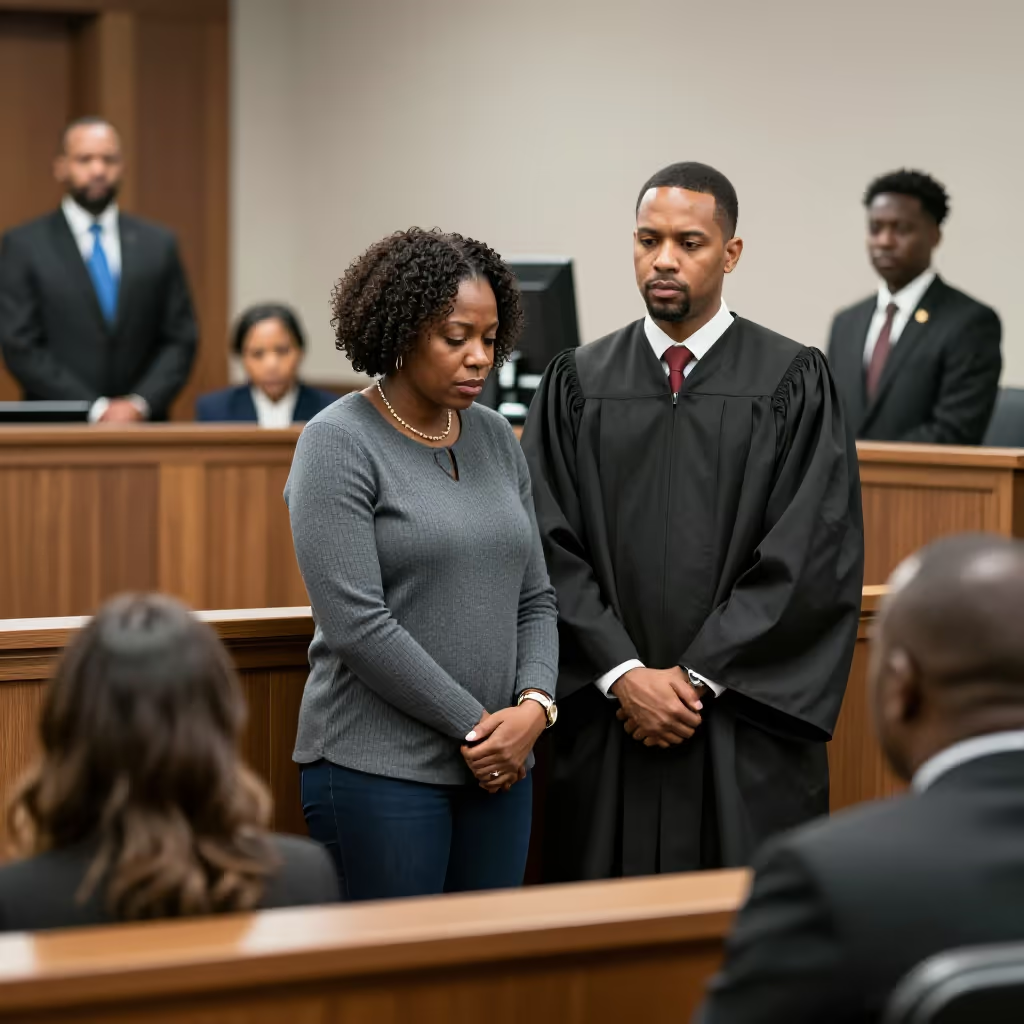
freisprechen
to acquit
In a court case, to officially declare an accused person not guilty.
EXAMPLE
Der Richter musste den Angeklagten aus Mangel an Beweisen freisprechen.
The judge had to acquit the defendant due to a lack of evidence.
to acquit
Loading your saved state.
to acquit
In a court case, to officially declare an accused person not guilty.
Der Richter musste den Angeklagten aus Mangel an Beweisen freisprechen.
The judge had to acquit the defendant due to a lack of evidence.

to release from apprenticeship
In the trades, to declare an apprentice a journeyman in a formal ceremony after they have passed their exam and completed their training.
Der Meister wird seine drei Lehrlinge am Ende der Woche feierlich freisprechen.
The master craftsman will formally release his three apprentices from their apprenticeships at the end of the week.
'Freisprechen' (to acquit / to release from apprenticeship) is a separable verb. The prefix 'frei-' comes at the end in a main clause, while it stays attached to the verb in a subordinate clause. In the infinitive with 'zu', 'zu' goes in the middle.
Das Gericht spricht den Mann frei.
The court acquits the man.
The verb is made up of 'frei' (free) and 'sprechen' (to speak). The literal meaning is 'to make someone free by speaking'—either free from guilt (in court) or free from the status of apprentice (in the trades).
Nach dem Urteil war der Mann froh, freigesprochen worden zu sein.
After the verdict, the man was glad to have been acquitted.
You can recognize the meaning from the context. Words like 'Gericht' (court), 'Angeklagter' (defendant), or 'Beweise' (evidence) point to the legal meaning. Terms like 'Lehrling' (apprentice), 'Meister' (master craftsman), or 'Handwerk' (trade/craft) indicate the meaning in the training context.
Der Richter sprach den Angeklagten aus Mangel an Beweisen frei.
The judge acquitted the defendant due to a lack of evidence.
In the legal context, the structure 'jemanden (Akkusativ) von etwas (Dativ) freisprechen' (to acquit someone of something) is often used. The preposition 'von' introduces the accusation or charge from which the person is freed.
Der Angeklagte wurde vom Vorwurf des Diebstahls freigesprochen.
The defendant was acquitted of the charge of theft.
to relieve / exonerate
Both words can express that an accused person is not guilty. Entlasten describes how evidence or other circumstances clear the person of an accusation, even before a verdict. Freisprechen, by contrast, refers to the court's official decision. Use entlasten for the effect of the evidence and freisprechen for the verdict.
Das Gericht sprach den Beschuldigten wegen fehlender Beweise frei.
The court acquitted the accused for lack of evidence.
Die neuen Zeugenaussagen entlasten den Beschuldigten deutlich.
The new witness statements clearly exonerate the accused.