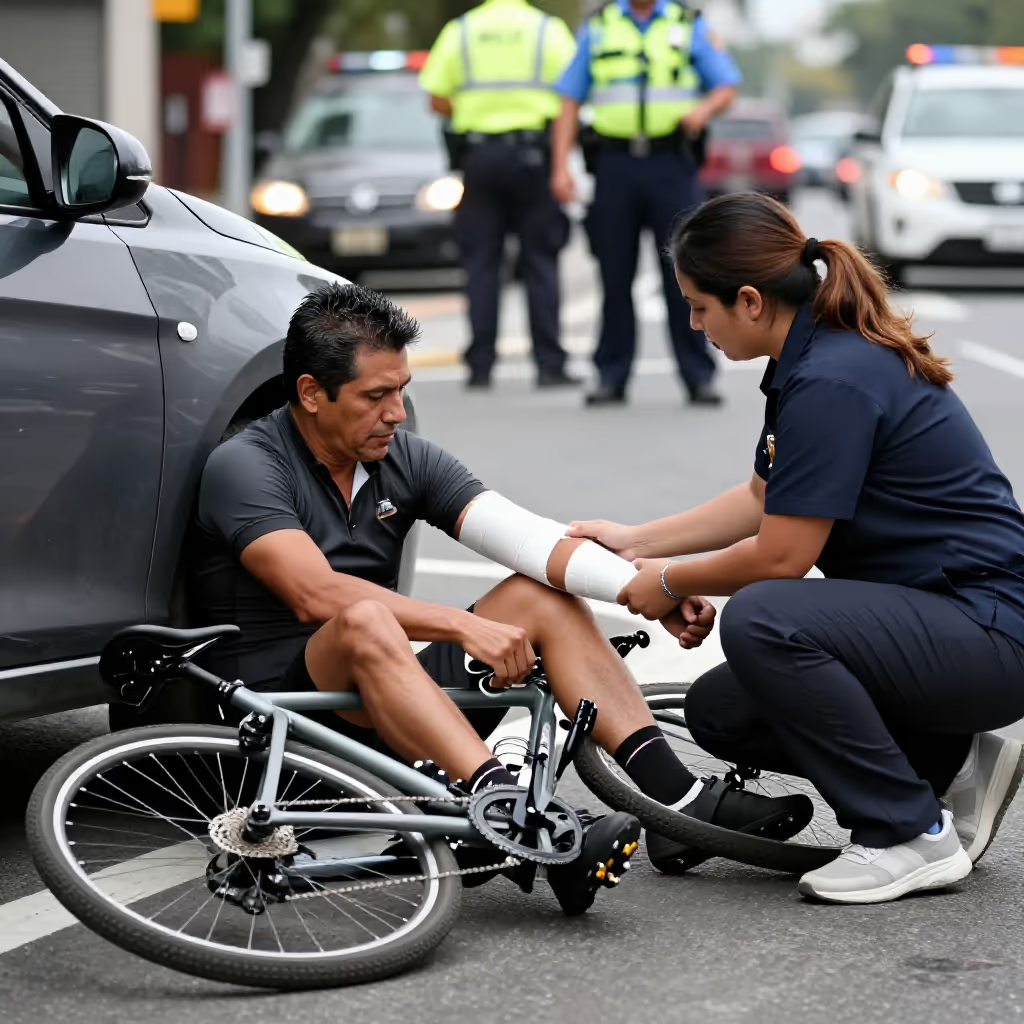
In a figurative sense, a person or group that is defenselessly exposed to attacks, criticism, or exploitation.
example
Nachdem ihre Affäre bekannt wurde, war die Politikerin für die Presse praktisch Freiwild.
After her affair became public, the politician was practically fair game for the press.
Usage tips
Compound word
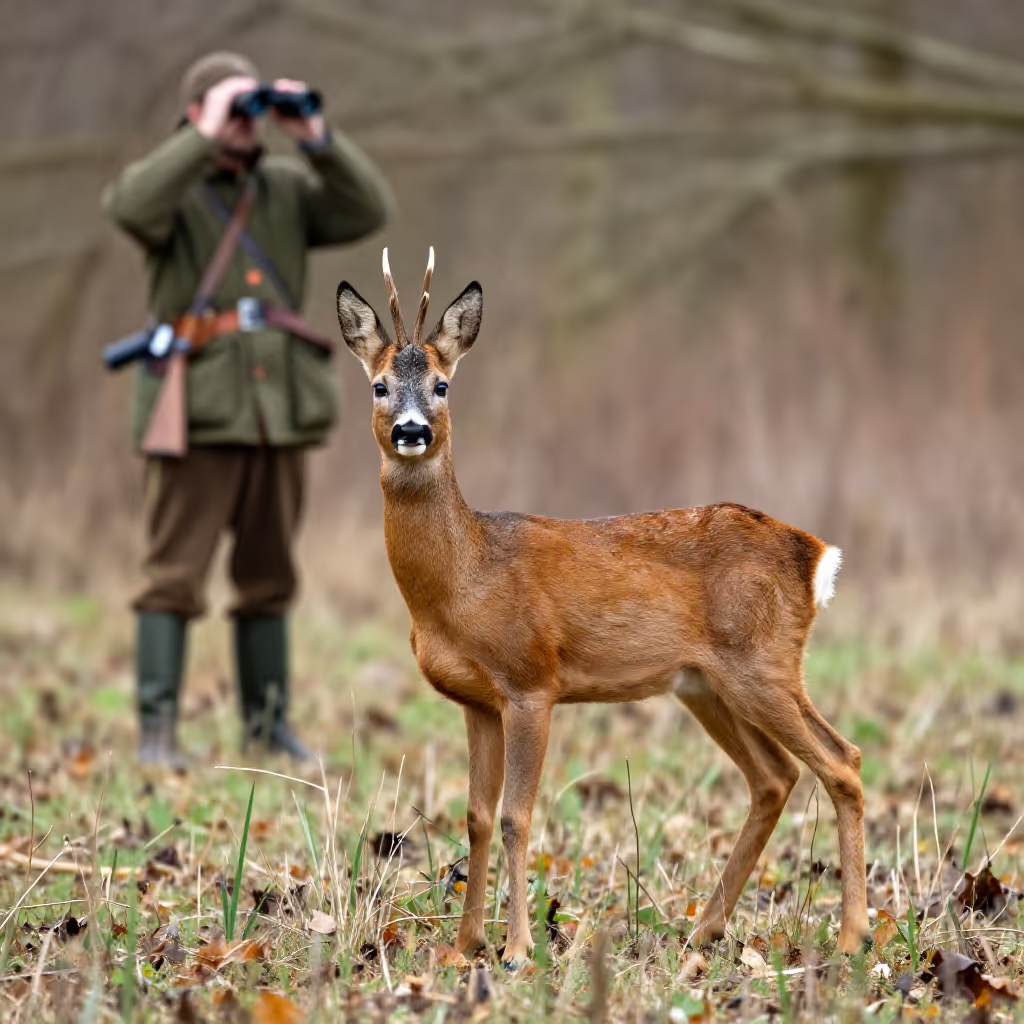
The word is made up of 'frei' (free) and 'Wild' (wild animals/game). The literal meaning is 'game that is free to hunt.' From this comes the figurative meaning of a defenseless person.
EXAMPLE
Nach dem Skandal war der Minister Freiwild für die Journalisten.
After the scandal, the minister was fair game for the journalists.
Context clue
The figurative meaning, which refers to people, is much more common in everyday language than the original hunting meaning. When people are being discussed, this figurative meaning is always meant.
EXAMPLE
In sozialen Netzwerken fühlen sich manche anonym und behandeln andere wie Freiwild.
On social networks, some people feel anonymous and treat others like fair game.
Typical collocations
In the figurative meaning, 'Freiwild' (fair game) is often used with verbs such as 'sein' (to be), 'werden' (to become), or 'gelten als' (to be considered). The phrase 'zum Freiwild werden' describes the process of becoming defenseless.
EXAMPLE
Seit er seine Meinung öffentlich äußerte, ist er zum Freiwild für seine Gegner geworden.
Since he expressed his opinion publicly, he has become fair game for his opponents.
Register: technical language
The original meaning from hunting is purely technical language ('Jägersprache', hunting terminology). Outside texts about hunting or forestry, you will hardly encounter this meaning.
EXAMPLE
Der Jäger erklärte, warum das Wildschwein in dieser Region als Freiwild gilt.
The hunter explained why wild boar is considered game without a closed season in this region.
Compare with
near_synonym · confusable
Freiwild vs Opfer
victim / sacrifice
'das Opfer' and 'das Freiwild' can both refer to people who are treated badly or attacked. 'das Opfer' is more neutral and fits when someone suffers harm through a crime, an accident, or another bad event. 'das Freiwild' is figurative and stronger: it emphasizes that someone is seemingly defenseless and that others attack or exploit them without consideration. Learners may confuse the words because in both cases people are in a weak position. In practice: when there is concrete harm, you usually say 'Opfer'; when you want to emphasize defenselessness and constant attacks, 'Freiwild' is more suitable.
Freiwild
Ohne klare Regeln fühlen sich viele Mitarbeiter wie Freiwild für ständige Kritik.
Without clear rules, many employees feel like fair game for constant criticism.
Opfer
Nach dem Unfall half die Polizei dem Opfer und rief sofort einen Krankenwagen.
After the accident, the police helped the victim and immediately called an ambulance.