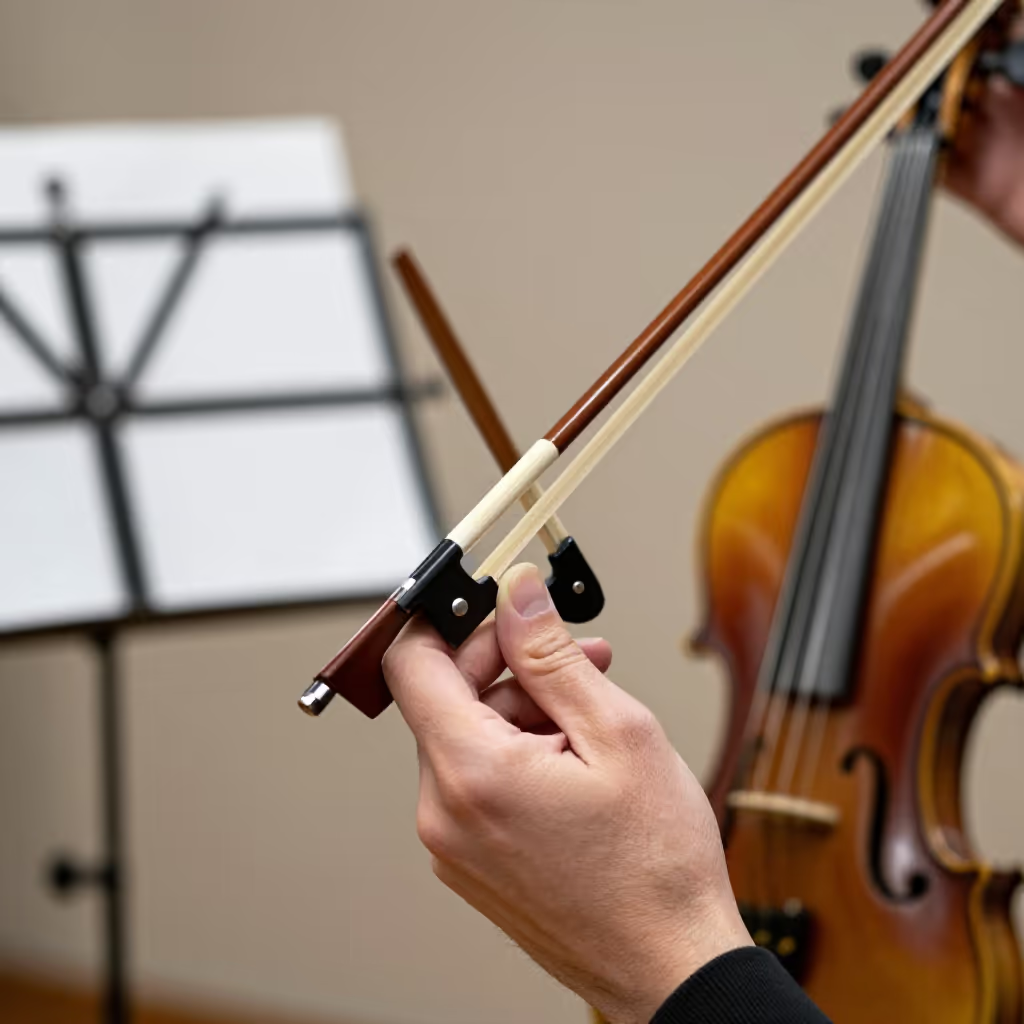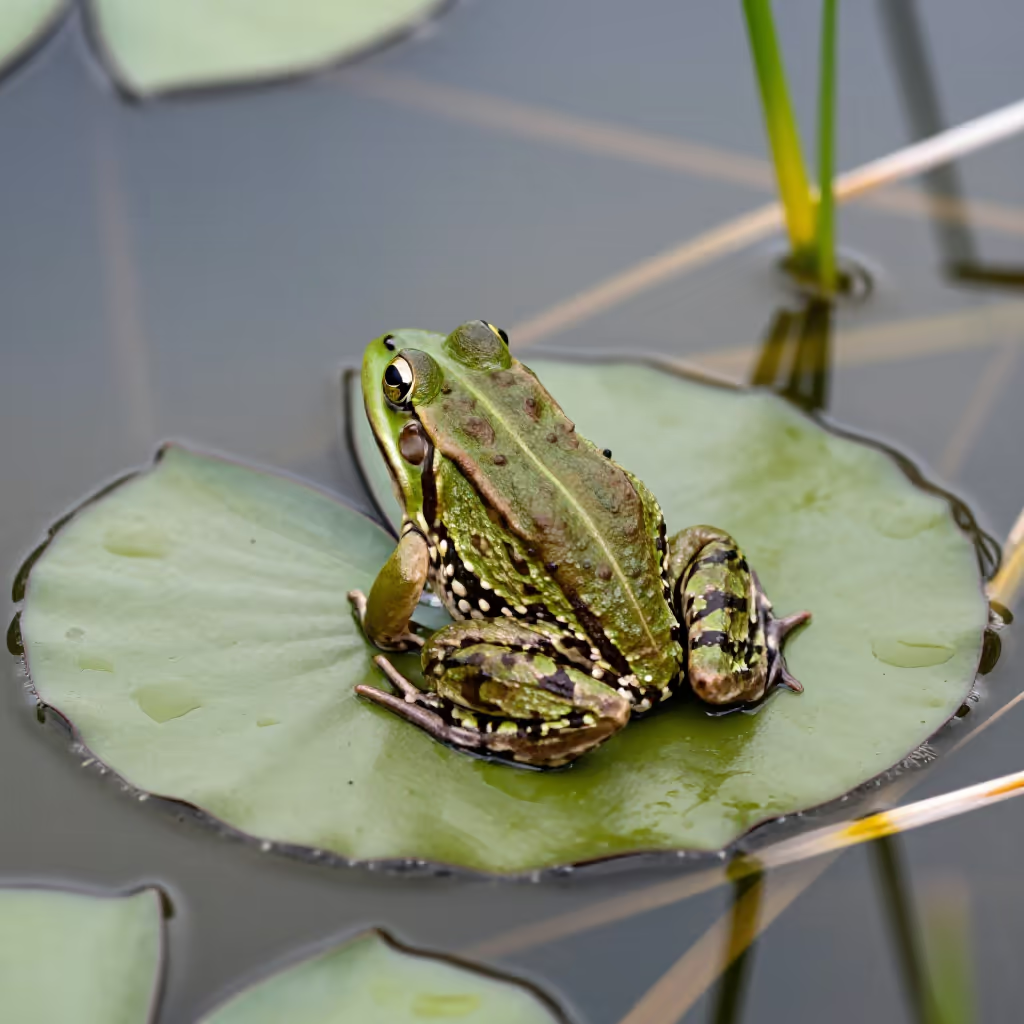
A small, usually green or brown amphibian with long hind legs that can jump and swim well and often lives near bodies of water.
example
Im Teich am Ende des Gartens quaken die Frösche.
The frogs are croaking in the pond at the end of the garden.

Usage tips
Context clue
You can easily recognize the meaning of 'Frosch' (frog) from context. If it is about nature, animals, or a pond, the amphibian is meant. In connection with music and string instruments, it means the part of the bow. The expression 'einen Frosch im Hals haben' (to have a frog in one's throat) is used when someone is hoarse.
EXAMPLE
Die Kinder beobachten die Frösche am See.
The children are watching the frogs by the lake.
Fixed expression
The idiom 'einen Frosch im Hals haben' (to have a frog in one's throat) is a fixed construction. The person who is hoarse appears in the nominative as the subject of the verb 'haben' (to have).
EXAMPLE
Vor seiner Rede war der Politiker nervös und hatte einen Frosch im Hals.
Before his speech, the politician was nervous and had a frog in his throat.
Typical collocations
When referring to the animal, typical verbs are 'quaken' (to croak), 'springen' (to jump), and 'schwimmen' (to swim). You often find a frog in a 'Teich' (pond), 'See' (lake), or 'Sumpf' (swamp).
EXAMPLE
Plötzlich sprang ein grüner Frosch aus dem Gras.
Suddenly, a green frog jumped out of the grass.
Cultural context
The frog is a well-known figure in German fairy tales, most famously in 'Der Froschkönig' (The Frog Prince) by the Brothers Grimm. In this story, a frog turns into a prince.
EXAMPLE
Meine Oma hat mir früher oft das Märchen vom Froschkönig vorgelesen.
My grandma used to often read me the fairy tale of the Frog Prince.
Compare with
antonym
Frosch vs Spitze
tip / top / lace
'die Spitze' and 'der Frosch' form a contrast when talking about the bow of a string instrument. 'die Spitze' means the narrow upper end of the bow. 'der Frosch' is the part at the lower end that the musician holds. In this specific context, it is therefore not about the animal 'Frosch' (frog), but about a part of the bow. The two words help clearly distinguish the two ends of the bow.
Frosch
Der Geiger hält den Bogen am Frosch ganz ruhig.
The violinist holds the bow very steady at the frog.
Spitze
Beim Spielen darf die Spitze des Bogens nicht gegen den Notenständer stoßen.
When playing, the tip of the bow must not bump into the music stand.