


die Gabel
fork
A piece of cutlery with several prongs, used to spear solid food or bring it to the mouth.
EXAMPLE
Mir fehlt noch eine Gabel, um den Salat zu essen.
I'm still missing a fork to eat the salad.
fork
Loading your saved state.
fork
A piece of cutlery with several prongs, used to spear solid food or bring it to the mouth.
Mir fehlt noch eine Gabel, um den Salat zu essen.
I'm still missing a fork to eat the salad.
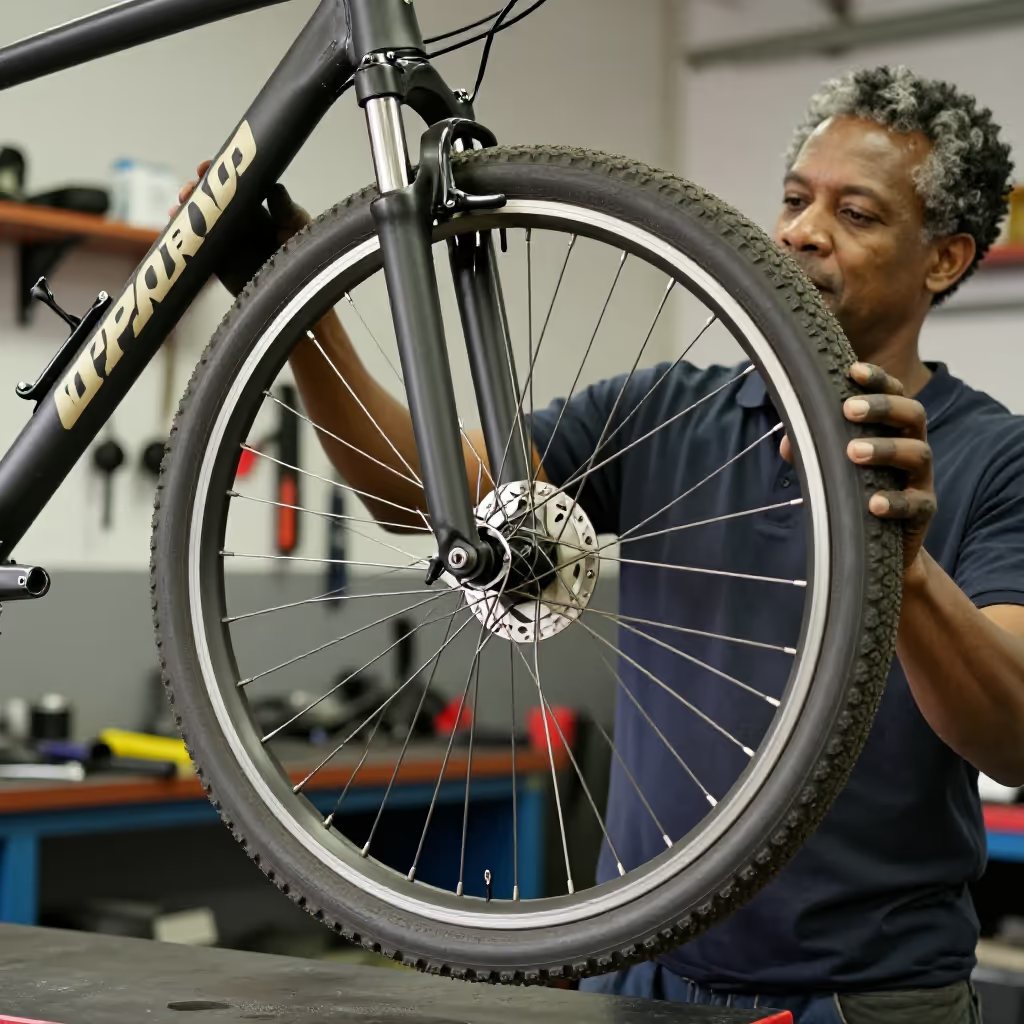
fork
A fork-shaped component on a vehicle, device, or tool, for example the front fork on a bicycle or a pitchfork.
Die Federung in der Gabel seines Mountainbikes ist kaputt.
The suspension in the fork of his mountain bike is broken.
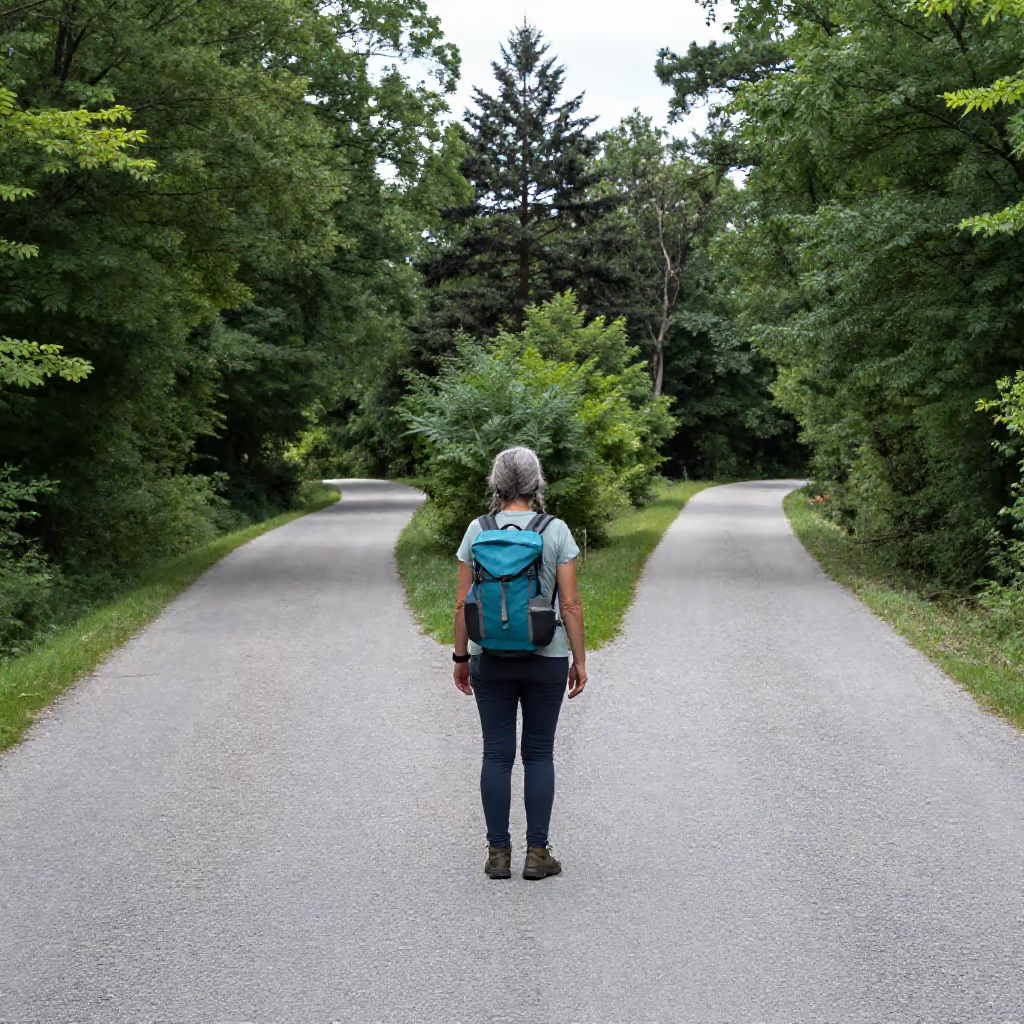
fork
A place where a path, road, or river splits into two directions; a fork in the road.
Gehen Sie den Waldweg entlang bis zur Gabel und halten Sie sich dann rechts.
Follow the forest path until the fork and then keep right.

fork
A tactical move in chess in which one piece, often a knight or pawn, attacks two or more opposing pieces at the same time.
Mit einer Springer-Gabel auf König und Turm gewann er die Partie.
With a knight fork on the king and rook, he won the game.
You can easily recognize the meaning of 'Gabel' (fork) from context. Words like 'Messer' (knife), 'Löffel' (spoon), or 'essen' (to eat) point to the cutlery. 'Fahrrad' (bicycle) or 'Gabelstapler' (forklift) point to a technical part. 'Weg' (path) or 'Kreuzung' (intersection) point to a fork in the road, and 'Schach' (chess) points to the chess move.
Für die Suppe brauchst du einen Löffel, keine Gabel.
For the soup, you need a spoon, not a fork.
The combination 'mit Messer und Gabel essen' (to eat with a knife and fork) is a very fixed and common expression. It describes the typical European way of eating a meal.
In Deutschland lernen Kinder früh, mit Messer und Gabel zu essen.
In Germany, children learn early to eat with a knife and fork.
The base form 'Gabel' (fork) is the basis for many compound words that describe a fork-shaped tool or component. Examples are 'der Gabelstapler' (forklift), 'die Heugabel' (pitchfork), or 'die Stimmgabel' (tuning fork).
Der Gabelstapler transportiert die schweren Kisten.
The forklift transports the heavy boxes.
When a fork in the road is meant, the preposition 'an' (at) is usually used to describe the location. You stand 'an der Gabel' (at the fork) or turn 'an der Gabel' (at the fork).
Unser Treffpunkt ist an der Gabelung des Wanderweges.
Our meeting point is at the fork in the hiking trail.
This meaning of 'Gabel' (fork) is technical language from chess. It is used only in this specific context.
Er übersah die Gabel und verlor dadurch seine Dame.
He overlooked the fork and lost his queen because of it.