

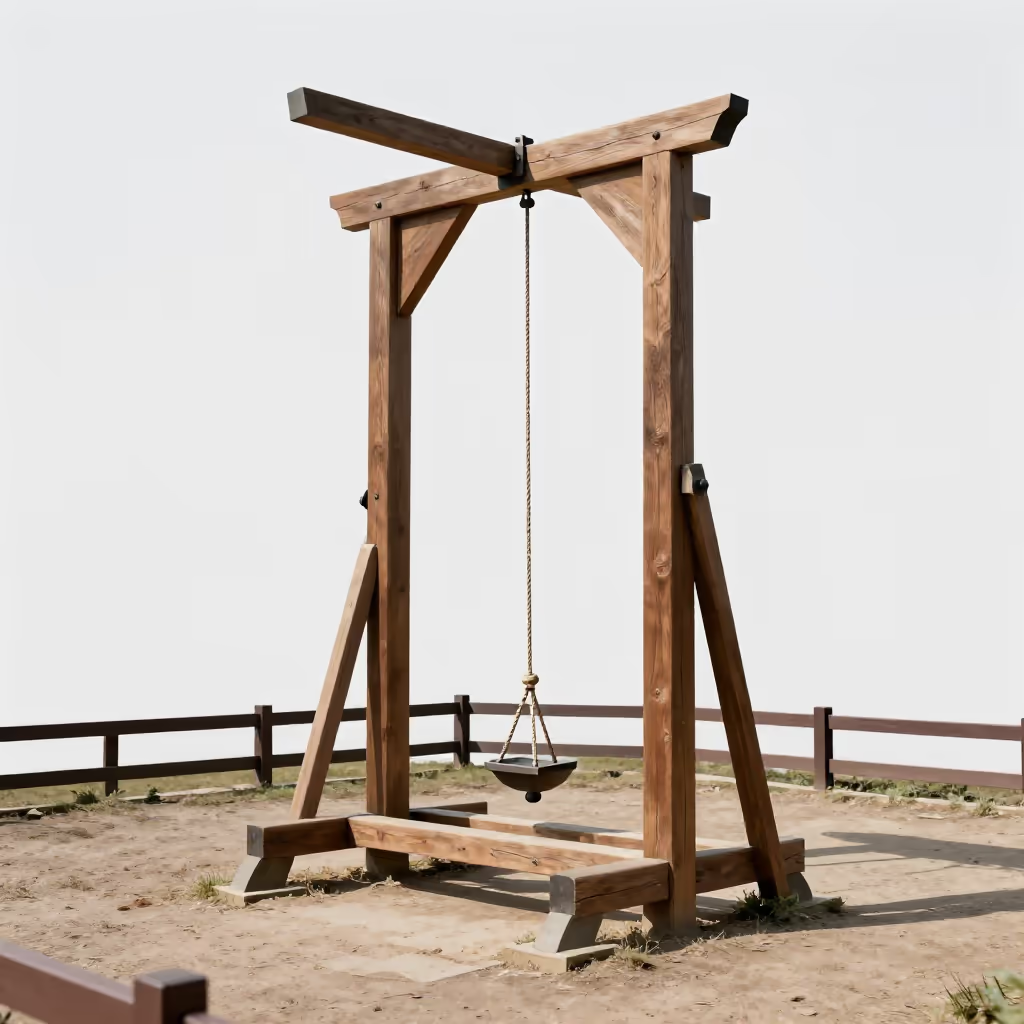
der Galgen
gallows
A structure, usually made of wooden beams, that was formerly used to execute people by hanging.
EXAMPLE
Auf dem alten Marktplatz stand früher ein Galgen.
There used to be a gallows in the old marketplace.
gallows
Loading your saved state.
gallows
A structure, usually made of wooden beams, that was formerly used to execute people by hanging.
Auf dem alten Marktplatz stand früher ein Galgen.
There used to be a gallows in the old marketplace.

support frame
A technical or sports-related construction in the shape of a gallows that serves as a holder or support for something.
In der Turnhalle hingen die Ringe an einem stabilen Galgen unter der Decke.
In the gym, the rings hung from a sturdy support frame under the ceiling.
To distinguish the meaning, pay attention to the context. If people are talking about history, the Middle Ages, or executions, the historical structure is meant. In technical or sports contexts, it refers to a support or holder.
Im Geschichtsbuch war die Abbildung eines Galgens zu sehen.
In the history book, there was an illustration of a gallows.
In historical contexts, there are fixed expressions such as 'jemanden an den Galgen bringen' (to bring someone to the gallows, i.e. to ensure that someone is executed) or 'am Galgen enden' (to end up on the gallows, i.e. to be executed).
Der Verräter wurde an den Galgen gebracht.
The traitor was brought to the gallows.
The expression 'Galgenhumor' (gallows humor) describes macabre or dark humor with which someone reacts to a hopeless or very terrible situation. It comes from the idea of still making a joke even at the gallows.
Trotz der schlechten Nachrichten bewahrte er seinen Galgenhumor.
Despite the bad news, he kept his gallows humor.