

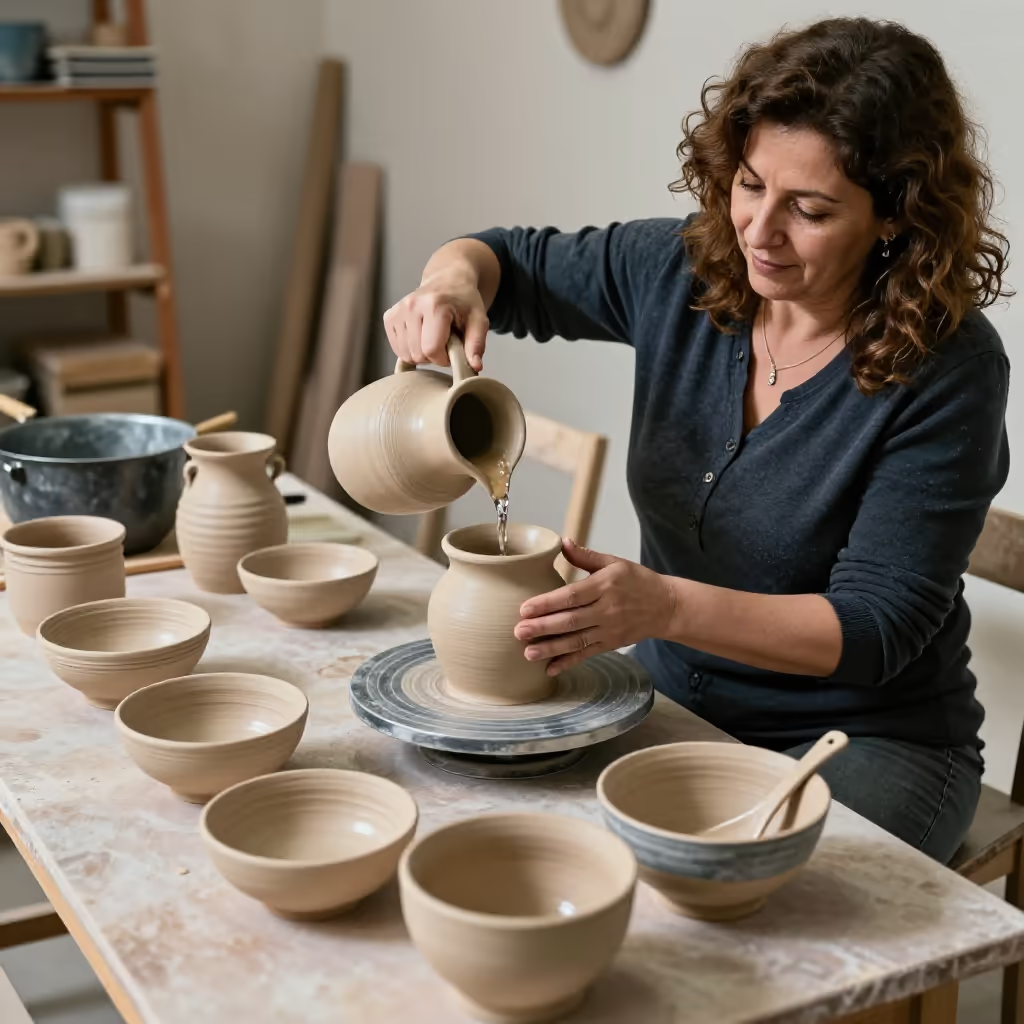
das Gefäss
container
A container used to hold or store liquids or other substances, for example a vase, a pot, or a bowl.
EXAMPLE
Bitte fülle die Suppe in ein grosses Gefäss um.
Please transfer the soup into a large container.
vessel / container
Loading your saved state.
container
A container used to hold or store liquids or other substances, for example a vase, a pot, or a bowl.
Bitte fülle die Suppe in ein grosses Gefäss um.
Please transfer the soup into a large container.

vessel
In anatomy, a tube-like structure in the body that transports fluids such as blood or lymph.
Rauchen kann die Gefässe schädigen und zu Durchblutungsstörungen führen.
Smoking can damage the vessels and lead to circulatory problems.
The spelling 'Gefäss' with 'ss' is common in Switzerland. In Germany and Austria, the word is written with 'ß' after the spelling reform: 'Gefäß'.
In der Schweiz schreibt man „Gefäss“, in Deutschland „Gefäß“.
In Switzerland people write 'Gefäss'; in Germany, 'Gefäß'.
The word 'Gefäß' comes from the verb 'fassen' (to hold or contain), which means 'halten' (to hold) or 'umfassen' (to enclose). So a vessel is literally something that contains or holds something else inside it.
Dieses alte Gefäß fasst genau einen Liter Wasser.
This old vessel holds exactly one liter of water.
You can recognize the meaning of 'Gefäß' from the context. If it is about the kitchen, garden, or storage, it means a container. If it is about medicine, biology, or the body, it means a vessel, such as a blood vessel.
Stell die Blumen bitte in ein Gefäß mit Wasser.
Please put the flowers in a vessel with water.
When a container is meant, 'Gefäß' is often combined with verbs such as 'füllen' (to fill), 'leeren' (to empty), or 'umfüllen' (to transfer), and with materials such as 'Glas' (glass), 'Ton' (clay), or 'Keramik' (ceramic).
Sie füllte die heisse Flüssigkeit in ein hitzebeständiges Gefäß.
She poured the hot liquid into a heat-resistant container.
In the medical meaning, 'Gefäß' is often combined into words such as 'Blutgefäß' (blood vessel) or 'Lymphgefäß' (lymphatic vessel). Common adjectives in this context are 'verengt' (narrowed), 'erweitert' (dilated), or 'verkalkt' (calcified).
Sport hilft, die Blutgefäße elastisch zu halten.
Exercise helps keep the blood vessels elastic.
container
Behälter is the general term for objects used to store or transport something. Gefäss usually refers to an object such as a vase, pot, or bowl that holds liquids or other substances. For transport purposes, Behälter is therefore usually the better choice.
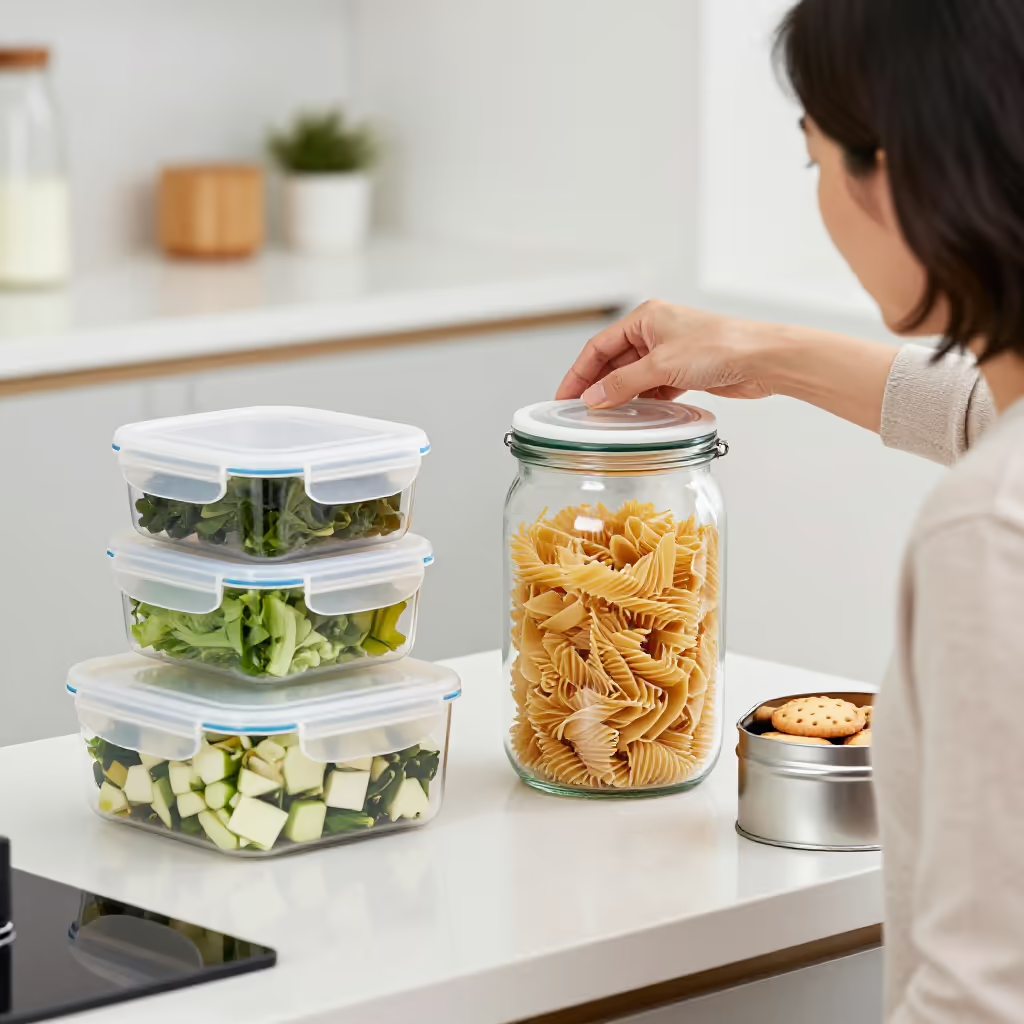
Zum Servieren des Wassers stellt Lea ein offenes Gefäss auf den Tisch.
To serve the water, Lea places an open vessel on the table.
Für den Transport des Wassers nimmt Lea einen verschliessbaren Behälter.
To transport the water, Lea uses a sealable container.