

gefroren
frozen
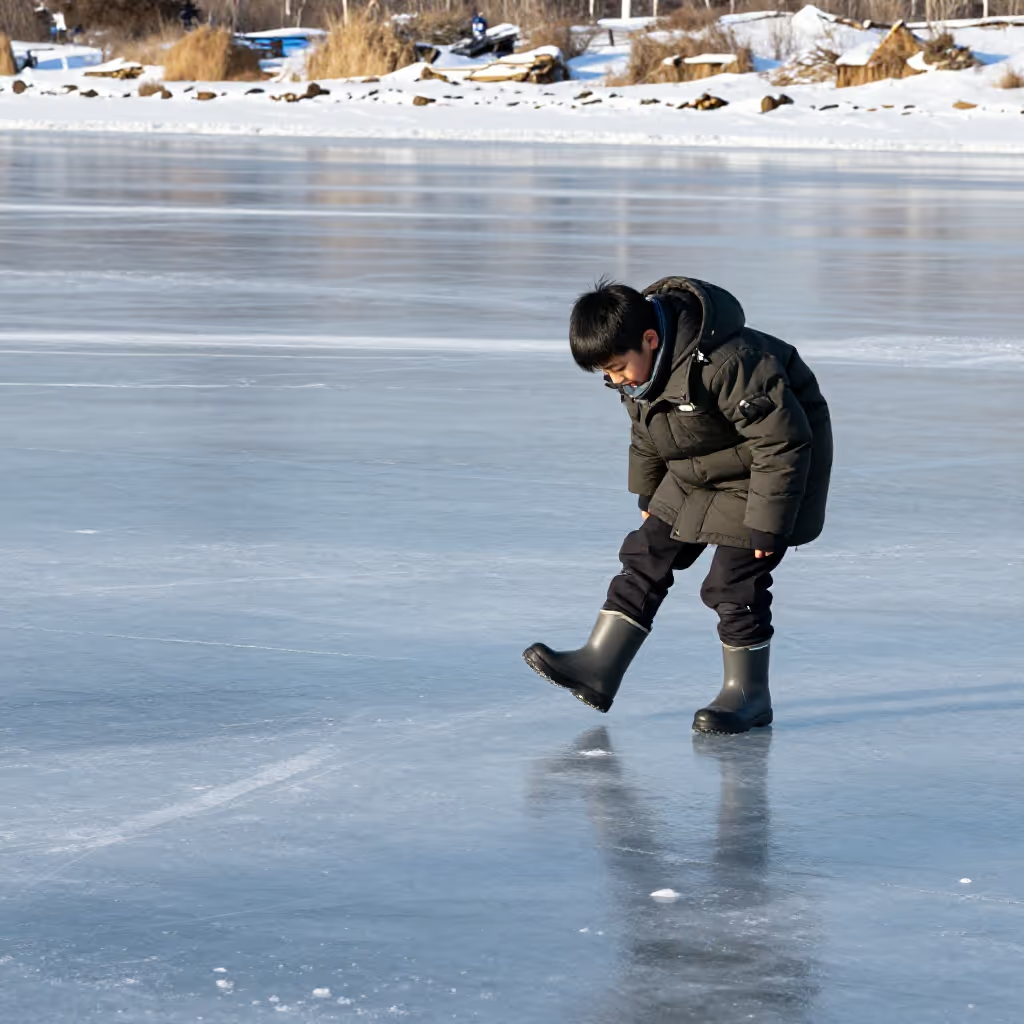
Changed into a solid state through cold, especially from water to ice.
EXAMPLE
Der See ist im Winter komplett gefroren.
The lake is completely frozen in winter.
frozen
Loading your saved state.
frozen
Changed into a solid state through cold, especially from water to ice.
Der See ist im Winter komplett gefroren.
The lake is completely frozen in winter.
frozen
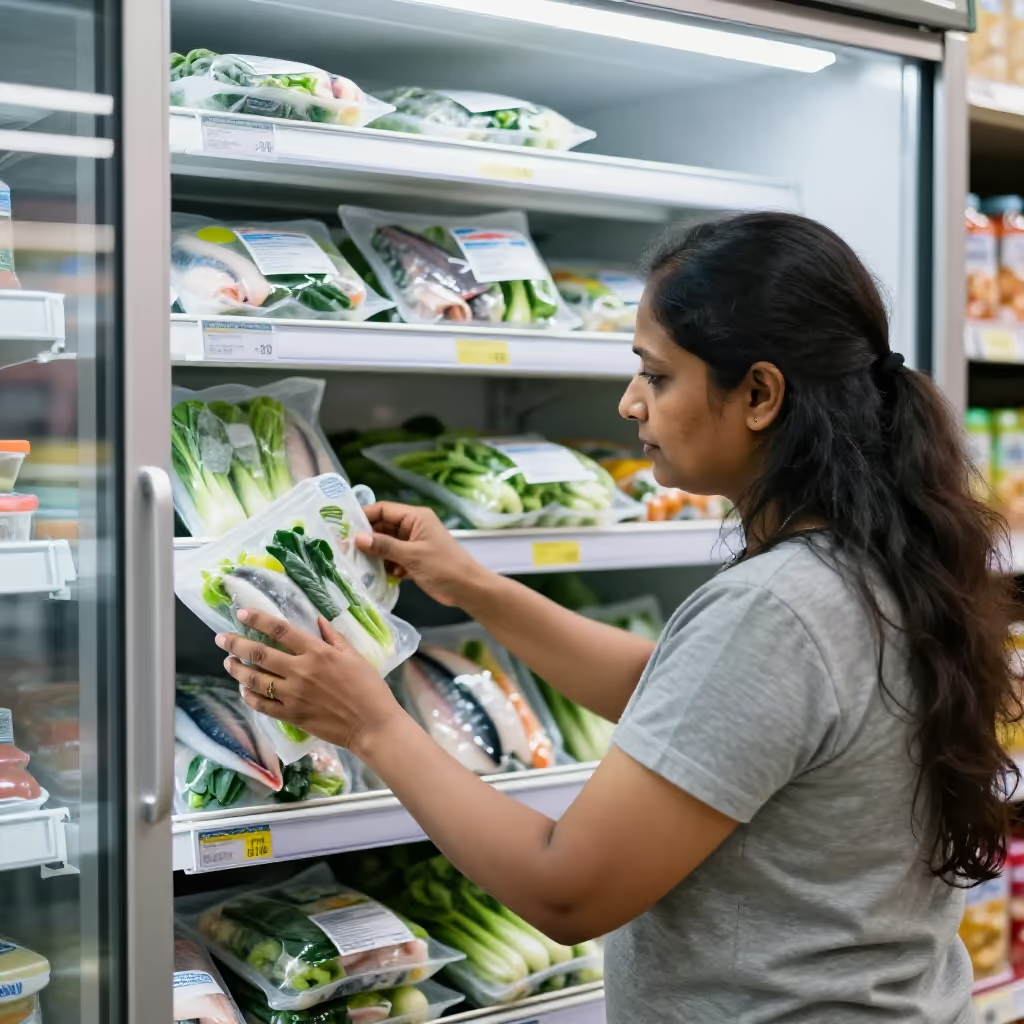
Referring to deep-frozen foods that have been frozen to preserve them.
Wir haben immer gefrorenes Gemüse im Haus, um schnell etwas kochen zu können.
We always have frozen vegetables at home so we can cook something quickly.
'Gefroren' (frozen) is the past participle of the verb 'gefrieren' (to freeze). It is very often used like a normal adjective to describe a state.
Die Scheiben des Autos waren am Morgen gefroren.
The car windows were frozen in the morning.
Be careful not to use 'gefroren sein' (to be frozen) if you only want to say that you are cold. The sentence 'Ich bin gefroren' means that your body has turned into ice. Instead, say 'Ich friere' (I'm freezing) or 'Mir ist kalt' (I'm cold).
Seine Finger waren nach einer Stunde im Schnee fast gefroren.
His fingers were almost frozen after an hour in the snow.
As an adjective, 'gefroren' (frozen) is almost always used with the verb 'sein' (to be) to describe the state of something.
Das Wasser in der Leitung ist gefroren.
The water in the pipe is frozen.
In the meaning 'turned to ice', 'gefroren' (frozen) is often combined with things in nature, such as 'der gefrorene See' (the frozen lake), 'der gefrorene Boden' (the frozen ground), or 'gefrorene Pfützen' (frozen puddles).
Die Kinder liefen Schlittschuh auf dem gefrorenen See.
The children ice-skated on the frozen lake.
When 'gefroren' (frozen) comes before a food item, it usually means 'deep-frozen'. Typical examples are frozen vegetables, frozen fish, or frozen pizza.
Für das Abendessen taue ich gefrorenen Lachs auf.
For dinner, I'm thawing frozen salmon.