

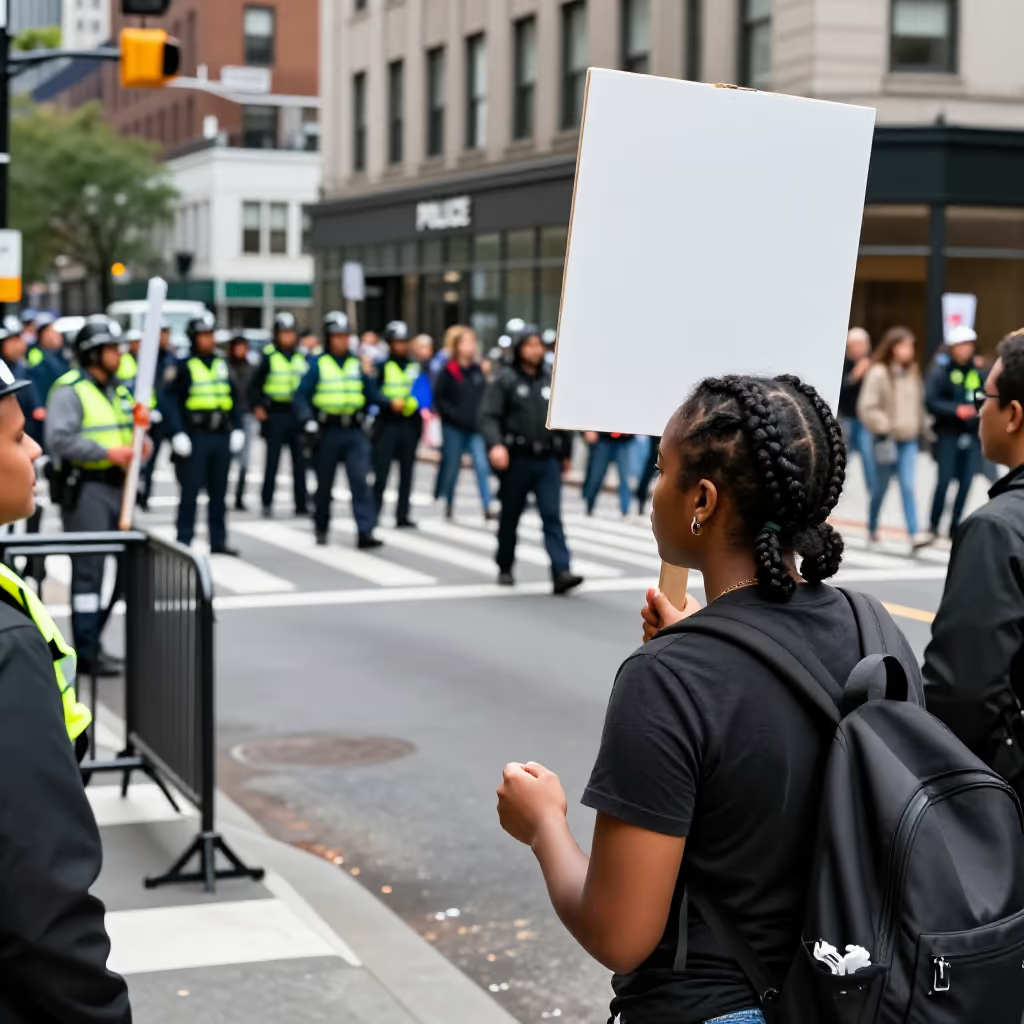
A person who takes part in a demonstration directed against another demonstration taking place at the same time.
example
Die Polizei musste die Demonstranten und die Gegendemonstranten voneinander trennen.
The police had to separate the demonstrators and the counterdemonstrators from each other.
Usage tips
Word composition
The word consists of the prefix 'gegen-' (against) and the noun 'Demonstrant' (demonstrator). The prefix 'gegen-' means 'against' or 'opposite,' so the word describes a person who protests against another demonstration.
EXAMPLE
Tausende Gegendemonstranten protestierten gegen den Aufmarsch der Rechten.
Thousands of counterdemonstrators protested against the right-wing march.
Typical collocations
This noun is often used in reports about political events. Typical verbs are 'sich versammeln' (to gather), 'protestieren' (to protest), or 'zusammenstoßen mit' (to clash with). It is also common to say that the police have to 'trennen' (separate) demonstrators and counterdemonstrators.
EXAMPLE
Die Polizei bildete eine Kette, um die Gegendemonstranten auf Abstand zu halten.
The police formed a line to keep the counterdemonstrators at a distance.
Context and usage
A 'Gegendemonstrant' (counterdemonstrator) is always understood in relation to another demonstration, usually one taking place at the same time. The word describes the dynamic situation of two opposing groups protesting in the same place.
EXAMPLE
Als die erste Gruppe ihre Reden begann, formierte sich der Zug der Gegendemonstranten.
As the first group began their speeches, the procession of counterdemonstrators formed.