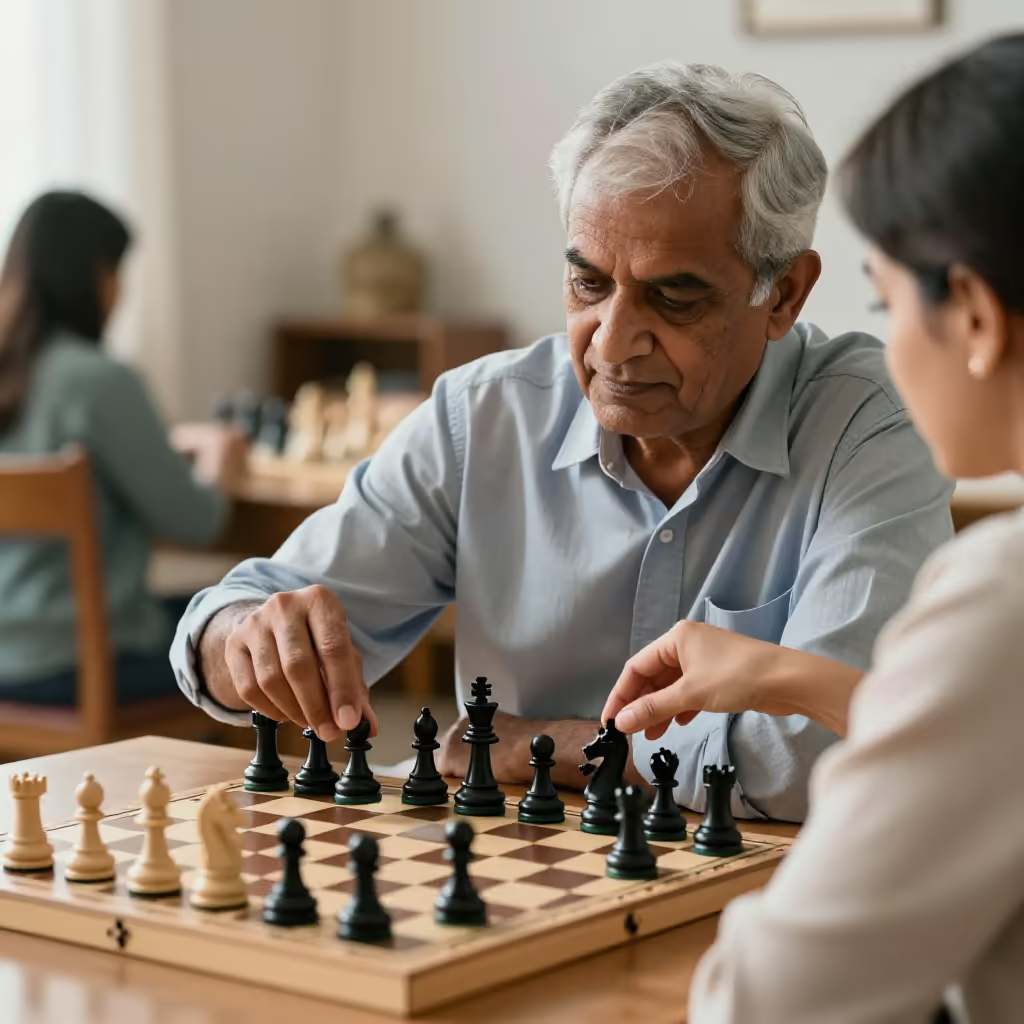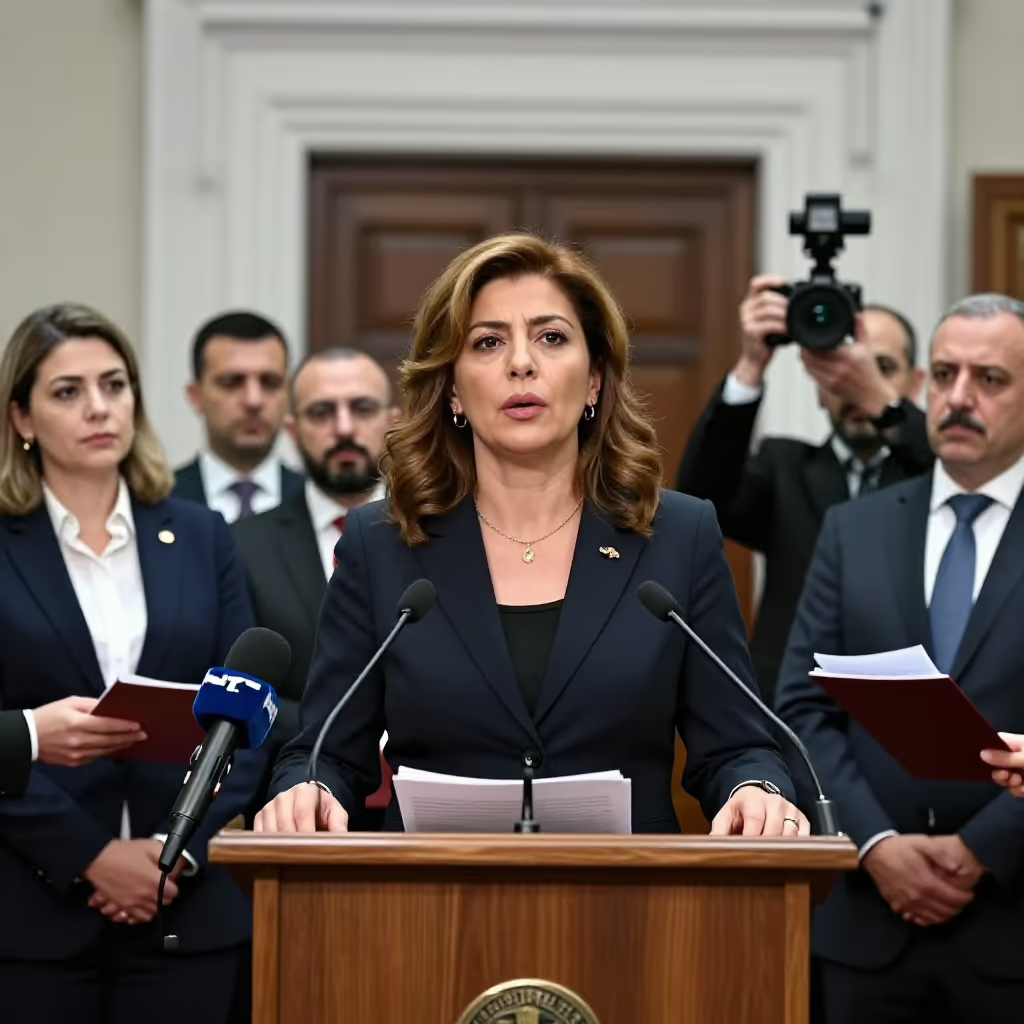
An action that is taken as a reaction to someone else's action.
example
Als Gegenzug für die Preissenkung des Konkurrenten startete das Unternehmen eine große Werbekampagne.
As a countermove to the competitor's price reduction, the company launched a major advertising campaign.
Usage tips
Compound structure
The word consists of 'Gegen-' (against, in response) and 'Zug' (movement, move, train). The meaning follows directly from this combination and the respective context.
EXAMPLE
Als Gegenzug auf die Kritik veröffentlichte der Politiker eine Stellungnahme.
As a countermove to the criticism, the politician published a statement.
Context clues
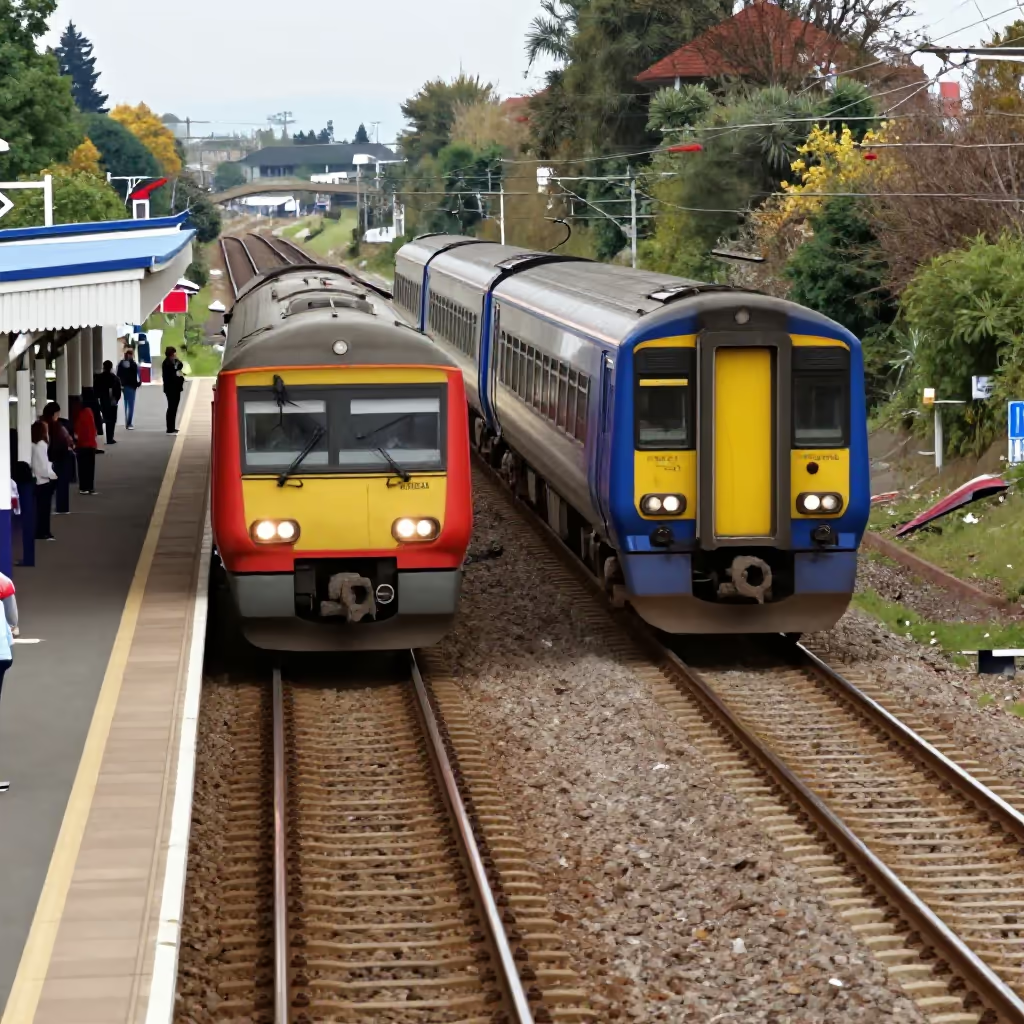
The meaning of 'Gegenzug' becomes clear from context. At a train station, it refers to the train going in the other direction. In board games, it is the next move. In politics or business, it is a reaction to an action.
EXAMPLE
Der Gegenzug aus Hamburg hat zehn Minuten Verspätung.
The return train from Hamburg is ten minutes late.
Fixed expression
The expression 'im Gegenzug' is very common and means 'in return' or 'in exchange.' It expresses that one action is a reaction to another.
EXAMPLE
Er hat mir beim Umzug geholfen und im Gegenzug habe ich ihn zum Essen eingeladen.
He helped me move, and in return I invited him to dinner.
Compare with
confusable
Gegenzug vs Zug
train / move / draft
'der Zug' and 'der Gegenzug' can both occur in transport or in games. A 'Zug' is a train or a single move in a game. A 'Gegenzug', on the other hand, is a train going in the opposite direction or a response to another player's move. The words are easy to confuse because 'Gegenzug' contains the word 'Zug'. The important part is 'gegen': it shows a direction back or a response to something.
Gegenzug
Lena überlegte lange, bevor sie den passenden Gegenzug machte.
Lena thought for a long time before making the right countermove.
Zug
Nach seinem nächsten Zug stand Max beim Schach deutlich besser.
After his next move, Max was in a much better position in chess.