

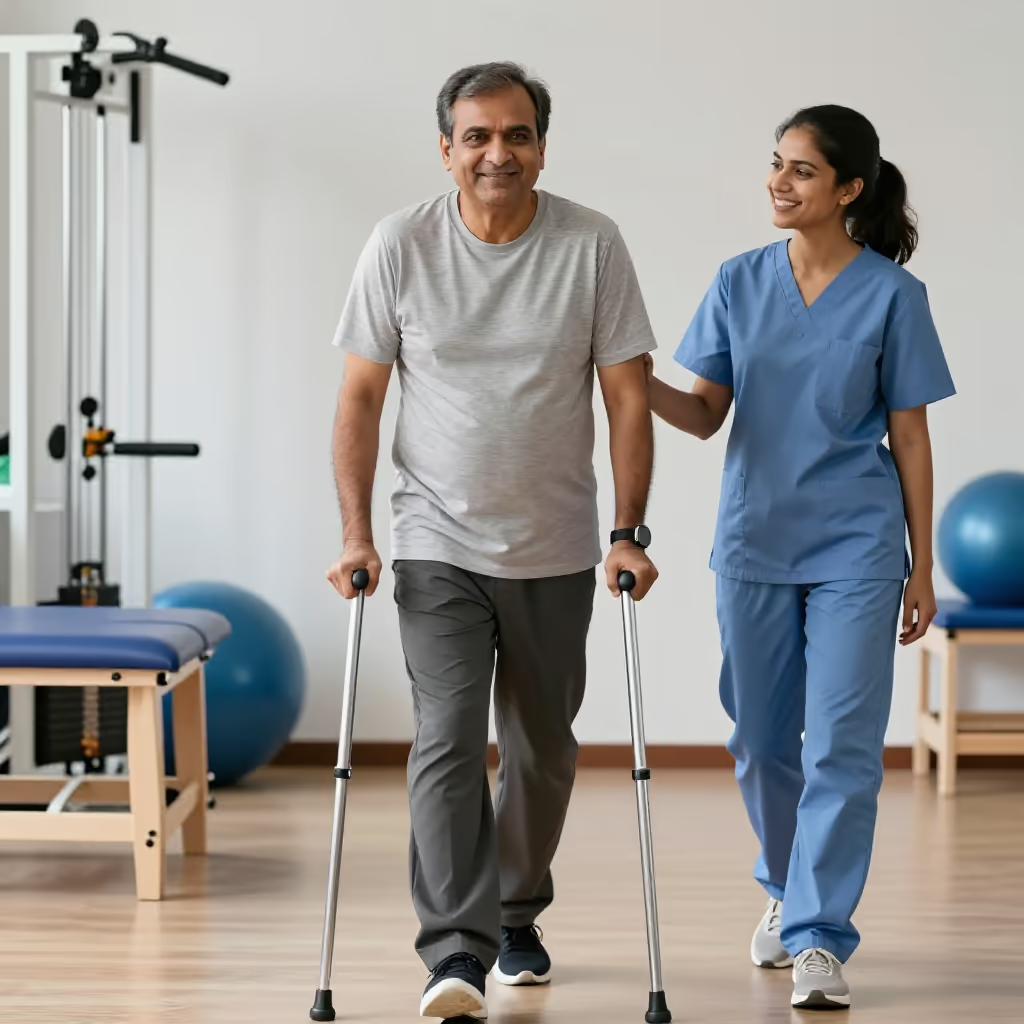
genesen
to recover
To become healthy again after an illness or injury.
EXAMPLE
Nach einer schweren Lungenentzündung ist sie nun endlich wieder vollständig genesen.
After a severe case of pneumonia, she has finally fully recovered.
to recover
Loading your saved state.
to recover
To become healthy again after an illness or injury.
Nach einer schweren Lungenentzündung ist sie nun endlich wieder vollständig genesen.
After a severe case of pneumonia, she has finally fully recovered.
The verb 'genesen' (to recover) describes a change of state from sick to healthy. Therefore, the perfect tense is always formed with the auxiliary verb 'sein' (to be), not with 'haben' (to have).
Ich bin nach der Grippe schnell wieder genesen.
I recovered quickly after the flu.
The past participle of 'genesen' (to recover) is irregular and is also 'genesen'. So no 'ge-' prefix is added.
Der Patient ist vollständig genesen und darf morgen nach Hause.
The patient has fully recovered and may go home tomorrow.
To name the illness or injury that someone has recovered from, the preposition 'von' (from) is used with the dative.
Er ist von einer schweren Operation genesen.
He has recovered from a serious operation.
'Genesen' (to recover) is a word used in an elevated style. It is often found in written reports, in literature, or in more formal conversations.
Wir wünschen Ihnen, dass Sie bald wieder vollständig genesen.
We wish you a full recovery soon.
to heal
Heilen can mean that someone treats a person, or that a wound heals on its own. Genesen, by contrast, describes the person affected who becomes healthy again after an illness or injury. Use genesen for people and heilen for the treatment or the wound.

Nach der Operation genas der Patient langsam.
After the operation, the patient recovered slowly.
Nach der Operation heilte die Wunde langsam.
After the operation, the wound healed slowly.