

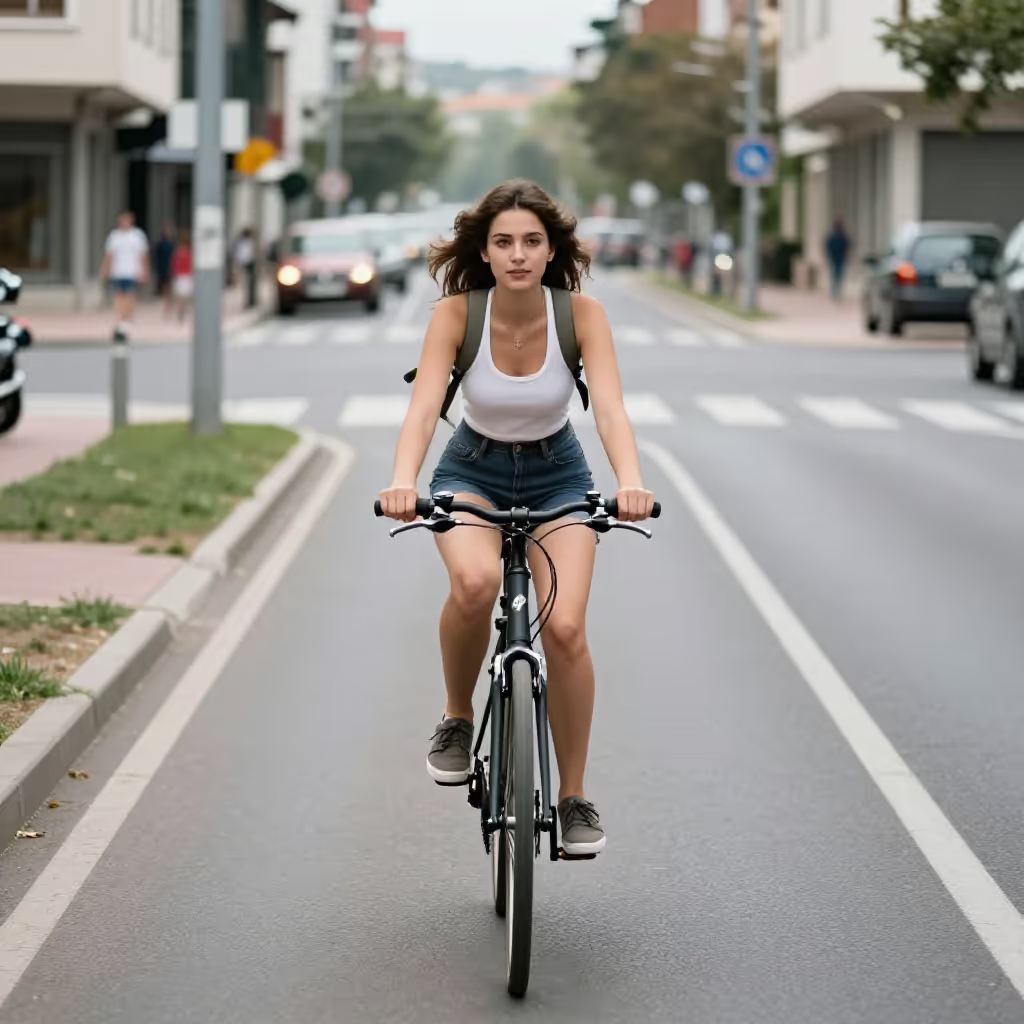
geradeaus
straight ahead
Describes a movement or direction that goes directly forward without turning.
EXAMPLE
Fahren Sie an der nächsten Kreuzung einfach geradeaus weiter.
At the next intersection, simply keep going straight ahead.
straight ahead / straightforward
Loading your saved state.
straight ahead
Describes a movement or direction that goes directly forward without turning.
Fahren Sie an der nächsten Kreuzung einfach geradeaus weiter.
At the next intersection, simply keep going straight ahead.

straightforward
In a figurative sense: direct, honest, and without beating around the bush in the way one speaks or acts.
Sie ist eine Person, die immer geradeaus sagt, was sie denkt.
She is a person who always says what she thinks in a straightforward way.
The word 'geradeaus' (straight ahead) is made up of 'gerade' (straight) and 'aus' (out). Literally, it describes a movement that leads 'straight' out from a point, meaning directly forward.
Gehen Sie hier einfach immer geradeaus, dann kommen Sie direkt zum Bahnhof.
Just keep going straight ahead here, and then you'll come directly to the train station.
You can tell whether the literal or figurative meaning is intended from the verb. Verbs of movement like 'gehen' (to go/walk) or 'fahren' (to drive/go) point to direction, while verbs of speaking or description point to an honest character.
Der Weg führt zwei Kilometer geradeaus durch den Wald.
The path goes straight ahead through the forest for two kilometers.
As an adverb of direction, 'geradeaus' (straight ahead) usually stands directly after the verb of movement. It answers the question 'Wohin?' (Where to?).
Du musst an der Ampel nicht abbiegen, fahr einfach geradeaus.
You don't have to turn at the traffic light; just drive straight ahead.
In the figurative meaning, 'geradeaus' (straightforward) is often combined with verbs of speaking or with the verb 'sein' (to be) to describe a direct and honest person.
Ich mag sie, weil sie so eine ehrliche und geradeaus Person ist.
I like her because she is such an honest and straightforward person.
direct
Direkt describes the shortest route without an unnecessary detour, even if you have to turn along the way. Geradeaus, on the other hand, indicates a forward direction without turning. Use direkt for the most efficient route and geradeaus for the specific direction of movement.

Ab der Kirche gehst du geradeaus bis zum Bahnhof.
From the church, walk straight ahead to the train station.
Der direkte Weg zum Bahnhof führt an der Kirche nach links.
The direct route to the train station turns left at the church.