

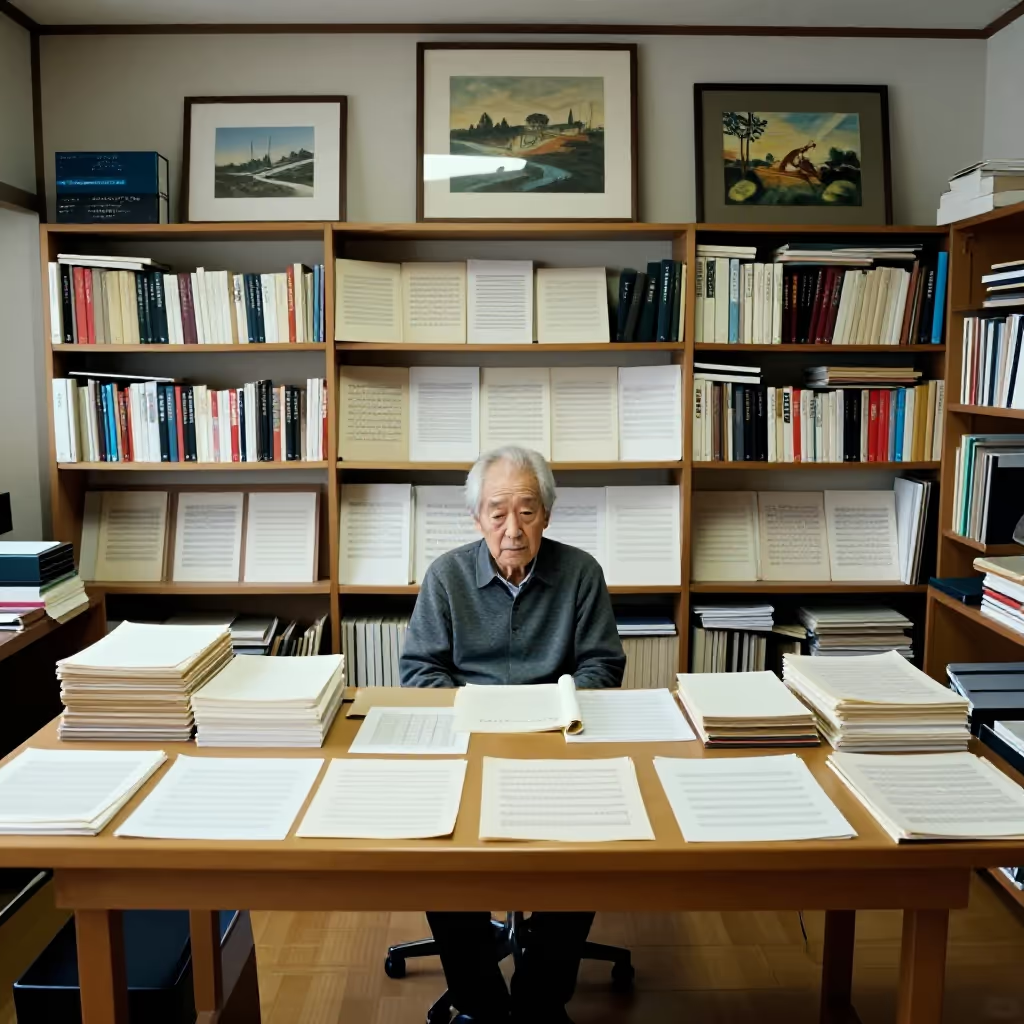
The sum of all works that an artist, writer, or composer has created over the course of their life.
example
Das Museum widmet dem Gesamtwerk der Malerin eine große Retrospektive.
The museum is dedicating a major retrospective to the painter's complete works.

Usage tips
Compound word
The word is a clear compound of 'gesamt' (whole, complete) and 'das Werk' (the work, the creative output). It therefore refers to the totality of all works by one person.
EXAMPLE
Das Gesamtwerk des Architekten umfasst mehr als 50 Gebäude.
The architect's complete works include more than 50 buildings.
Use with genitive
To name the creator, the genitive is usually used. The structure is: 'das Gesamtwerk' (the complete works) + genitive of the name or person.
EXAMPLE
Ich studiere das Gesamtwerk Franz Kafkas.
I am studying the complete works of Franz Kafka.
Context and register
This word belongs to technical and educated language. You find it mainly in texts about art, literature, music, or science.
EXAMPLE
In seiner Dissertation analysiert er das filmische Gesamtwerk von Wim Wenders.
In his dissertation, he analyzes the complete cinematic works of Wim Wenders.
Compare with
near_synonym · confusable
Gesamtwerk vs Werk
plant / work
'das Werk' and 'das Gesamtwerk' can both mean all the works of an artist, writer, or composer. 'das Gesamtwerk' makes it especially clear that the complete sum of all works is meant. 'das Werk' can also have this meaning, but it is more flexible and, depending on the context, can also mean a single work. This is why learners may confuse the words. If you want to talk unambiguously about everything a person has created, 'Gesamtwerk' is more precise. If the context is clear, 'Werk' can also fit.
Gesamtwerk
Die Ausstellung zeigt das Gesamtwerk der Fotografin in mehreren Räumen.
The exhibition shows the photographer's complete works across several rooms.
Werk
Im Seminar lesen wir Texte aus dem Werk von Franz Kafka.
In the seminar, we read texts from the works of Franz Kafka.