


geschmacklos
tasteless
Lacking good taste; perceived as inappropriate, hurtful, or lacking style.
EXAMPLE
Sein Witz auf der Beerdigung war absolut geschmacklos.
His joke at the funeral was absolutely tasteless.
tasteless
Loading your saved state.
tasteless
Lacking good taste; perceived as inappropriate, hurtful, or lacking style.
Sein Witz auf der Beerdigung war absolut geschmacklos.
His joke at the funeral was absolutely tasteless.
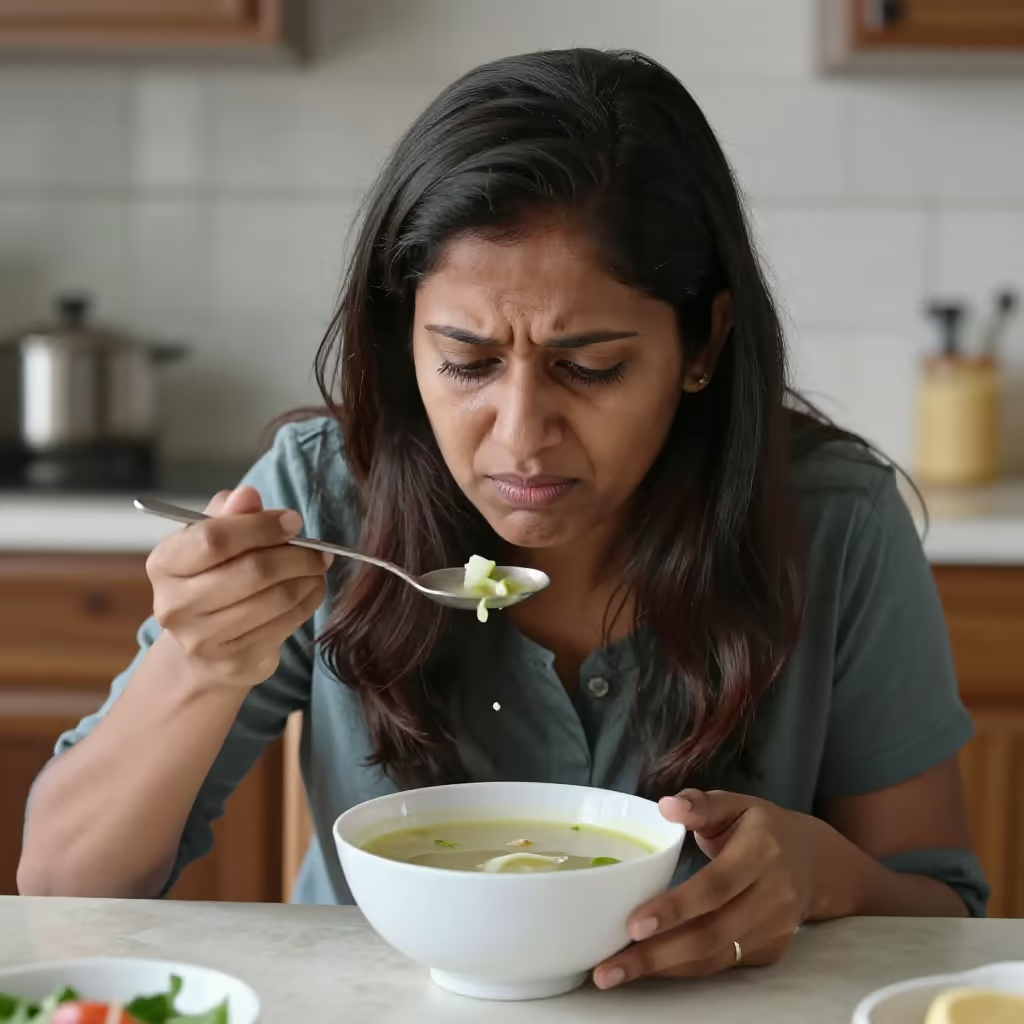
flavorless
Having little or no flavor of its own; tasting bland.
Ohne Salz und Kräuter war die Suppe völlig geschmacklos.
Without salt and herbs, the soup was completely flavorless.
The word consists of 'der Geschmack' (taste/flavor) and the ending '-los', which means 'without'. 'Geschmacklos' (tasteless/flavorless) therefore literally means 'without taste', which explains both meanings.
Sein Einrichtungsstil ist leider völlig geschmacklos.
Unfortunately, his interior design style is completely tasteless.
The context makes the meaning clear: If the word refers to food or drink, it means 'fade' (bland/flavorless) (m02). If it refers to jokes, clothing, behavior, or comments, it means 'stillos' (lacking style) or 'unangebracht' (inappropriate) (m01).
Sein Kommentar über ihr Kleid war wirklich geschmacklos.
His comment about her dress was really tasteless.
In the meaning 'stillos' (lacking style), 'geschmacklos' (tasteless) often describes human behavior or creations. Typical examples are: a 'geschmackloser Witz' (tasteless joke), 'geschmacklose Kleidung' (tasteless clothing), or 'geschmackloses Benehmen' (tasteless behavior).
Er ist bekannt für seine geschmacklosen Witze.
He is known for his tasteless jokes.
In the meaning 'fade' (bland/flavorless), 'geschmacklos' (flavorless) is used exclusively for food and drinks. Typical examples are 'geschmacklose Suppe' (flavorless soup), 'geschmackloses Gemüse' (flavorless vegetables), or 'geschmackloses Wasser' (flavorless water).
Das Krankenhausessen war leider ziemlich geschmacklos.
Unfortunately, the hospital food was pretty flavorless.
inappropriate
When referring to a remark or joke, both words can express a negative assessment. Unpassend mainly concerns the fact that the contribution does not fit the occasion, while geschmacklos focuses more strongly on its hurtful or tasteless content. Choose unpassend for the context and geschmacklos for the nature of the joke.

Der Witz über den Unfall war geschmacklos, weil er die Betroffenen verspottete.
The joke about the accident was tasteless because it mocked the people affected.
Der Witz über den Unfall war bei der Gedenkfeier unpassend.
The joke about the accident was inappropriate at the memorial service.